

2 June 2025 · Roshni Mahtani Cheung
Cofounder, Little Rei · Mother of one
Confinement in Singapore: What It Is and What to Keep
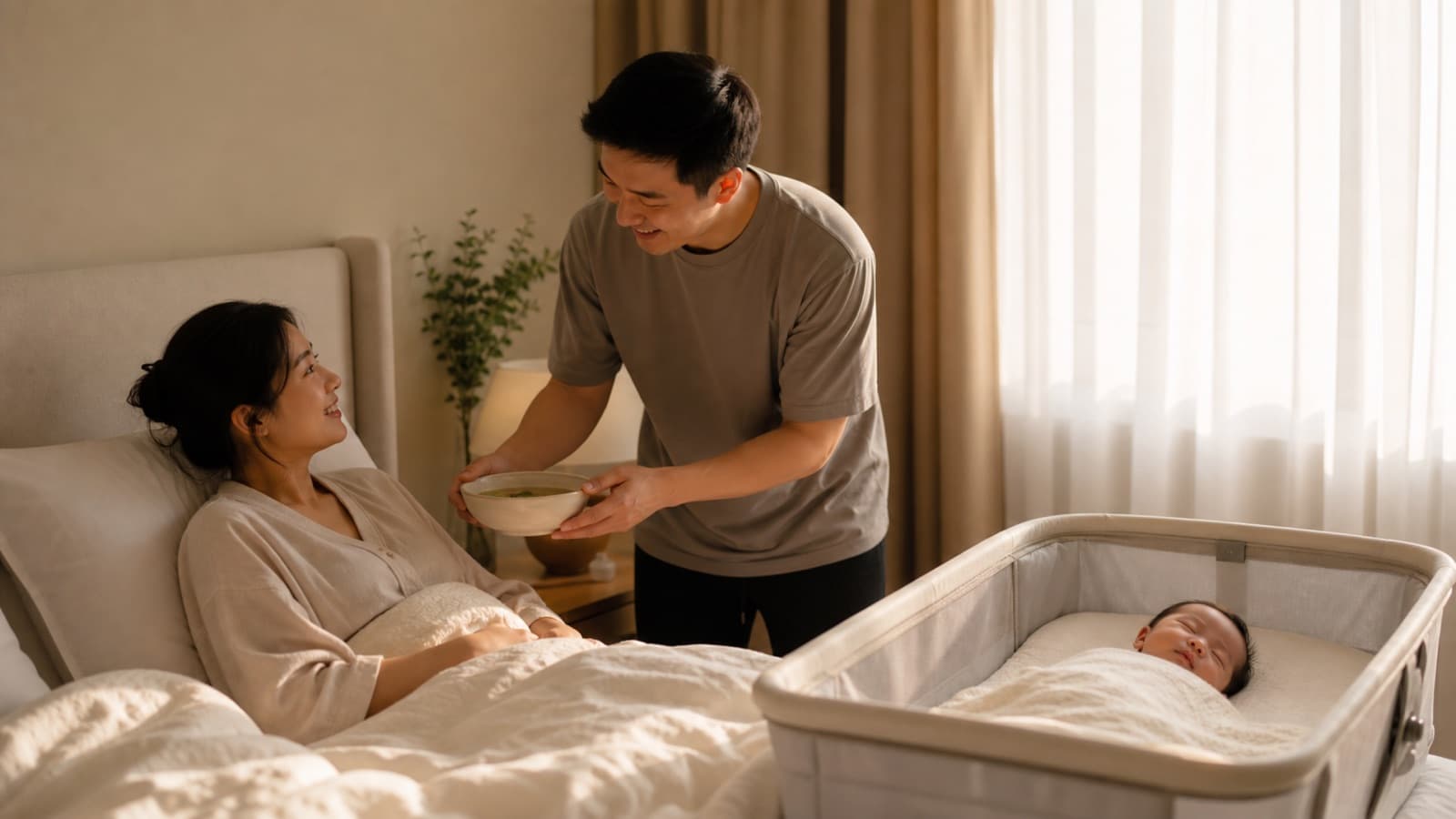
Somebody is going to hand you a set of rules in the first week, and they aren't going to ask whether you wanted them. Almost every culture here has a version, and mine arrived from a direction I hadn't anticipated.
Confinement is a structured rest period after birth, 28 to 40 days depending on which tradition you've inherited, with rules covering food, washing, temperature and visitors.
The core idea is sound, and increasingly supported: a woman who has just given birth needs rest, feeding and help, and shouldn't be running a household in week two.
Some of the specific rules are sound too. A few are actively risky at 32 degrees and 80% humidity, and it helps to know which is which before somebody bans you from the shower for a month.
The three traditions, compared
Different rules, same underlying instruction: somebody else runs the house for a month.
| Length | Central ideas | |
|---|---|---|
| Chinese (zuo yue zi) | ~28-40 days | Warmth, no cold food or water, ginger and sesame, rest, limited washing |
| Malay (pantang) | ~40-44 days | Bengkung binding, tungku heat therapy, massage, herbal baths, dietary rules |
| Indian | ~40 days | Oil massage, warm baths, specific spices and soups, seclusion with the baby |
| Shared across all | — | Rest, being fed by others, minimal visitors, help with the household |
Strip out the specifics and all three say the same thing: for about six weeks somebody else runs the house, and the mother's only jobs are recovering and feeding the baby. That part deserves defending fiercely.
What holds up
Rather more of it than a sceptic expects, and I came into this as the sceptic. Rest, feeding support and a firm limit on visitors have all become mainstream postnatal advice, which is a slightly humbling thing to notice about a tradition you were preparing to argue with.
- Rest, enforced. The strongest element in all three traditions and the one modern practice most often fails to provide.
- Being cooked for. Recovery and milk production both need calories, and a woman making her own lunch at day five isn't resting.
- Limiting visitors. Good for rest, good for infection control in the newborn period, and much easier to enforce as "tradition" than as a personal preference.
- Warm drinks in place of iced ones: harmless, comforting, and they keep fluid intake up, which helps with breastfeeding.
- Abdominal binding, once bleeding is settled and with reasonable tension. Many women find it helps with support and posture, but it doesn't shrink anything permanently.
- Postnatal massage, after the first week or so and from someone experienced with postpartum bodies.
- Nutrient-dense soups and stews, which is simply good postnatal nutrition wearing a cultural costume.
What doesn't hold up here
The trouble is that these traditions grew up somewhere colder.
Several rules that make perfect sense in a northern Chinese winter turn risky at 32 degrees and 80% humidity.
- No bathing or hair washing for a month. Good hygiene counts after birth, particularly with a perineal tear or a caesarean wound, and infection is a real risk in this heat. Warm showers are fine.
- No fans or air-conditioning. Overheating in a Singapore flat in July is a genuine hazard for both mother and newborn. A room at 25 to 26 degrees isn't a betrayal of the tradition; heatstroke isn't a recovery strategy.
- Heavy layers, socks, long sleeves and a covered head indoors. In this climate this causes heat rash, dehydration and miserable nights.
- Severe fluid restriction. Actively bad advice while breastfeeding.
- Very restricted diets that exclude vegetables and fruit for weeks. Constipation after birth is already common and this makes it worse.
- Tungku or hot compresses applied over a caesarean wound, or binding applied tightly over one before it has healed.
- Confinement alcohol in quantity while breastfeeding. A splash cooked off in a dish is different from a daily tonic.
None of this means throwing the whole thing out. Keep the structure (rest, food, help, fewer visitors) and adapt the parts written for a different climate.
The recovery itself
Do you need a nanny?
One option among several, and an expensive one, typically a four-figure monthly sum plus a red packet.
What it buys is cooking, night help and household work, which is exactly what the tradition says you need.
- A confinement nanny, live-in, usually 28 days. Most support, highest cost, and it means a stranger in a small flat during a raw period.
- A confinement food catering service, which delivers the meals without the live-in element. A middle option many families land on.
- Family, which is free and comes with the strongest opinions.
- A postnatal doula, who does less cooking and more emotional and feeding support.
- None of it, with a partner on leave and a meal plan. Entirely workable if the leave is real.
Mentioned above
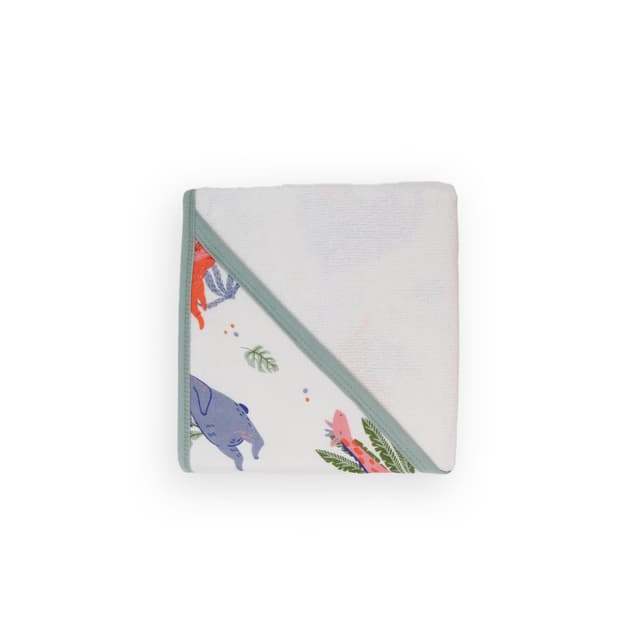 Bamboo Hooded TowelS$45.00Shop now
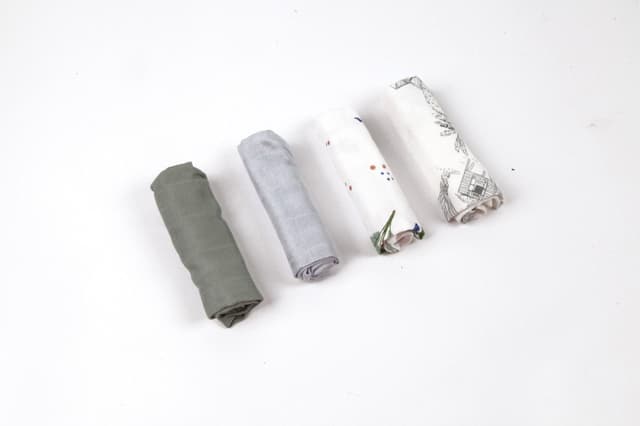 Bamboo Wash Cloth 4pc (Rustic Rainforest)S$25.00Shop now
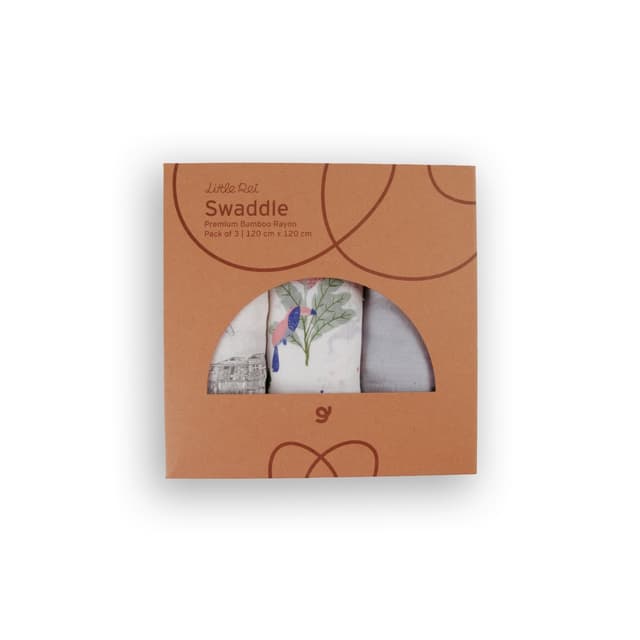 Bamboo Swaddles (3pc)S$69.00Shop now
One I kept, one I broke
Mine came from my mother-in-law, and I didn't think myself above any of it.
The one I kept was the hair: a month without washing it, in Singapore. Anybody who lives here can imagine how that went. What made it survivable was her: she turned up with a towel-off shampoo so I could at least get my scalp clean without water.
I've thought about that a great deal since. She was the person enforcing the rule and she was also the person who found the way to make it bearable, and for her those two things weren't remotely in conflict. That's what confinement is like from the inside: people looking after you in a way you didn't choose and wouldn't have picked.
The one I broke was staying in: a month indoors, apart from doctor's appointments. I lasted a fortnight.
It wasn't boredom. It was claustrophobia, and it arrived quite suddenly and didn't lift, and I remember standing at the window doing the sums on how much of a fuss it would cause if I simply went downstairs, so I went downstairs, and then I kept going.
What I'd do differently is negotiate that one at the start. Breaking it in week two helped nobody and felt like failing, whereas asking wouldn't have, and I suspect she'd have said yes. She had already proved she was willing to find a way round a rule when it counted.
The rest of it I'd keep exactly as it was: somebody else cooking, fewer visitors, no expectation that I run the house, all of which was a gift I didn't entirely understand until it stopped.
How to decline without a row
Not with evidence. Nobody has ever won an evidence argument against a mother-in-law who has done this three times, so put a third party in the middle instead. "The doctor said to shower because of the stitches." "The hospital said to keep the room at 26 for the baby." Both true, both unarguable, neither of them you. Then give ground somewhere visible. Drink the ginger tea. Eat the soup. Accept the binding. Keep the visitor limit.
A confinement where you've accepted most of it and declined the shower ban is one everybody can live with, and much less exhausting than a month of principled refusal in your first fortnight of motherhood.
One thing tradition has no answer for.
If you feel persistently low, hopeless, unable to sleep even when the baby does, or frightened by your own thoughts, that isn't folklore territory. Postnatal depression is common and treatable, and it's a conversation for your doctor at the six-week check, or before it.
Questions I had
What's confinement in Singapore?
A structured rest period after birth of roughly 28 to 44 days, with rules on food, washing, temperature and visitors. Chinese, Malay and Indian traditions each have their own version.
Can you shower during confinement?
Yes. Warm showers are safe and hygiene counts after birth, particularly with a perineal tear or a caesarean wound. The no-bathing rule comes from colder climates and doesn't suit this one.
Can you use air-conditioning during confinement?
Yes, and in Singapore you generally should. A room at 25 to 26 degrees is safer for both mother and newborn than a sealed hot room. Avoid a draught blowing directly on either of you.
How much does a confinement nanny cost in Singapore?
Typically a four-figure monthly sum plus a red packet, for a live-in stay of around 28 days. Catering-only services and postnatal doulas are cheaper middle options.
How do you decline confinement rules without offending family?
Put a third party in the middle, "the doctor said to shower because of the stitches", and give ground visibly elsewhere by accepting the food, the tea and the visitor limits.
What I read
This guide is general information, written to help you understand a topic and ask better questions. It is not medical advice and does not replace your own doctor, midwife or paediatrician. Anything that worries you about your baby belongs with them.