

15 April 2025 · Jennifer Wijaya
Finance Director · Mother of one, expecting
Baby Sleep Sack Guide Singapore: TOG Ratings, Air-Con and Sizing Explained
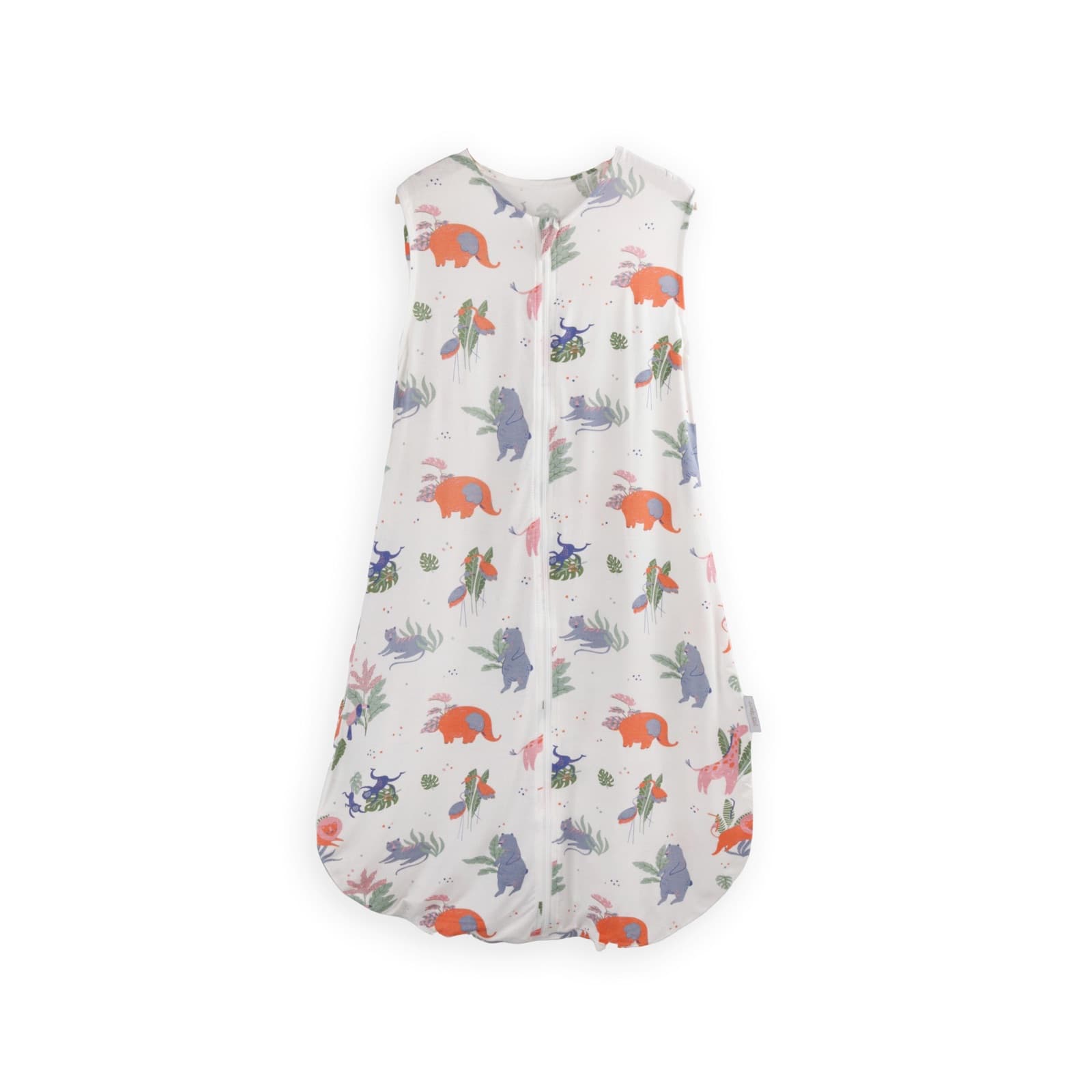
A sleep sack is what happens when the swaddle grows up. A wearable blanket that can't be kicked off, ridden up, or draped anywhere it shouldn't be.
In Singapore it solves the one real cold problem we have, the air-conditioned night, without asking the fabric to do anything but breathe. This is how to choose one: TOG, sizing, and what goes underneath.
What TOG means, and what TOG for Singapore
TOG measures thermal resistance, how much warmth a fabric keeps in. A 2.5 TOG sack belongs to an English winter. Here the working range is narrow and light.
| Room temperature | TOG | What goes underneath |
|---|---|---|
| 27-30°C, fan only | 0.2–0.5 | Short-sleeve onesie, or a diaper alone |
| 24-26°C, gentle air-con | 0.5–1.0 | Short- or long-sleeve onesie |
| 22-24°C, cold sleepers' air-con | 1.0 | Long-sleeve onesie |
| Any night | — | Judge by the chest and neck, never the hands. Warm and dry is right. |
Bamboo complicates the number kindly. Because it wicks, a bamboo sack of a given TOG feels less stuffy than the cotton equivalent, so ours are in that light band and manage both kinds of night.
The room it is worn in
How it should fit
Snug where it must be, generous where it may. The neckline should be close enough that she can't slip down inside, and the test is 2 fingers between fabric and chest at the collar, no more. Armholes hold without pinching.
Below the chest a good sack is a tent. Room for legs to bend, kick and fall into the frog fold growing hips need. Size by weight and length. Age is a poor guide. Between sizes, take the smaller one for the neckline's sake.
When to move from swaddle to sack
At the first sign of rolling, usually 2 to 3 months. Swaddle retires, sack begins.
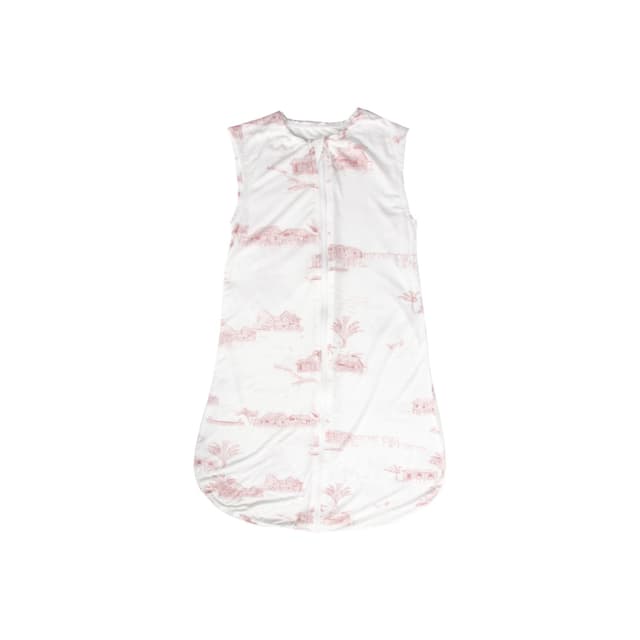
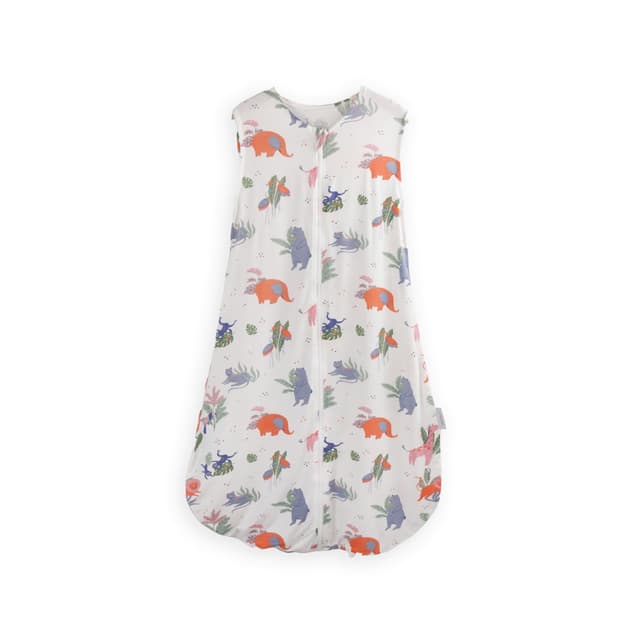
Arms come free, the fabric keeps the familiar held feeling, and bedtime survives the transition better than most parents expect. Ours run from 6 months into toddlerhood in the same prints as the swaddles they replace, which makes the handover feel less like a change and more like a graduation.
Why bamboo for a sleep sack
A sack is worn 11 hours at a stretch, directly over sleeping skin, in a room whose temperature changes twice a night. Bamboo rayon's talent is moving moisture away before it becomes damp. That's the job.
It washes the way the swaddles do. Softer with time, unbothered by a daily machine cycle, kind to the eczema-prone skin this climate produces.
One sack for the cot and one for the wash. The pair covers every night until the blanket years.
Mentioned above
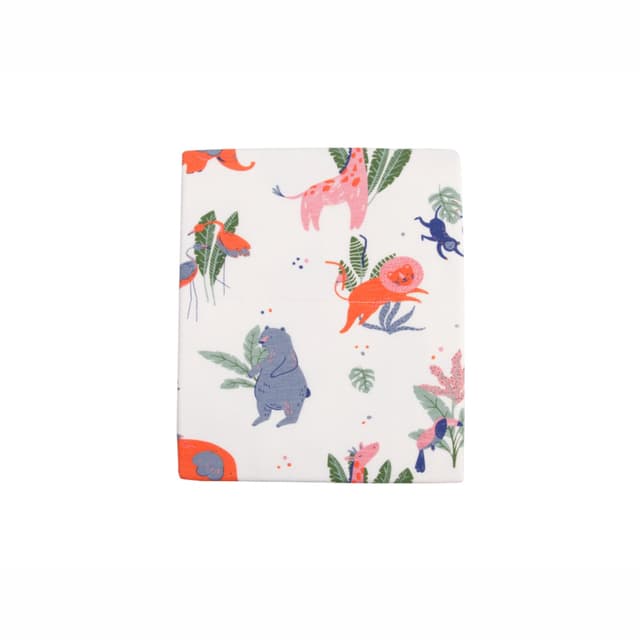 2 Layer Blanket (120x120cm)S$85.00Shop now
The TOG table, and why most of it doesn't apply here
TOG charts that come with sleep sacks are written for bedrooms in temperate countries. Almost the whole range is irrelevant to a flat in Singapore. Know that before you buy the wrong one.
| Room temperature | TOG | Underneath | Applies here? |
|---|---|---|---|
| 27°C and above | 0.2 or a sheet only | Short-sleeved bodysuit, or nappy only | Yes. Most flats without air-con overnight |
| 24–27°C | 0.5 | Short-sleeved bodysuit | Yes. This is the Singapore default |
| 20–24°C | 1.0 | Long-sleeved bodysuit | Occasionally. A hard air-conditioned room |
| 16–20°C | 2.5 | Long-sleeved bodysuit plus footed sleepsuit | Rarely, and only if you run air-con very cold |
| Below 16°C | 3.5 | Not relevant here | No |
For most families here: 0.5 TOG, and 1.0 only if the bedroom is air-conditioned hard all night. A 2.5 bought from an overseas site is the commonest and most expensive mistake in this category, and it's unsafe in a warm room. I bought one, I think in 2024. It's in a drawer.
2 things the chart can't tell you. The timer is the real variable, because a room at 24°C at midnight and 29°C at 5am has spent the night crossing 2 rows of that table, and the sensible answer is to dress for the warmer half. The check that overrides everything is your hand on the back of her neck or chest. Warm and dry is right. Damp means take a layer off.
What it costs over the time you'll use it
A sleep sack is used from roughly the point swaddling stops to somewhere past the second birthday, in sizes. That's the part people forget when comparing prices.
| Size | Roughly | How many you need | Why that number |
|---|---|---|---|
| 0–6m | From when swaddling stops | 2 | One on, one in the wash. Washed often at this age |
| 6–12m | Once she outgrows the first | 2 | Same reasoning |
| 12–24m | Walking, still in a cot | 2 | Fewer accidents, still washed weekly |
| 24m+ | Until she moves to a duvet | 1–2 | Often the last one you buy |
6 to 8 sacks across 2.5 years. Work out cost per size band. A cheap sack that pills after 20 washes has to be replaced inside a band and the arithmetic reverses.
Where a cheaper one is fine: daytime naps, where you're in the room. Spend on the 2 you use overnight, washed most and worn 11 hours at a stretch.
Coming from a swaddle?
This guide is general information, written to help you understand a topic and ask better questions. It is not medical advice and does not replace your own doctor, midwife or paediatrician. Anything that worries you about your baby belongs with them.