

27 July 2026 · Nina Aramway
People & Culture · Grandmother of ten
When Should You Stop Swaddling a Baby?
Some questions deserve their answer before anything else, and this is one, because it's a safety question, and safety questions don't wait for the anecdote. You stop swaddling at the very first signs of rolling, which for most babies falls around two to three months. Not the first confident roll. The first attempt, a tip to one side, a kick that carries her over during play, a hip worked up off the cot when you weren't looking. This is the rule I'd most want a grandmother of my generation to have got right, and it's the one we were least clearly told, and I include myself. A baby who reaches her tummy with her arms held inside a swaddle can't push herself back, and that's a serious safe-sleep risk, so when in doubt, stop early, because no stretch of sleep is worth another week of waiting, however good the stretch has been. There's a number behind that rule, and almost nobody is given it.
In 2016 Anna Pease and colleagues at the University of Bristol pooled four case-control studies, 760 SIDS cases against 1,759 controls, gathered across parts of England, Tasmania and Chicago over two decades, and swaddling on its own didn't reach statistical significance: an odds ratio of 1.58, with a confidence interval of 0.97 to 2.58 that crosses one, which is the statistician's way of saying not proven.
What did reach significance was the combination. A swaddled baby placed on her front carried an odds ratio of 12.99, on her side 3.16, and the risk rose with age, with babies of six months and over carrying the highest figure at 2.53, which is the age at which nobody should still be wrapping.
Read those together and the rule writes itself. The danger isn't the wrap. It's a wrapped baby who can reach a position she has no way out of, and the first roll is the announcement that she can.
It's a hard thing to give up, and you're allowed to say so, because the swaddle has been the best sleep tool in the house and setting it aside can feel like volunteering for worse nights, and it may be, for a week. But this milestone doesn't negotiate, and the kind thing is to plan the transition so that it doesn't catch you out at two in the morning with a baby on her front.
The signs it is time to stop
Any one of these is enough. You aren't waiting for all of them, and waiting is the risk.
- Any attempt at rolling, even a strong sideways lean during tummy time or in the cot.
- She breaks out of the wrap overnight, leaving loose fabric near her face.
- She fights the swaddle at bedtime where she used to settle into it.
- The startle reflex has plainly faded, and the wrap is no longer doing much work.
- She's around two to three months old, even if none of the above has arrived yet.
Rolling can come overnight, quite literally. Many parents see the first roll during afternoon play and retire the swaddle that same evening. That's exactly right.
What age should you stop swaddling?
Two to three months for most babies, but age is the weaker signal and rolling is the stronger one, and if the two disagree the rolling wins, every time. Some babies are ready at six weeks, a few are still safely wrapped at fourteen, and the table is a guide to what you should be watching for, not a date to hold out until.
| Age | What is usually happening | Swaddle? |
|---|---|---|
| 0-6 weeks | Moro reflex strong, no rolling | Yes, arms in |
| 6-10 weeks | Reflex fading; watch for sideways leaning | Yes, but start watching |
| 2-3 months | First rolling attempts for most babies | Stop at the first attempt |
| 3-4 months | First full roll, front to back | No. Arms free, sleep sack |
| Any age | Any rolling attempt at all | Stop that day, whatever the age |
How do you transition out of the swaddle?
Some babies let the swaddle go without a backward glance, and others want a week or two of gentler weaning, one arm out for a few nights, then both, then the sleep sack, a slow loosening and never a sudden absence, and you'll know which sort you have by the second night.
Keep the rest of bedtime exactly as it was while you make the change. The same feed, the same dim room, the same song, because when only one thing moves she adjusts sooner, and you can tell whether any fussing is about her arms or simply an ordinary off night, of which there are many. More than I remember, I suspect.
If she sleeps in a velcro swaddle wrap, this stage is mercifully simple: one arm free, the body still snugly held.
Mentioned above
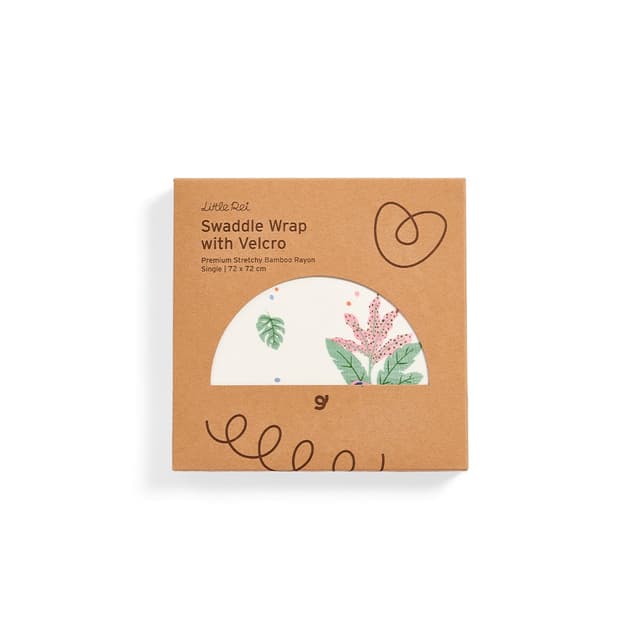 Swaddle Wrap with VelcroS$55.00Shop now
What should baby sleep in after swaddling
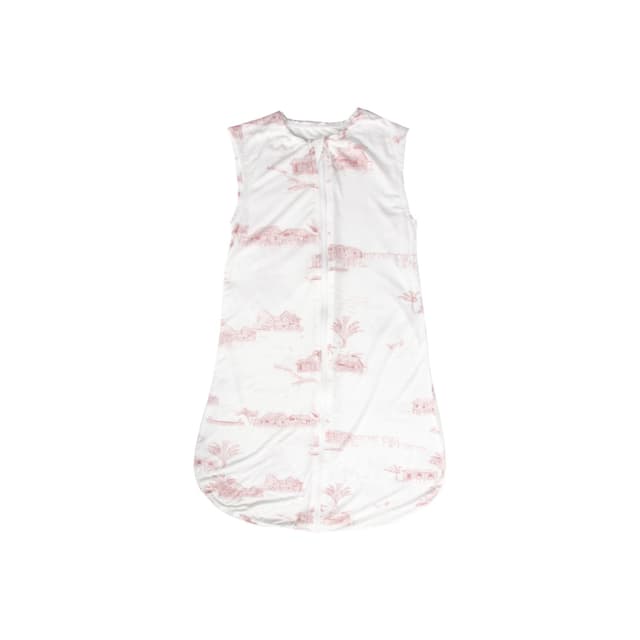
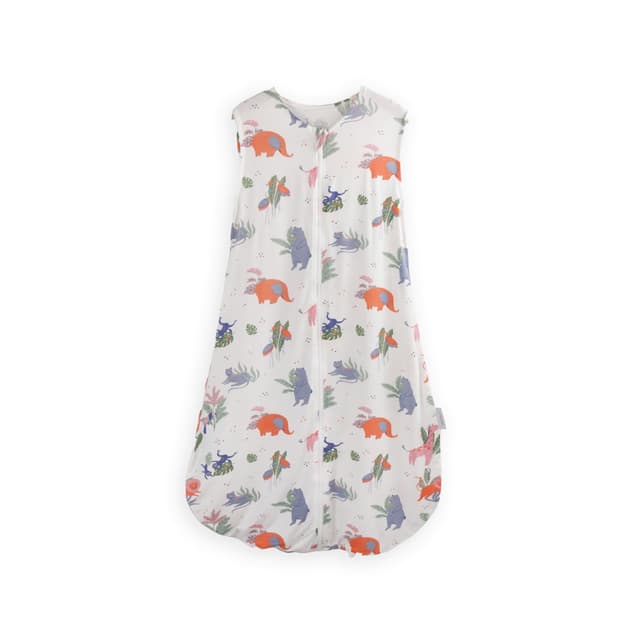
A sleep sack, and it's the natural next chapter. She stays covered with nothing loose in the cot, her arms are free for rolling and for finding her own comfort, and in our warm climate a single light bamboo layer is all she needs, and you should expect a few unsettled nights while her arms learn their freedom, and they pass.
Free hands become their own consolation. Within a week or two most babies find their fists to suck and a way of settling that belongs to them, small skills the swaddle had been postponing, and what feels like a loss at first is the next stage arriving on time, which is how most losses in the first year turn out.
On the handover
Whether you still need the swaddles afterwards
You do, and this is the happy ending. A good bamboo muslin square graduates, pram shade, nursing cover, burp cloth, picnic blanket, and ours only take more softness from washing, so the piece you wrapped her in stays in service for years after the wrapping stops, and I have one that's older than its owner's children.
Mentioned above
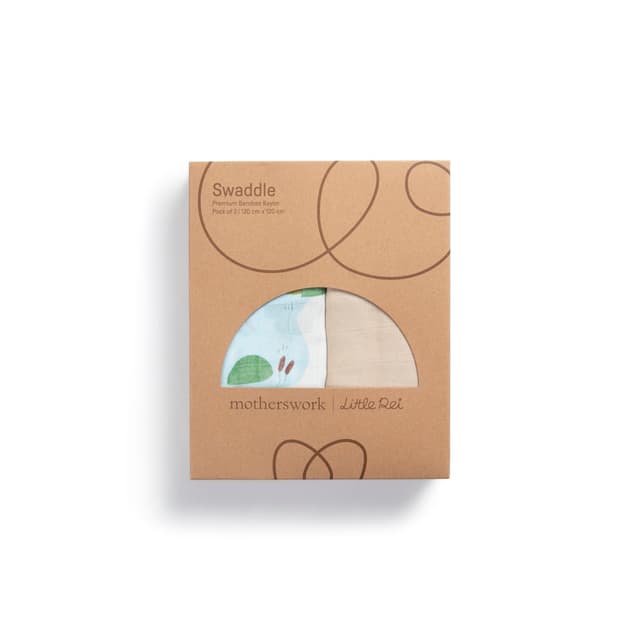 Bamboo Swaddles (2 pc)S$49.00Shop now
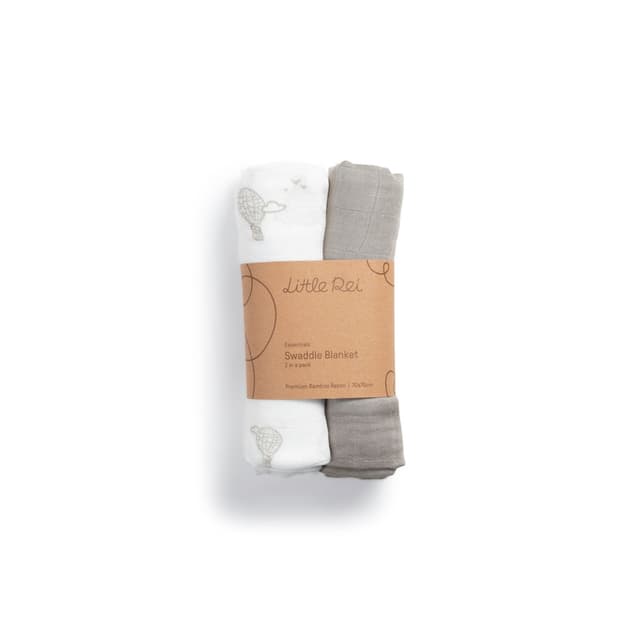 Travel Size 70sq Bamboo Swaddles - 2pcS$19.90Shop now
If you're unsure whether she's ready to stop, or the transition leaves her truly unsettled, raise it at your next paediatrician visit, but on the timing itself be decisive: first signs of rolling, swaddle away, arms free. A week of broken sleep is a fair price for a safe cot, and the better nights return sooner than you think.
What I read before I wrote
- Pease et al. (2016), Pediatrics 137(6): Swaddling and the Risk of Sudden Infant Death Syndrome: A Meta-analysis
- The Lullaby Trust: Swaddling and slings
- American Academy of Pediatrics: A Parent's Guide to Safe Sleep
- NHS: Reducing the risk of sudden infant death syndrome
This guide is general information, written to help you understand a topic and ask better questions. It is not medical advice and does not replace your own doctor, midwife or paediatrician. Anything that worries you about your baby belongs with them.