

10 April 2025 · Nina Aramway
People & Culture · Grandmother of ten
Soothing and Safe: How to Swaddle a Newborn
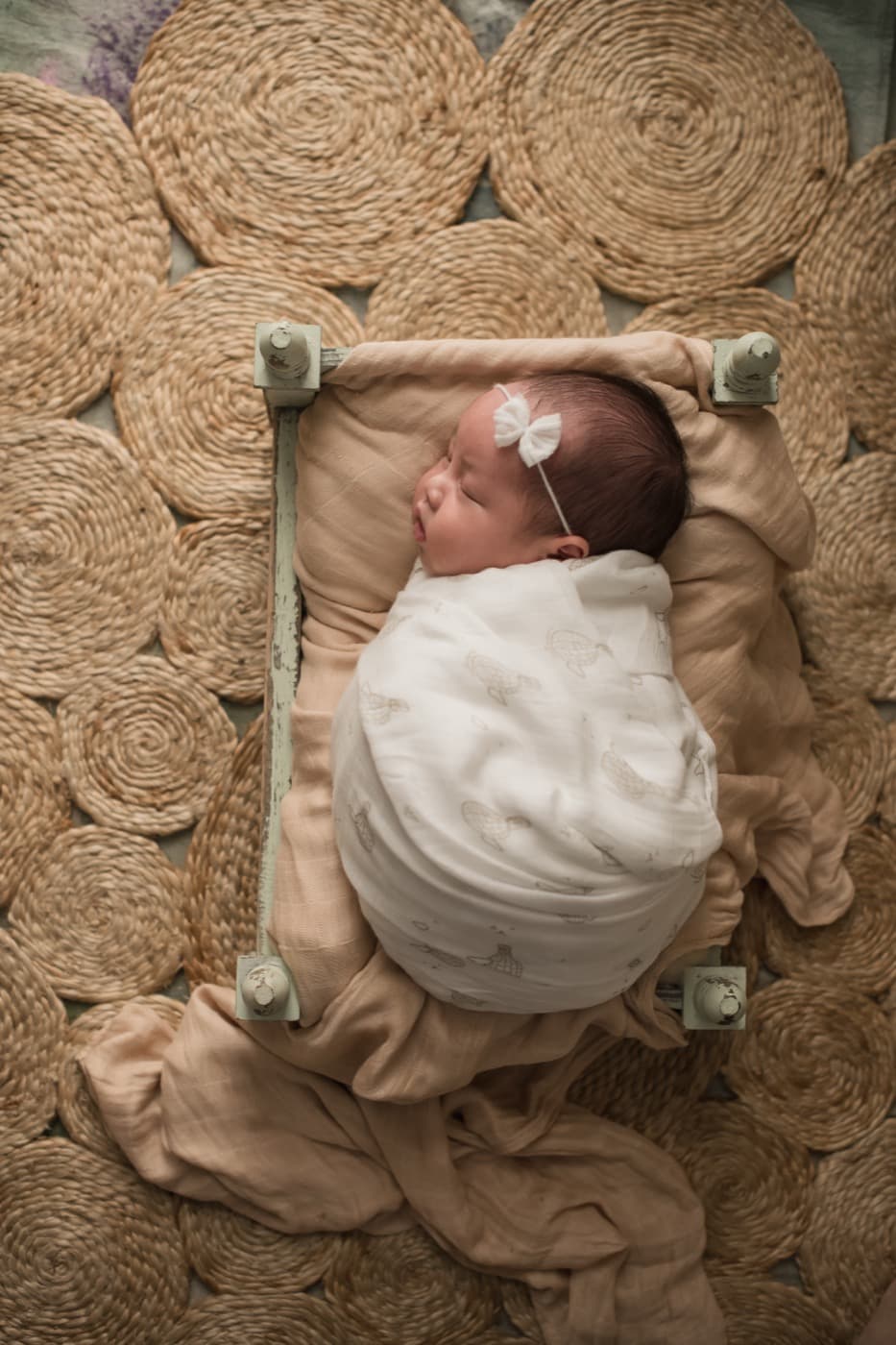
There's a moment in the maternity ward when a nurse folds a square of muslin around your baby in four unhurried movements, and the crying simply stops, and you look at her as though she's done a card trick.
It looks like sleight of hand, but it isn't. It's a good length of fabric and a sequence your own hands will learn a great deal faster than you expect, and I say that having taught it to five of my own children when their turn came, and to a Swedish son-in-law who was convinced he couldn't.
Muslin is what makes the wrap kind. An open weave lets air through the layers, so your baby is held without being warmed, which is the whole art of swaddling in a climate like this one, and bamboo muslin does it best of all, cool to the touch on a humid evening and softer after every wash than it was before, which is the opposite of most things.
What do you need before you start?
Very little. A flat surface, a baby who's fed and drowsy and certainly not furious, and one generous square of muslin, and our full-size bamboo swaddles are cut large enough to tuck properly, so a single piece, in a print you find yourself returning to, is a quiet way to begin before you commit to a set.
Mentioned above
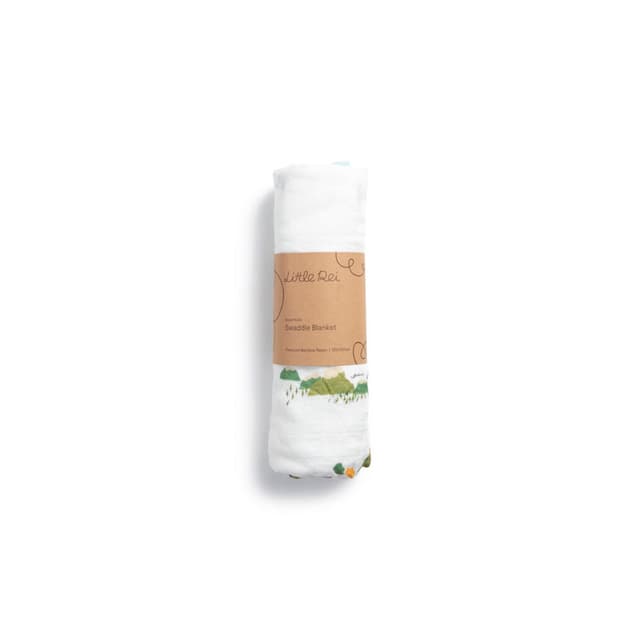 Bamboo Swaddle Single (Printed)S$29.00Shop now
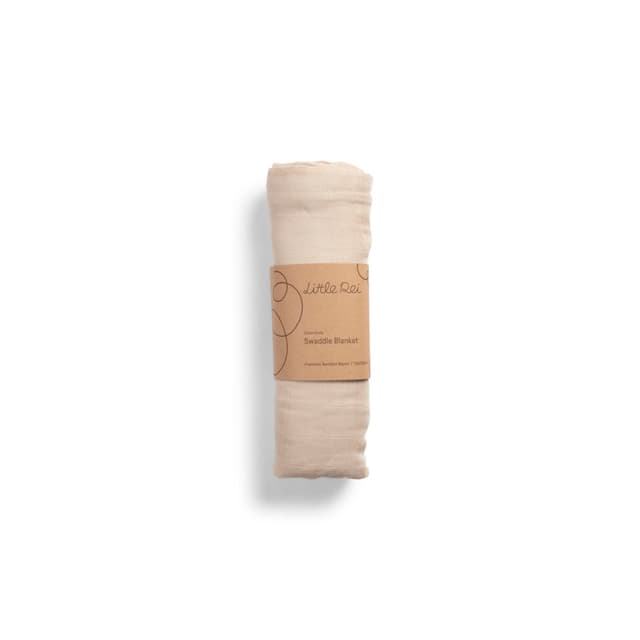 Bamboo Swaddle Single (Solid Colours)S$26.00Shop now
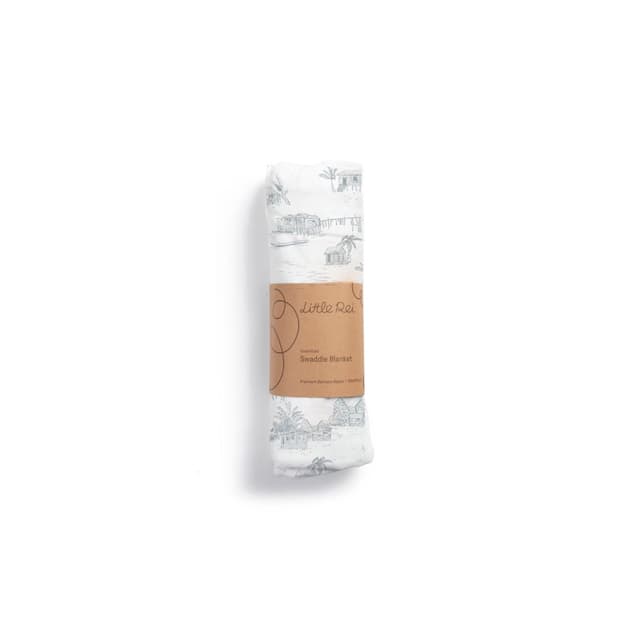 Bamboo Swaddles Single (Rustic Print)S$29.00Shop now
Timing does half the work. Wrap after a feed and a fresh nappy, in the lull before sleep arrives, and the ritual begins to mean something, because the cool fabric against her skin becomes its own signal that the day is closing, and babies read that signal long before they read anything else.
How do you swaddle a newborn step by step?
This is the diamond wrap, the one taught in maternity wards the world over, and the one my mother used. Read it through once by daylight, and keep it open beside the cot for the first few evenings, because nobody remembers step three at midnight.
- Lay the swaddle flat as a diamond and fold the top corner down to make a straight edge.
- Place your baby on her back, shoulders just below the fold, head clear of the fabric entirely.
- Ease her left arm straight, draw the left corner across her body and tuck it beneath her right side.
- Bring the bottom corner up over her feet, leaving the fabric easy around the hips so her legs can bend and fall open.
- Draw the right corner across her body and tuck it snugly under her left side: firm at the arms, unhurried at the hips.
Snug at the chest, loose at the hips. Two or three of your fingers should slide easily between muslin and chest.
How tight should a swaddle be
Firm enough to hold through a night of small movements, and never so tight that it presses her legs straight or demands anything of her breathing, because the hips want room to fall open into that small frog fold, and a swaddled baby sleeps on her back, always, in a cot that applies nothing else.
Warmth is the other thing to watch. On our nights a single layer of muslin over a nappy or a light onesie is enough, so rest a hand at the back of her neck, and damp means too warm, so take a layer away and let the weave do its work, and stop swaddling entirely at the first signs of rolling, usually around two to three months, and earlier if she's early.
If the folding defeats you at three in the morning, there's no shame in it, and it has defeated me. A velcro swaddle wrap holds the arms gently and keeps the hip pouch roomy, and demands nothing of your hands but two soft closures.
Mentioned above
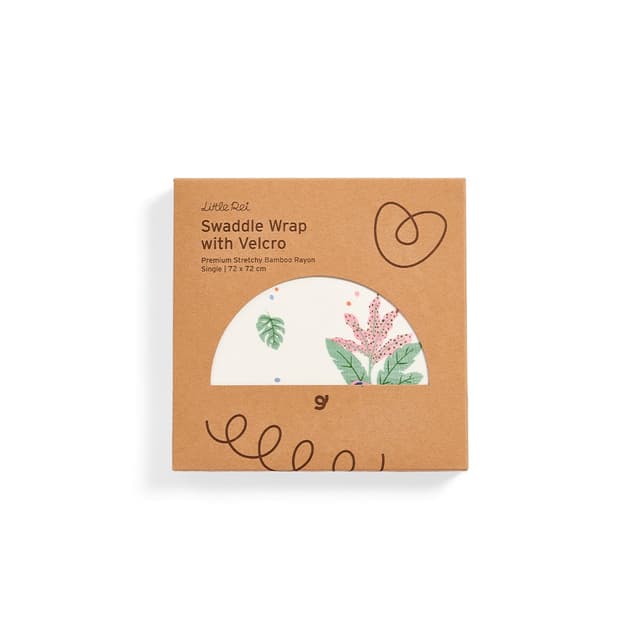 Swaddle Wrap with VelcroS$55.00Shop now
Why choose bamboo muslin for swaddling in Singapore
Because here the fabric counts for as much as the fold. The air stays warm and heavy the year round, and bamboo muslin answers it, lighter than cotton muslin, quicker to move moisture away from her skin, and inclined to take softness from washing and never to lose it, which my grandmother would have found suspicious and then adopted.
That breathability is the difference between a settled baby and a long night, because wrapped in something heavy on a thirty-degree evening she'll fight the fabric and sweat through it, and in the right muslin she goes still, held without being hot.
Swaddling is safe when a small number of conditions hold, and it's these, and not the fold itself, that count, so read them once properly and never absorb them in pieces.
- On the back, every sleep. A swaddled baby who ends up face-down can't free their arms to lift or turn their head, which is what makes position non-negotiable and never merely advisable.
- Stop at the first sign of rolling, usually around two to three months. Not when rolling is reliable, at the first sign.
- Nothing loose near the face. The wrap shouldn't be able to work its way up over the nose and mouth.
- Two or three fingers between the muslin and the chest. Breathing must be entirely unrestricted.
- Hips loose enough to bend and fall open: see below, because this is the part most often got wrong.
- Never swaddled in a car seat, sling, bouncer or swing. The wrap prevents a baby from adjusting a position that has become unsafe.
- One light layer underneath and no more, and check the back of the neck, never the hands.
- Never with a hat on, and never with anything else loose in the cot.
Why the hips matter
A newborn's hip joints are still forming, and the position they're held in affects how they form. Wrapping the legs straight and pressed together, which is what a tight wrap naturally does if you aren't thinking about it, raises the risk of developmental dysplasia of the hip, where the joint doesn't seat properly in the socket, and that's the one thing about the old way that was wrong. I'm told there were others. I didn't see them.
This isn't folklore. Van Sleuwen and colleagues reviewed the swaddling literature for Pediatrics in 2007 and found the hip risk attaches specifically to wrapping with the legs extended and pressed inward, not to swaddling as such, and the International Hip Dysplasia Institute has built its guidance on the same distinction.
Which is the good news in it: you don't have to choose between a settled baby and her hips, because firm across the arms and chest and loose below the waist solves both problems at once, and costs nothing.
Keep the wrap firm across the arms and chest and roomy from the waist down, so the legs can stay in that small frog fold and move freely, and if you can only remember one thing about swaddling safety, this is a good candidate: snug at the top, generous at the bottom.
If the wrap will not hold, or she objects to it
When not to swaddle
Two of these are about age and one is about the room, and all three are absolute, and none is a judgement call, whatever anybody's aunt tells you.
- Once rolling has started, or once they're consistently fighting their way out.
- During skin-to-skin, which works better with the baby against you unwrapped.
- While feeding, particularly in the early weeks, when the arms and hands are part of how a baby latches and signals.
- If a baby is unwell or has a temperature, when the priority isn't adding heat.
- If they clearly dislike it. A minority of babies settle better with arms free from the beginning, and that's a preference, not a problem to be solved.
When the swaddle alone isn't enough
A wrap calms the startle reflex, and for many babies that's most of the battle, and when it isn't, adding one or two other inputs usually does more than tightening the fabric, which is the instinct, and the wrong one, and I had it for years.
- Side-lying or over the shoulder to settle, then back into the cot on the back to sleep.
- Steady low sound. Not silence, and not loud, the household hum a baby was used to before birth.
- Movement. Slow and rhythmic beats fast and vigorous; walking, rocking, or a pram in a corridor.
- Something to suck on, once feeding is established and a dummy won't confuse it.
- Fewer inputs, not more. A baby who's already overstimulated needs the room dimmed and the talking to stop, with no further technique layered on top.
- Check the simple things first: hungry, wind, nappy, too warm. In that order, most evenings.
If the crying has pushed you past your limit, put the baby down somewhere safe and step out of the room for a few minutes, because that's the correct response and never a failure of one, and it's the thing to decide in advance, in daylight, before you need it.
Once the wrap becomes part of your evenings, a set of two or three keeps a fresh square folded in the drawer while another dries on the rack, so practise a few times in daylight, and your hands will remember the sequence long before you do.
This guide is general information, written to help you understand a topic and ask better questions. It is not medical advice and does not replace your own doctor, midwife or paediatrician. Anything that worries you about your baby belongs with them.