

11 August 2026 · Nina Aramway
People & Culture · Grandmother of ten
What Is Swaddling? The Complete Guide
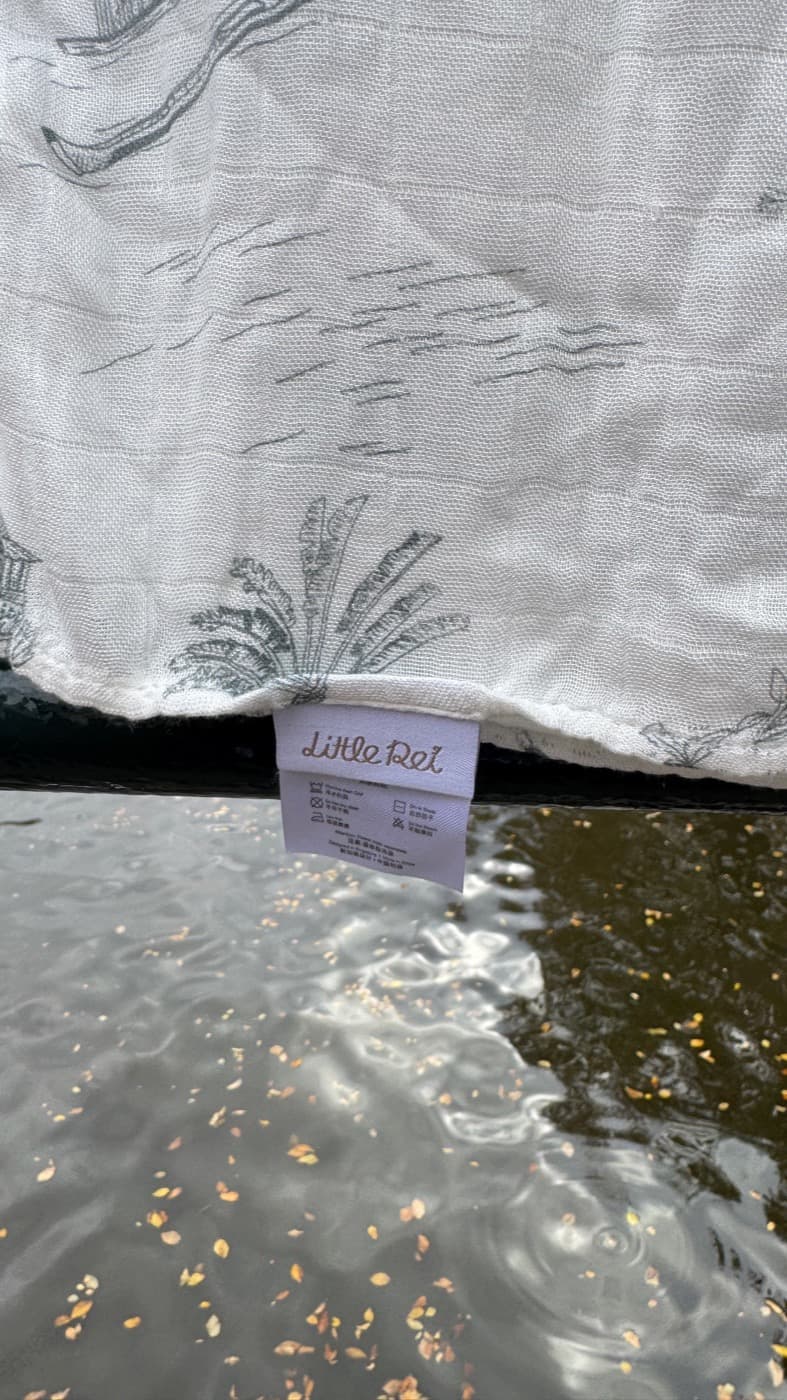
Nobody explains swaddling before you need it. In the maternity ward somebody else does it to your baby in about four seconds, and then you go home with a stack of muslin squares, a vague memory of a fold, and a baby who has opinions.
I've watched that happen five times as a mother and ten times as a grandmother, in three countries, and the four seconds have never once been enough. So here is the explanation, with links to everything else we've written on it.
What it is
It means wrapping a baby snugly in a thin cloth so that her arms are held against her body while her hips and legs stay free to move. It calms the startle reflex through the newborn weeks, and it stops at the first sign of rolling, which for most babies comes at around two to three months, often earlier than the parents were hoping.
Fabrics, velcro wraps, arms-up designs and the argument about naps are all details on top of that, and I'll get to each of them.
One thing to say at the start. Swaddling is ancient and nearly universal. My mother did it in Greece, and her mother before her, and I've seen versions of it everywhere I've lived, from Thessaloniki to Hong Kong by way of a Swedish mother-in-law who had her own views. Baby advice changes every decade, so a practice that has lasted this long is reassuring.
Why it works
Three things happen at once, and each makes the others stronger.
It contains the Moro reflex. A newborn startles at almost nothing (a sound, a change in the light, the feeling of falling as she finally relaxes) and her arms fly wide, which wakes her from a sleep she had only just entered, and then you start again. Wrapped, she still startles, but it doesn't wake her.
The pressure is familiar. For months she was held evenly on every side, and an open cot is enormous by comparison, so even pressure across her body is the nearest thing to the womb she has only just left.
And it becomes a cue. Cool fabric, dim room, feed, cot, in that order every evening. Babies respond to repetition long before they understand any of it, so the wrap brings the whole bedtime routine with it, to a grandmother's flat or across a change of continent, which I've seen more than once.
When it starts, and when it has to stop
Day one, if you like. It ends a good deal earlier than almost anybody expects.
The ending isn't optional. It's the part I got wrong with my own children, all of them. Or four of them. I forget whether the fifth was ever swaddled. A baby who gets onto her tummy with her arms pinned inside a wrap can't push herself back up, and that's a real danger, not an over-cautious rule.
| Age | What is happening | What to do |
|---|---|---|
| 0-6 weeks | Moro reflex at its strongest; sleep is fragmentary | Swaddle for naps and nights, arms in |
| 6-10 weeks | Reflex fading; she may start fighting the wrap | Keep swaddling, watch for rolling attempts |
| 2-3 months | First rolling attempts, often during play | Stop swaddling. Move to arms-free sleep |
| 3 months + | Rolling both ways; arms needed to reposition | Sleep sack only. Muslins become pram covers |
Start here
Is it safe?
Done properly, yes, and every major safe-sleep authority recommends it for newborns. The rules are few and they don't bend. On her back, every sleep. Snug at the chest and loose at the hips. Face clear of fabric. Nothing else in the cot. Stop at the first sign of rolling.
Two of those come up so often that each has its own page. Read both before the first night, not after it, which is when most people get round to them.
On safety
What to wrap her in
One large square of thin, breathable cloth, about 120cm across, which is big enough to tuck properly. A smaller one works for a few weeks and then stops working as she grows, usually at the worst possible hour.
The weave counts for more here than almost anywhere else. A swaddled baby can't take a layer off or pull an arm free to cool down, so the fabric has to keep her temperature right for her, and it had better be good at it.
Mentioned above
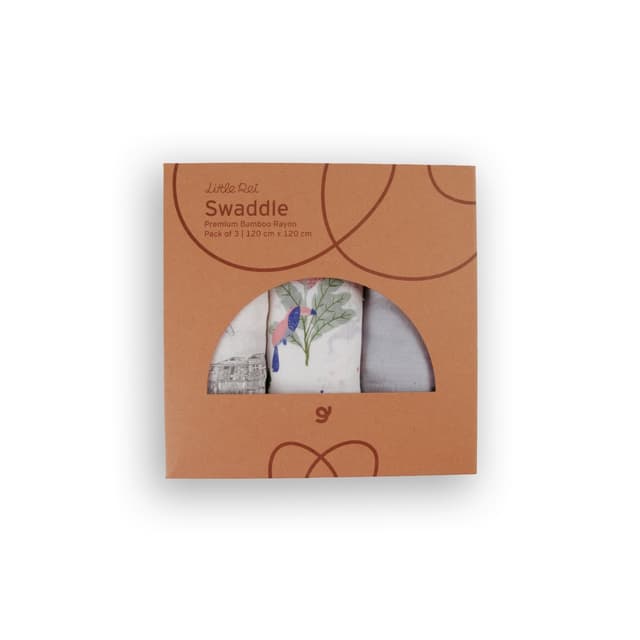 Bamboo Swaddles (3pc)S$69.00Shop now
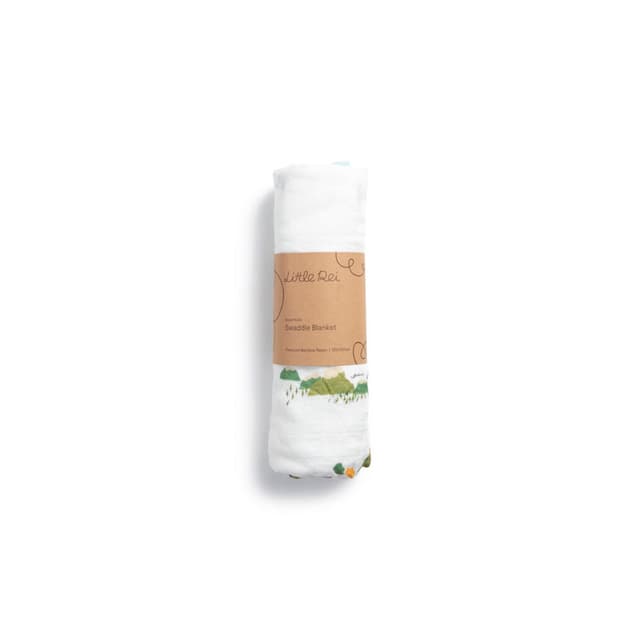 Bamboo Swaddle Single (Printed)S$29.00Shop now
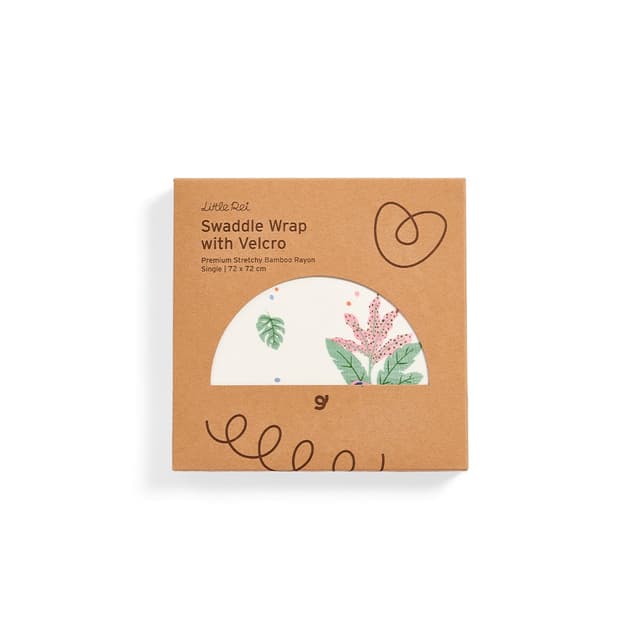 Swaddle Wrap with VelcroS$55.00Shop now
Bamboo muslin is our answer to that, and I won't pretend we're neutral. It's airier than cotton, it draws moisture away from the skin instead of holding it there, and in a flat where nothing else dries overnight it's dry on the rack by morning, which in Hong Kong in August is no small thing.
If the folding defeats you at three in the morning, as it does most people eventually, a velcro wrap gives you the same hold with none of the origami. There's no prize for the traditional method, and I say that as the traditional method.
On fabric and layers
The questions that arrive in week three
The first fortnight is about technique. After that it's troubleshooting, and the questions are the same in every household and every decade.
She escapes it every night. She screams while you wrap her. Do naps count? What happens when it ends?
Troubleshooting
It's a short chapter, eight or ten weeks. Then the muslin becomes a pram shade, a nursing cover, and eventually the thing a five-year-old won't go on holiday without. I still have one of my daughter's, and it's softer now than anything you can buy.
Read the technique once. Get the safety rules exactly right. Improvise everything else.
Where this comes from
- The Lullaby Trust: Swaddling and slings
- American Academy of Pediatrics: A Parent's Guide to Safe Sleep
- International Hip Dysplasia Institute: Swaddling and hip health
This guide is general information, written to help you understand a topic and ask better questions. It is not medical advice and does not replace your own doctor, midwife or paediatrician. Anything that worries you about your baby belongs with them.