

What Should a Baby Wear to Sleep in Singapore: With and Without Air-Con?
Other countries dress their babies by season. We dress ours by remote control. The same cot in the same room can be 30°C with the windows open or 22°C an hour after the air-con goes on, so in Singapore you dress your baby for the room, not the weather outside.
There isn't one right outfit, though I wish there were, because the room's temperature, how humid it is, whether a fan is moving the air, what the clothes are made of, how well she is that week and plain individual difference all play a part. What helps is a sensible starting point for each kind of night and a reliable way to check her, which is about as much as anyone can manage at eleven at night.
Start with a room thermometer near the cot. The number on the air-con remote is what the unit is aiming for, measured at the unit, and it isn't necessarily what the cot is getting, so put a thermometer where she sleeps and believe that instead.
What should baby wear to sleep with air-con on?
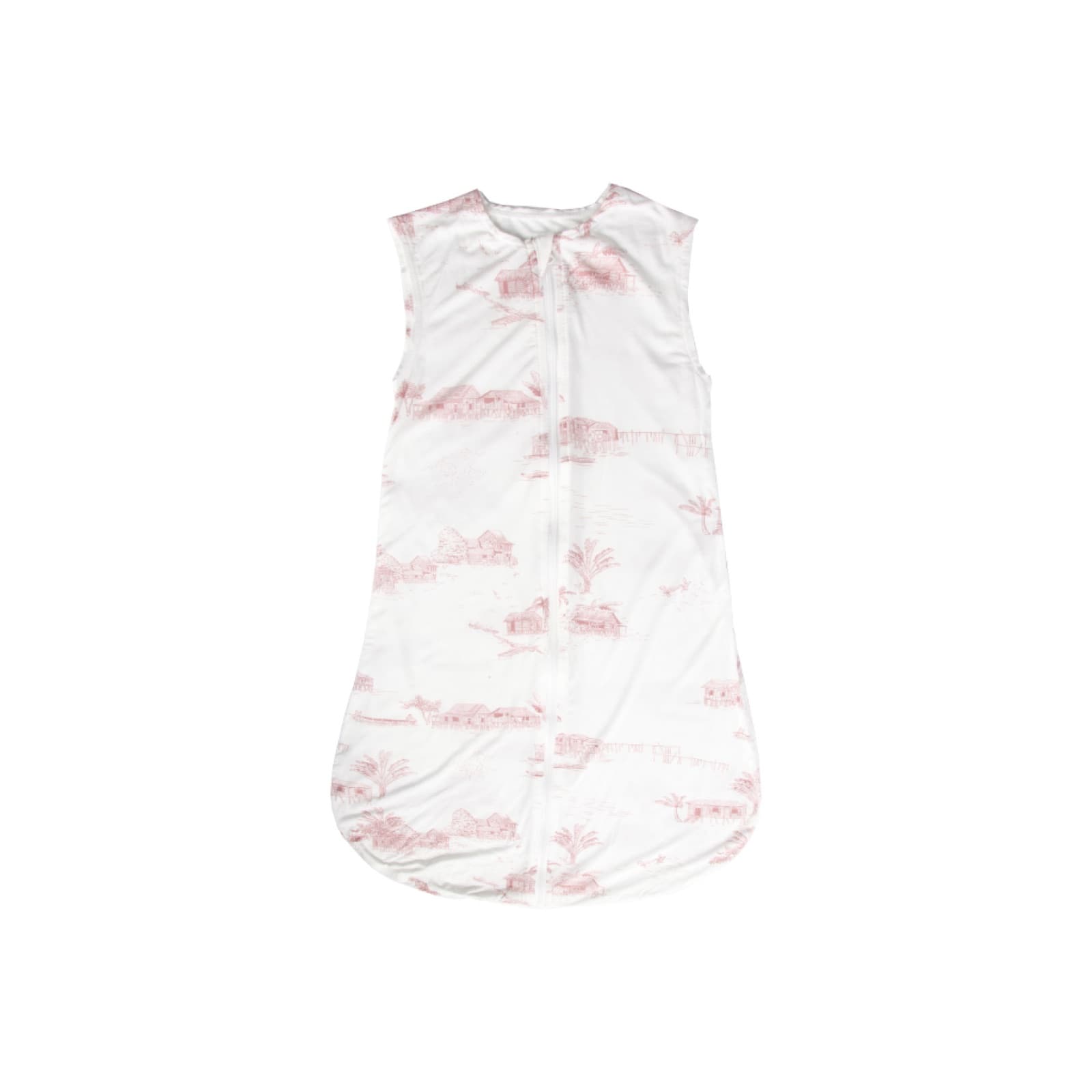
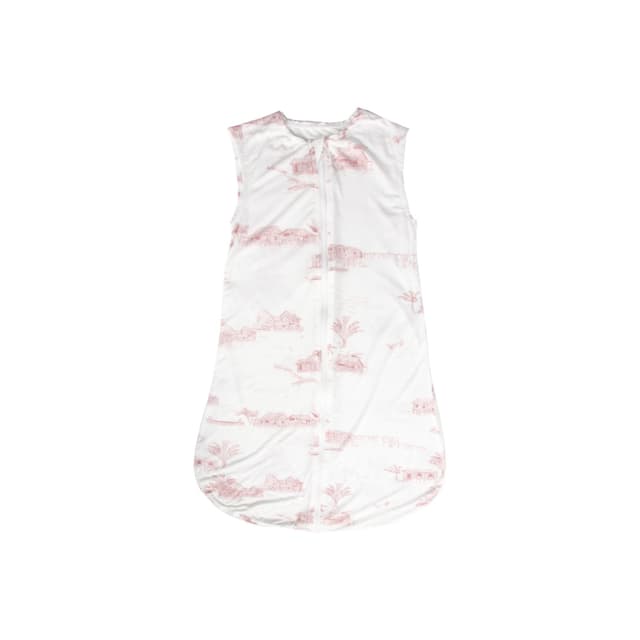
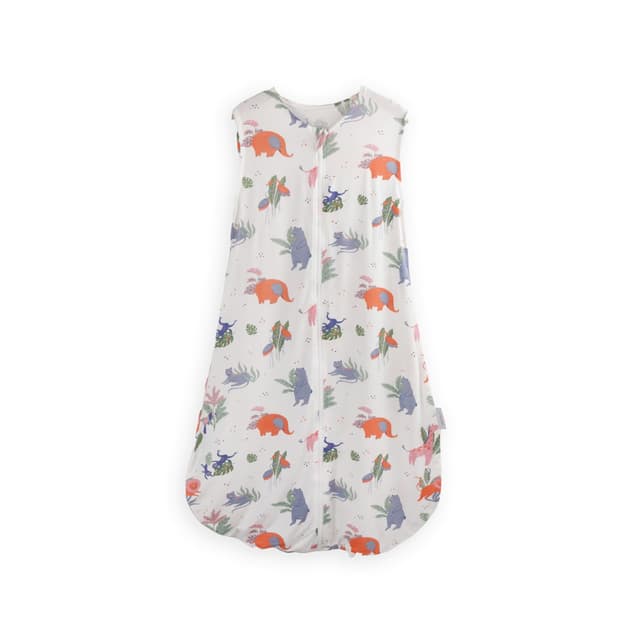
For a room at 22-24°C, a common starting point is a long- or short-sleeved onesie with a sleep sack over it. The sack does what a blanket can't: it stays on at 4am, it can't ride up over her face, and it keeps her tummy covered when she kicks. Our sacks start at 6 months and don't carry a tested TOG rating, so treat this as a place to begin and then check her, as below.
What should baby wear without air-con?
For a fan-only night at 27-30°C, one light layer is usually plenty, such as a short-sleeved onesie on its own. If you swaddle a newborn who isn't showing any sign of rolling, the wrap counts as part of what she's wearing, so keep what's underneath light, follow the wrap maker's instructions and feel her chest. A fan moves the air, which is pleasant, but it doesn't make up for too many layers. In this climate the usual problem is overheating, not cold, and overheating also makes sleep less safe.
By sleepwear format
How to know if your baby is too hot or too cold
Her hands and feet are usually cooler than the rest of her, which is normal, so they're a poor guide on their own. Feel the back of her neck or her chest instead. Warm and dry is right, damp or sweaty means one layer too many, and cool means add one. Check ten minutes after she settles, not as you leave the room. One warning from my own house, because I got this wrong for years. Everyone will tell you a child who throws her covers off is too hot. That's usually true, but not always. Mine threw hers off every night and was cold underneath, because she couldn't stand the weight and feel of the blanket and would rather be cold than have it on her. If you read that as overheating and take a layer away, you make it worse.
So check her neck to judge temperature. Then think about the cover itself: how heavy is it, and would she accept a thinner one? If she kicks off her cover but snuggles up to you for warmth, the problem is the fabric, not the temperature.
A starting point for each kind of night, then, to adjust once you've felt her neck:
- 22-24°C (air-con night): onesie plus a sleep sack that fits her.
- 25-26°C (air-con set gently): short-sleeve onesie plus a light sleep sack, or a light wrap for a newborn who isn't trying to roll.
- 27-30°C (fan only): one light layer.
- Any temperature: nothing loose in the cot, and a sleep sack or swaddle in place of a blanket for the first year. Stop swaddling once she shows signs of trying to roll.
The basic rule: dress baby as you'd dress yourself for that room, then swap the blanket for something that can't slip.
When blankets come in
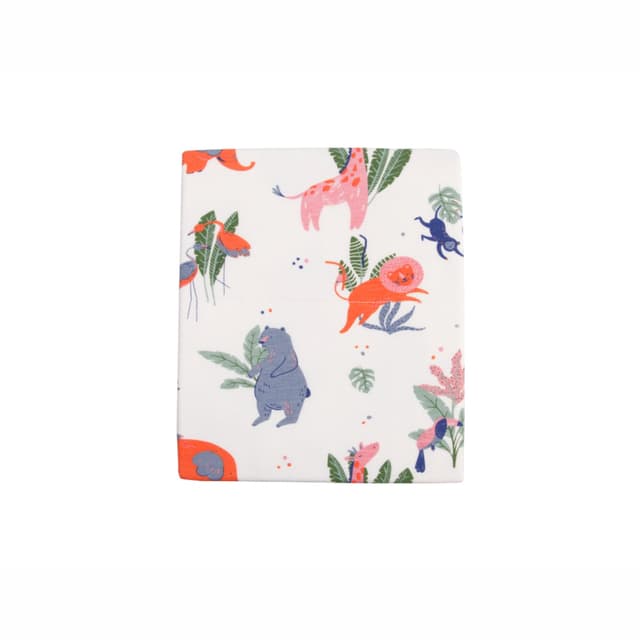
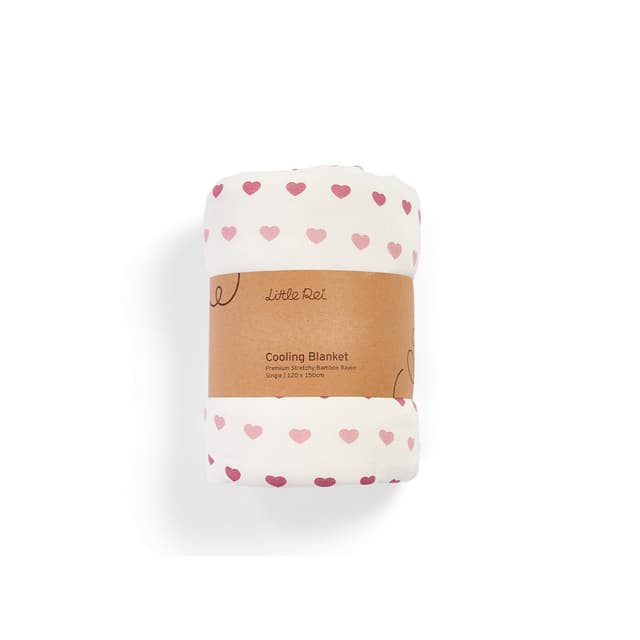
The AAP's advice is to keep blankets and other soft bedding out of a baby's sleep space, and most families leave blankets until well after the first birthday. Even then it depends on the child and the bed, whether she's still in a cot, whether she can pull a blanket off her own face, and the safe-sleep advice you're following, and a wearable blanket is still a perfectly good choice well past one. When you do bring a blanket in, ours are bamboo: a two-layer one for air-conditioned rooms and a lighter one we sell as our cooling blanket.
Sources: The Lullaby Trust: Room temperature and keeping your baby the right temperature · American Academy of Pediatrics: A Parent's Guide to Safe Sleep · NHS: Reducing the risk of sudden infant death syndrome · The Lullaby Trust: Safer sleep advice
This guide is general information, written to help you understand a topic and ask better questions. It is not medical advice and does not replace your own doctor, midwife or paediatrician. Anything that worries you about your baby belongs with them.
Read next: What Should a Baby Wear Under a Swaddle? · Baby Sleep Sack Guide Singapore: TOG Ratings, Air-Con and Sizing Explained
← More on sleepAll 189 guidesShop: Bamboo sleep essentials →