
17 August 2026 · Little Rei
Terrific Thanksgiving Crafts for the Whole Family
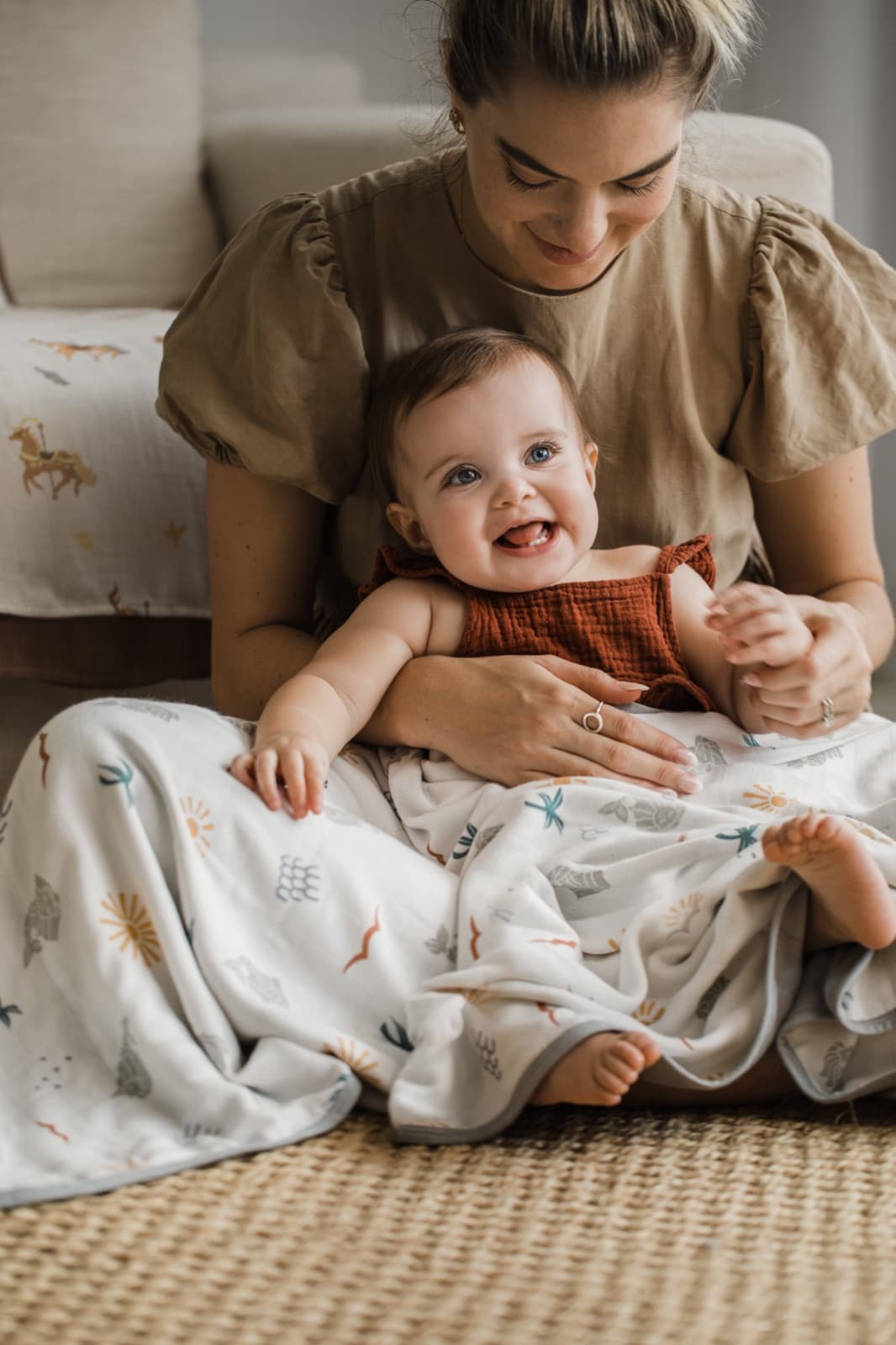
Thanksgiving is a national holiday rather than a global one — the fourth Thursday of November in the United States, the second Monday of October in Canada. If you keep it, the crafts below are built for it. If you do not, they work unchanged as harvest and gratitude activities, which is what nearly every culture marks in some form and what these crafts are actually about.
The rule with a baby or toddler is that the craft has to be doable with no precision. Anything requiring cutting, gluing small pieces or staying on a line is an adult craft the child watches. These are the other kind.
Which crafts work for a baby under one?
- Handprint and footprint turkeys. The classic for a reason: your hand does the work, the child supplies the hand. Washable non-toxic paint, one limb at a time, a bowl of warm water ready before you start.
- A gratitude handprint tree — an adult-drawn trunk with the child's handprints as leaves, added to over several days so it is not one long sitting.
- Leaf printing. Press a leaf into paint, press it onto paper. A baby who can hold a leaf can do this with a hand over theirs.
- A sensory tray of dried corn, oats or uncooked rice for a baby who is past the everything-in-the-mouth stage — and skip it entirely if they are not. Under close supervision only.
- Edible finger paint made from plain yoghurt with a little fruit purée for colour, straight onto the high-chair tray. Removes the supervision problem completely.
Which crafts work from one to three?
- A gratitude jar. Everyone in the house says one thing each day and an adult writes it on a scrap of paper. A toddler's contributions are usually about food or a specific vehicle, and they are the ones you will keep.
- A paper-plate wreath — the child sticks torn paper or pressed leaves onto a ring. Tearing paper is itself a fine motor exercise and toddlers will do it happily for far longer than they will stick anything.
- A table runner made of plain paper taped down the middle of the table, decorated by the children over the week and used on the day.
- Place cards with a thumbprint per guest. Simple, personal, and the child can genuinely do all of it.
- Nature collecting — a walk with a bag, then gluing whatever comes home onto card. The walk is the activity; the card is the excuse.
- Cooking as craft. Stirring, mashing, tearing herbs, pressing pastry. A toddler on a chair at the counter is doing more real work than any craft on this list.
How do you set it up so it does not end badly?
Most craft sessions with small children fail for one of three reasons: they run too long, they have an outcome the adult is attached to, or the setup takes longer than the child's attention span. All three are avoidable.
- Set everything out before the child is in the room. A toddler waiting while you find the paint has already lost interest.
- Plan for ten minutes. If it runs to twenty, that is a bonus rather than the target.
- Let go of the outcome. Every handprint turkey ends up as a brown smear, and the smear is the artefact — the point is the hand, and the date on the back.
- Cover more than you think, including the floor around the chair, and put the child in something you do not care about.
- Have the cleanup ready before you start: warm water, cloths, a bin bag within reach.
- Stop while they are still enjoying it. Ending on a good moment is what makes them want to do it again.
What materials are safe?
- Washable, non-toxic paint only, and check the marking used where you live — AP on art materials, EN 71-3 in Europe, ASTM D-4236 in the United States.
- No small parts for under-threes: googly eyes, pompoms, beads, buttons and sequins are all choking hazards and all extremely popular in craft kits.
- No glitter around babies. It gets in eyes, and it never fully leaves the house.
- Glue sticks rather than liquid glue, and no hot glue guns anywhere near a child.
- Dried food materials — corn, beans, rice, pasta — only for children well past mouthing, and never for under-twos.
- Watch for allergens in edible crafts, particularly nut butters and wheat, and follow your own health service's guidance on introducing them.
How do you run a craft with more than one age at the table?
This is the situation most families are actually in — a baby, an older sibling, and possibly a cousin — and it fails in a predictable way: the older child's project is ruined by the younger one, and everybody ends up upset. The fix is to give each child a different job on the same activity rather than the same job at different levels.
- Separate the surfaces. The baby gets a high-chair tray, the toddler gets a taped-down sheet, the older child gets a corner of the table nobody can reach across.
- Split the roles: the older child cuts and assembles, the toddler tears and sticks, the baby prints a hand. One artefact, three contributors, no direct competition.
- Give the older child something with a real outcome. A five-year-old who wants their turkey to look like a turkey should be allowed to achieve that, not told the mess is equally good.
- Do the baby's part first and get them out. Two minutes of handprint, then a clean-up and a nap, buys the older child twenty uninterrupted minutes.
- Keep a spare of anything precious. The single sheet of good paper will be grabbed.
What about the gratitude part?
A toddler cannot conceptualise gratitude in any abstract sense, and asking a two-year-old what they are thankful for will produce either silence or the name of a snack. That is fine — the practice is what teaches it, not the answer. A daily round of naming one good thing, out loud, at the table, does the work over years rather than in a session.
Keep the artefacts. Date them on the back, badly, in pen. A handprint from a first November is unremarkable in the moment and becomes the single most valuable thing produced that month, which is the honest argument for doing any of this.
Questions parents ask
What Thanksgiving crafts can a baby do?
Handprint and footprint art, leaf printing with a hand over theirs, and edible finger paint made from yoghurt on a high-chair tray. Anything requiring cutting, precision or small parts is an adult craft the baby watches.
When is Thanksgiving?
The fourth Thursday of November in the United States and the second Monday of October in Canada. It is a national holiday rather than a global one, though harvest and gratitude celebrations exist in many cultures.
Are craft materials safe for toddlers?
Use washable non-toxic paint and glue sticks, and avoid small parts entirely under three — googly eyes, pompoms, beads and sequins are choking hazards. Dried food materials such as corn or rice are unsuitable for under-twos.
How long should a craft session with a toddler last?
Plan for about ten minutes. Set everything out before the child arrives, stop while they are still enjoying it, and treat anything longer as a bonus rather than the goal.