

13 July 2026 · Nina Aramway
People & Culture · Grandmother of ten
Coloring WITHOUT the Lines Is Best for Your Baby
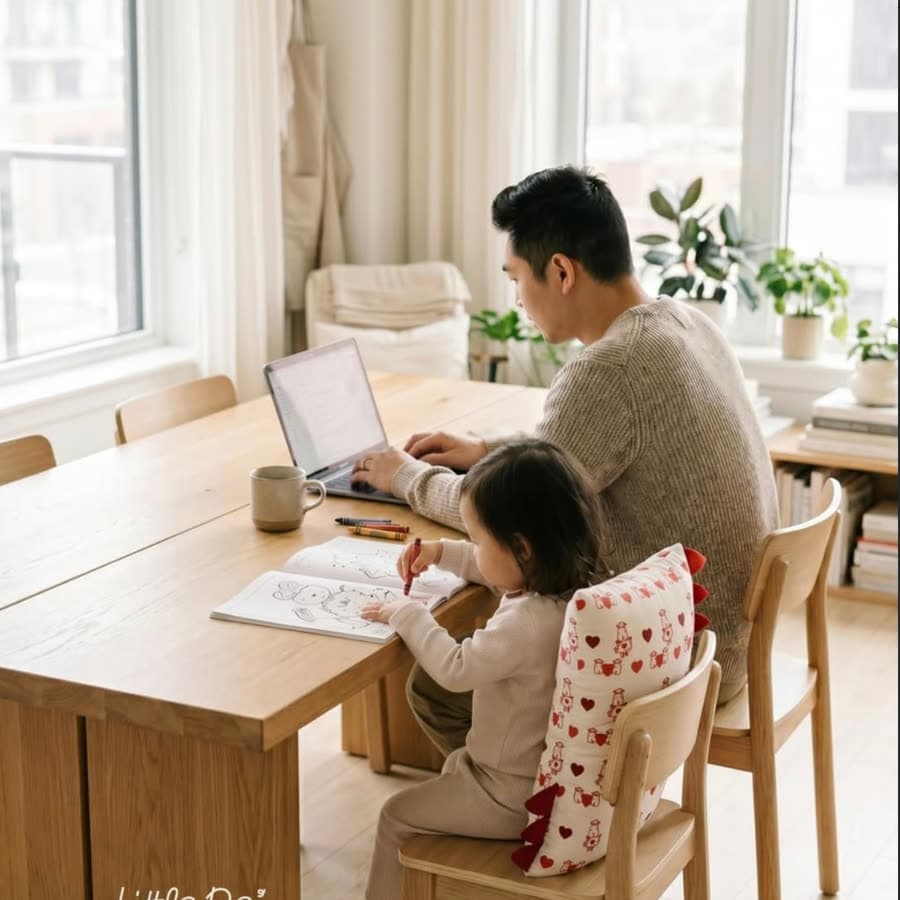
Colouring books are among the first things people buy for a small child, and they're almost exactly backwards, which I say as a woman who has bought a great many of them for a great many grandchildren and now buys paper.
A printed outline sets a standard the child can't yet meet, defines success as accuracy, and turns an open-ended activity into a test, and a blank sheet does none of those things, so for a child under about four the blank sheet is doing far more developmental work, and it's usually a great deal more fun as well, for her and for whoever is sitting with her.
What's happening when a toddler scribbles
Motor planning, mostly. Early mark-making is the visible output of a much larger process: she's learning that her hand can leave a trace, that the trace obeys her, and eventually that it can be aimed, and none of that has anything to do with staying inside a duck.
Researchers who study children's drawing describe a fairly consistent progression, and the marks are the record of it and never an attempt at a picture. Around twelve to eighteen months it's random marks, whole-arm movement from the shoulder, no control of direction, and enormous delight at cause and effect, which is the delight to protect.
From eighteen to twenty-four months you get controlled scribble, with repeated back-and-forth and circular motion, which means she's now repeating a movement on purpose, and between two and three closed shapes appear, and with them the first naming after the fact, where she draws, and then decides what it is, and will change her mind if you ask twice.
From three to four the intention comes first: she announces what she's drawing before she draws it, and figures appear, often as a head with legs attached and no body in between, and from four to five you get recognisable scenes, a baseline, relative sizes, and a growing interest in getting things right, which is the moment the colouring book finally has a customer.
The ages are approximate and vary widely. The order is the part to hold on to.
Why colouring books hold that back
Because they insert an adult's finished drawing into the middle of a process that was supposed to be hers.
Three things follow. She's working to somebody else's plan and not her own, success becomes a matter of precision she isn't yet developmentally capable of, and the picture already exists, so the imaginative work, deciding what to make, has been done for her by somebody in a printing works.
There's an attention cost too. Give a small child a printed outline and the goal narrows to the boundary, and give her a blank sheet and she'll typically stay longer, talk more about what she's doing, and range further across the page and the table and, if you haven't taped it down, the wall.
None of which makes colouring books harmful, and they're perfectly fine as one thing among many, and they come into their own around five or six when children want precision and can achieve it. They simply shouldn't be the default, and they're always the default, because they're what the shop has.
More unstructured play
What to say about a child's drawing
Not "what's it?". That question asks a child who isn't yet drawing representationally to justify her work in terms that don't apply to it, and the usual result is a shrug or an invented answer to keep you happy, and I've had a great many invented answers over the years, some of them very good. Describe instead. Naming what you can see, the colour, the direction, the pressure, how much of the page she used, tells her you're paying attention without grading anything, and children can tell the difference between attention and grading long before they can tell you. "You used a lot of red on this side" describes and asks nothing. "That line goes all the way across" notices the effort. "Tell me about your drawing" is an invitation and works whether or not the drawing depicts anything at all. "You worked on that for a long time" praises the persistence, which is the part that transfers.
Try to retire "good job" as a reflex, which is harder than it sounds once it's in your mouth, because constant evaluation shifts a child's attention from the work to your reaction to it, and that's a hard habit to undo later, in her and in you.
The mess is the reason most families stop, so solve it properly instead of heroically. The principle is to make the space obviously large and the boundaries obviously clear, because small paper on a big table is an invitation to draw on the table, and she'll accept it. Or maybe she'll draw on the table anyway. Mine did.
Go big. A roll of cheap paper, the back of wrapping paper, a flattened box from whatever arrived this week. Large surfaces suit whole-arm movement, which is what young children have, and then tape the paper down, since sliding paper is the commonest cause of a mark going somewhere it shouldn't.
Chunky crayons for the youngest, and don't fuss about the grip, because a fist hold is normal and appropriate at this age, and a proper tripod grip usually turns up somewhere between three and five on its own, without anybody teaching it.
Mentioned above
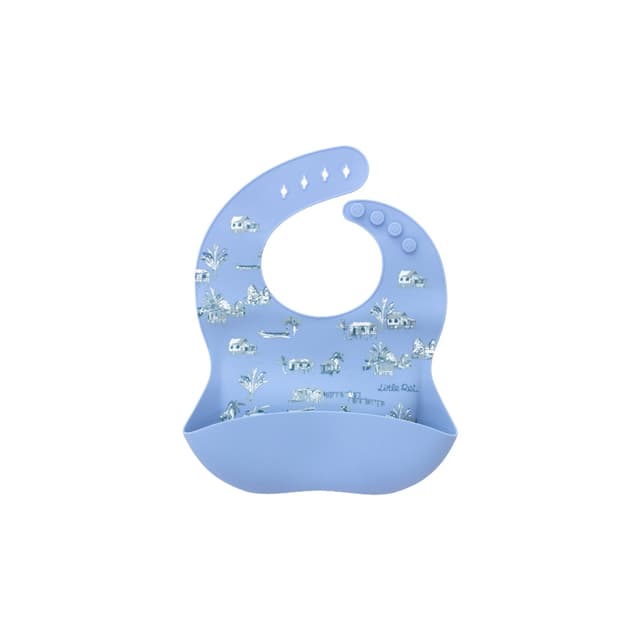 Silicone Rustic BibS$19.90Shop now
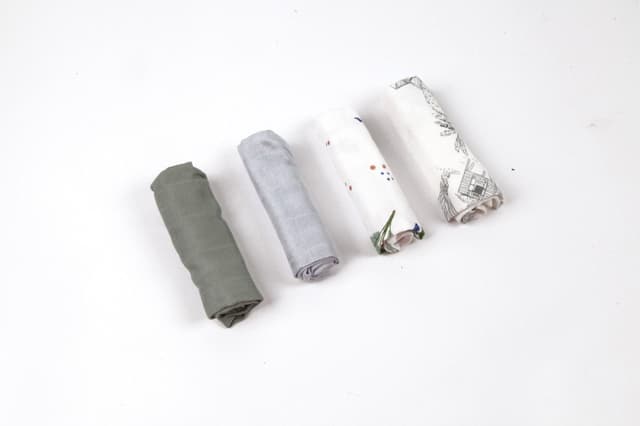 Bamboo Wash Cloth 4pc (Rustic Rainforest)S$25.00Shop now
Vertical surfaces are badly underrated. Paper taped to a wall, or an easel, builds shoulder and wrist stability rather better than a tabletop does, and it keeps the crayons off the floor, which is where I usually find them.
Water-based, washable, non-toxic materials only at this age, and assume everything reaches a mouth at least once, because it will. Look for the safety marking used where you live, and on the days you have no tolerance for any of it, and there are such days, bath crayons and a window with a spray bottle solve the mess entirely.
Marks don't have to be made with a crayon, and for a baby under one they generally shouldn't be.
A finger through spilled water on a tray. A hand in yoghurt on a high-chair top. A stick dragged through sand at the beach. It's all the same lesson, my movement leaves a trace, and edible-safe materials remove the supervision problem entirely, which means the activity lasts as long as her interest and not as long as your vigilance, and your vigilance runs out first.
Keep the sessions short and stop while she's still enjoying it, because ten minutes of enthusiastic scribbling most days does more than one long session that ends in a struggle over the crayons, and everything ends in a struggle over the crayons eventually.
Keep some of it, badly and unsystematically, in a drawer or a box. A stack of dated scribbles is one of the clearest records of a year of development you'll ever have, and I have my daughters' somewhere still, forty years on, and I wouldn't part with them.
This guide is general information, written to help you understand a topic and ask better questions. It is not medical advice and does not replace your own doctor, midwife or paediatrician. Anything that worries you about your baby belongs with them.