

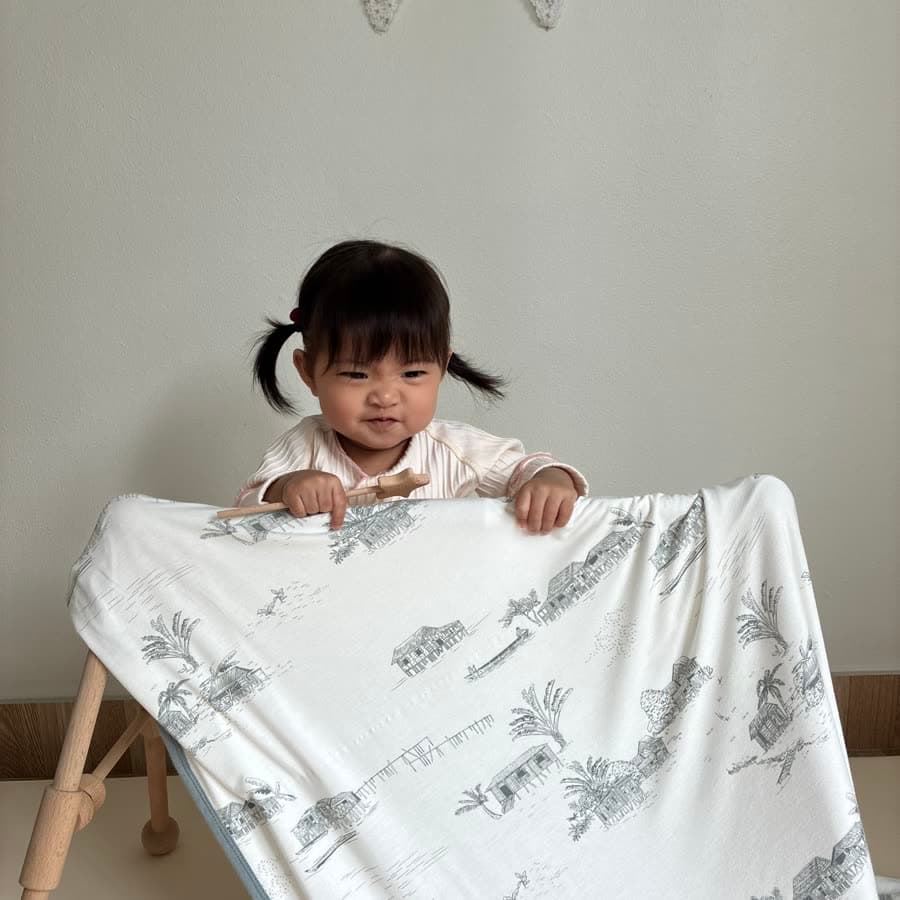
There's a quiet pressure on new parents to run a curriculum. Flashcards at six months. A class on Saturday morning. An app that promises vocabulary. A shelf of toys each aimed at a named skill. Under all of it is one assumption: that ordinary play is what happens when nothing educational is going on.
It's closer to the reverse. Free, child-led, undirected play is the main way young children learn. A lot of the enrichment industry is selling parents a way to feel less anxious. I've bought several of those things. They're in a cupboard.
What free play builds
More than any activity designed to build one thing. The child sets the agenda, so play runs at exactly the edge of her current ability. That's where learning happens. And it moves along as she does, without anybody assessing her.
It builds executive function. Choosing what to do, holding a plan, dropping it when it fails, resisting the urge to do something else. All practised hardest in unsupervised pretend play. It builds language. Children use longer, more complex sentences in pretend play than in directed tasks. They narrate. They take on other voices.
It builds physical competence through risky play. Climbing higher, moving faster, balancing on something marginal. That's how a child calibrates her own limits. Children denied it are worse at judging risk. The opposite of what the denying was for.
It builds social negotiation. Agreeing the rules of a game with another child means proposing, conceding, enforcing and repairing. There's no substitute for doing that badly a few hundred times. It builds a tolerance for boredom. A real skill. It develops only when there's nothing to do.
Does a baby need toys that teach?
Very few. One of the more reliable findings in play research: the more a toy does, the less the child does.
Electronic toys that light up, talk and reward a button press produce less language, from child and parent both, than simple objects or books. Watch it on your own carpet. The toy that performs holds attention briefly and shallowly. A set of stacking cups, or a wooden spoon and a saucepan, gets used ten ways across two years.
Open-ended beats specific every time. A box. A blanket. Containers that nest. Things to fill and empty. Water, sand, cardboard. Most of it is in your house already. This isn't a frugality argument, and I say that as the man in this company who negotiates the commercial deals. An ambiguous object makes the child supply the idea. Supplying the idea is the work.
What it looks like in practice
How much should a parent join in?
Less than most of us do, and differently. The best adult posture in play is attentive and non-directive. Available, responsive, not steering. The moment an adult starts organising, the child's job changes from inventing to complying. Most of the value drains out.
Follow her lead. Join whatever she's doing without proposing something better. Narrate sparingly. Describing what a child does supports language. A running commentary becomes instruction. Resist fixing. A tower that keeps falling over is the activity.
Wait longer than feels natural before stepping in. A frustrated child working on a problem is often thirty seconds from solving it, and you're about to take that away. Say yes to repetition. The fortieth time down the same step is consolidation. However much it feels like a life sentence. Fortieth is a guess. Could be more.
Whether to teach independent play
You can, and it deserves doing for everyone's sake. It gets built in short repeated stretches, never by announcement. Start with a minute or two of her playing while you're visibly nearby doing something undemanding. Extend it gradually. Leaving the room abruptly ends the whole project. She then treats your presence as the thing at risk.
Expect it to be uneven. Illness, a new sibling, teething, developmental leaps, any change of routine. All knock it backwards for a while, and it recovers. Expect a young child's independent stretch to be measured in minutes. Ten to fifteen for a toddler is a good result. Anyone claiming an hour has an unusual child or an unreliable memory.
Classes, and screens
Classes are fine. Their real value is usually adult company, structure to the week, and equipment or space you don't have at home. Legitimate reasons to go. They're a different claim from accelerating development. No baby needs a class to develop normally. If a class costs more than it returns, in money, stress or a wrecked nap, dropping it costs your child nothing.
Screens are the sharper trade-off. The major health bodies advise against screen time below about eighteen months to two years, video calls excepted, and limited co-viewed use after that. The mechanism matters more than the rule. Screen time displaces something. An hour of video is an hour not spent handling objects, moving about, or in back-and-forth conversation. Back-and-forth conversation is the strongest predictor of language a parent controls.
So what does a good day look like
Thoroughly ordinary. Some time outdoors. Some time on the floor. A few books. A lot of talking. A stretch of the day where nothing is planned and she works out what to do with it.
Boredom isn't a hole in the schedule waiting to be filled. Most of what looks like an unproductive afternoon is the real work of early childhood. The parent doing less organising is very often doing more of the right thing.
Where the numbers come from
This guide is general information, written to help you understand a topic and ask better questions. It is not medical advice and does not replace your own doctor, midwife or paediatrician. Anything that worries you about your baby belongs with them.