

27 November 2025 · Samantha Lin
Designer · Mother of two
Stuck at Home? 10 Boredom Busters for Young Children
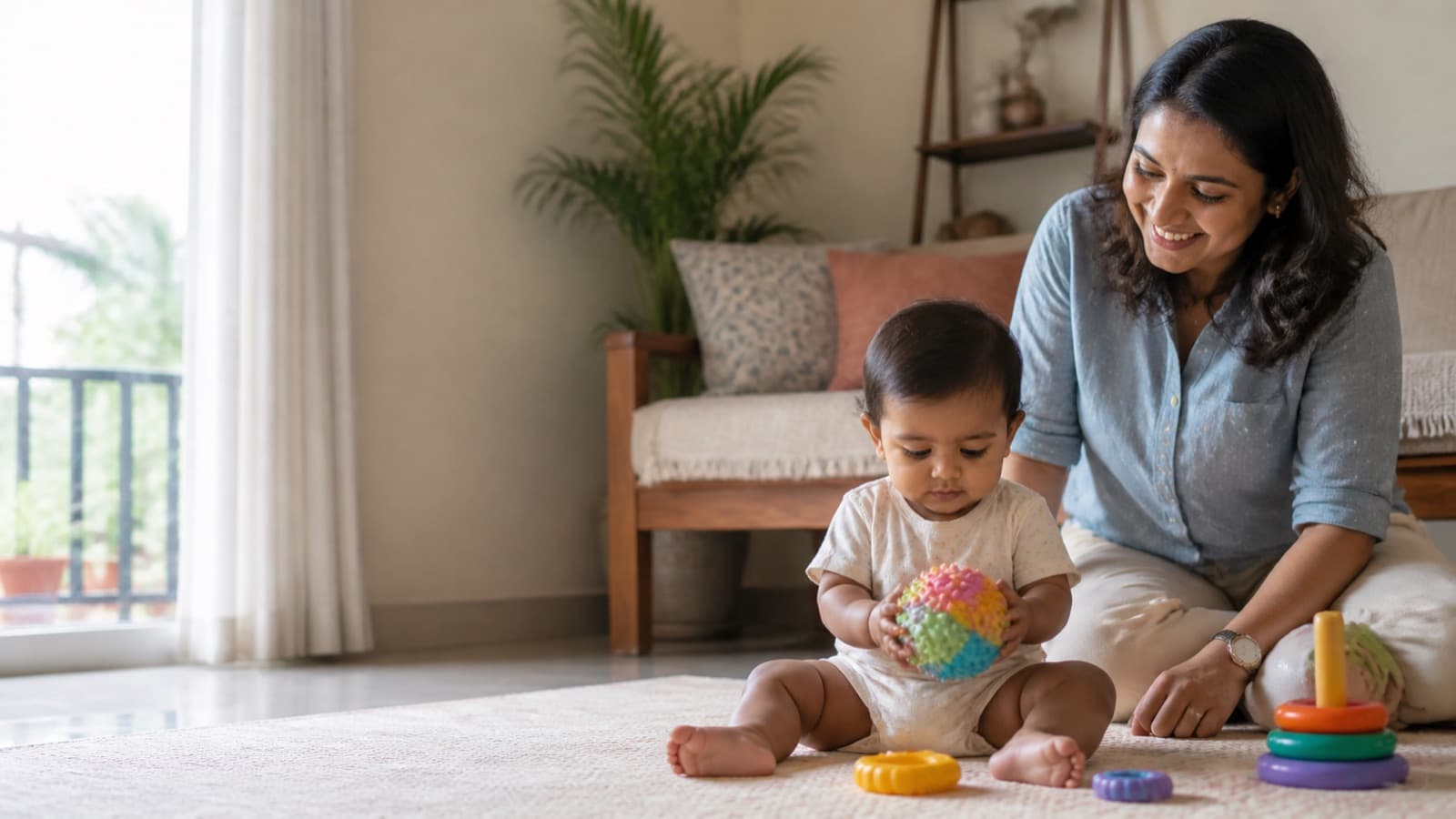
This is the emergency list. It isn't a plan for the day, which is a different problem. It's ten things you can start inside sixty seconds of a child announcing that there's nothing to do, using only what's already in your flat.
We spend most weekends at home, so this list has been thoroughly tested on a three-year-old and a one-year-old at the same time. Each one comes with the age it suits and roughly how long it buys you.
One. The treasure basket
Fill a basket with ordinary household objects that aren't toys: a whisk, a wooden spoon, a metal bowl, a scarf, a tin, a hairbrush. Hand it over and say nothing at all.
Babies from around six months will empty and refill it repeatedly, and toddlers will invent a use for every single item. Ten to twenty minutes, and it works again next week provided you change the objects.
Two. Frozen toys
Small plastic animals in a tub of water, into the freezer. Later, bring it out with a spoon and a cup of warm water. Best from around eighteen months, twenty to thirty minutes, and it scales beautifully, because a bigger block simply takes longer to break into.
More for indoor days
Three. Masking tape roads
Tape a road system across the floor, around the table legs and up the side of the sofa. Toy cars follow it. Toddlers and up, fifteen to forty minutes, and it'll stay down for days without marking the floor.
Four. The washing-up station
A chair at the sink, warm water, a squirt of soap and a few unbreakable plates. Absurdly effective from about eighteen months, twenty minutes, and everything ends up cleaner than it started, which is rare on this list. I haven't checked what it does to the water bill, but I'd guess it's fine.
Five. The den
Two dining chairs, a blanket over the top and a torch inside. Add a snack and it doubles in length. From around two, and anywhere between twenty minutes and the entire rest of the afternoon.
Six. Sorting
Odd socks into pairs, cutlery into the drawer, buttons by colour into an ice cube tray. Two-year-olds find sorting satisfying, and unlike most of this list it gets something done for you. Ten to twenty minutes, with supervision wherever the objects are small.
Seven. Balloon games
Keep it off the floor. Bat it with a paper plate, or between two people. Any age once walking, ten to twenty minutes of real movement in almost no space, which counts in a flat. Deflated balloons are a choking hazard, so clear every piece away immediately if it pops.
Eight. The obstacle course
Cushions to jump between, a chair to crawl under, a line of tape to balance along, a cushion to throw a soft toy onto. Let her design it, because the designing is half the activity. From eighteen months, fifteen to thirty minutes.
Nine. A cardboard box, unaltered
A box big enough to sit in beats most objects sold as toys. Add crayons and it becomes a decorating project as well. Any age from sitting up, and the duration is unpredictable: ours once lasted three days.
Ten. Ten minutes of your undivided attention
This is the one that works when nothing else does. A great deal of announced boredom is a request for company.
Ten minutes on the floor, phone in another room, following whatever she's doing without directing any of it, will frequently reset an entire afternoon. Children who get it will often go off and play by themselves afterward, which feels counterintuitive until you've watched it happen a few times.
What to do before you reach for the list
Check her body first, because in a small child boredom is usually a physical need. Is she hungry, thirsty, needing the toilet or needing to move? Most boredom at four in the afternoon is one of those. Then let her be bored for a few minutes. It's uncomfortable to watch, but it's exactly where self-directed play comes from. Say yes to the messy option where you can, since clearing up is nearly always shorter than the argument. Don't offer a choice of ten things. Offer two.
This guide is general information, written to help you understand a topic and ask better questions. It is not medical advice and does not replace your own doctor, midwife or paediatrician. Anything that worries you about your baby belongs with them.