

26 May 2026 · Maia Hillsborrow
Marketing Director · Mother of five
Multicultural Holidays to Celebrate This Season
Most holiday writing assumes it already knows which holidays you keep. That assumption gets stranger the more mixed a family is, and a great many families now are, whether through marriage, migration, adoption, or simply living somewhere with a different calendar from the one you grew up with.
Ours is blended and expatriate, Californian and now Thai-resident, with five children who between them mark rather more occasions than I grew up with. Here's a year of celebrations families around the world keep, what each one is, and how a baby or toddler can be part of it.
Two ground rules before the list. Dates for many of these follow lunar or lunisolar calendars, so they move against the Gregorian calendar every year and need checking each year, since last year's date will mislead you. And there's a real difference between celebrating a holiday that's yours, being warmly invited to one that isn't, and borrowing the decorative parts of somebody else's tradition without the meaning attached. The first two are lovely. The third is what people mean by appropriation, and the fix is usually as simple as asking somebody whose holiday it is.
The ones that deserve knowing about
This isn't an exhaustive calendar. These are the ones your child will meet at nursery, in the neighborhood, and in somebody's living room.
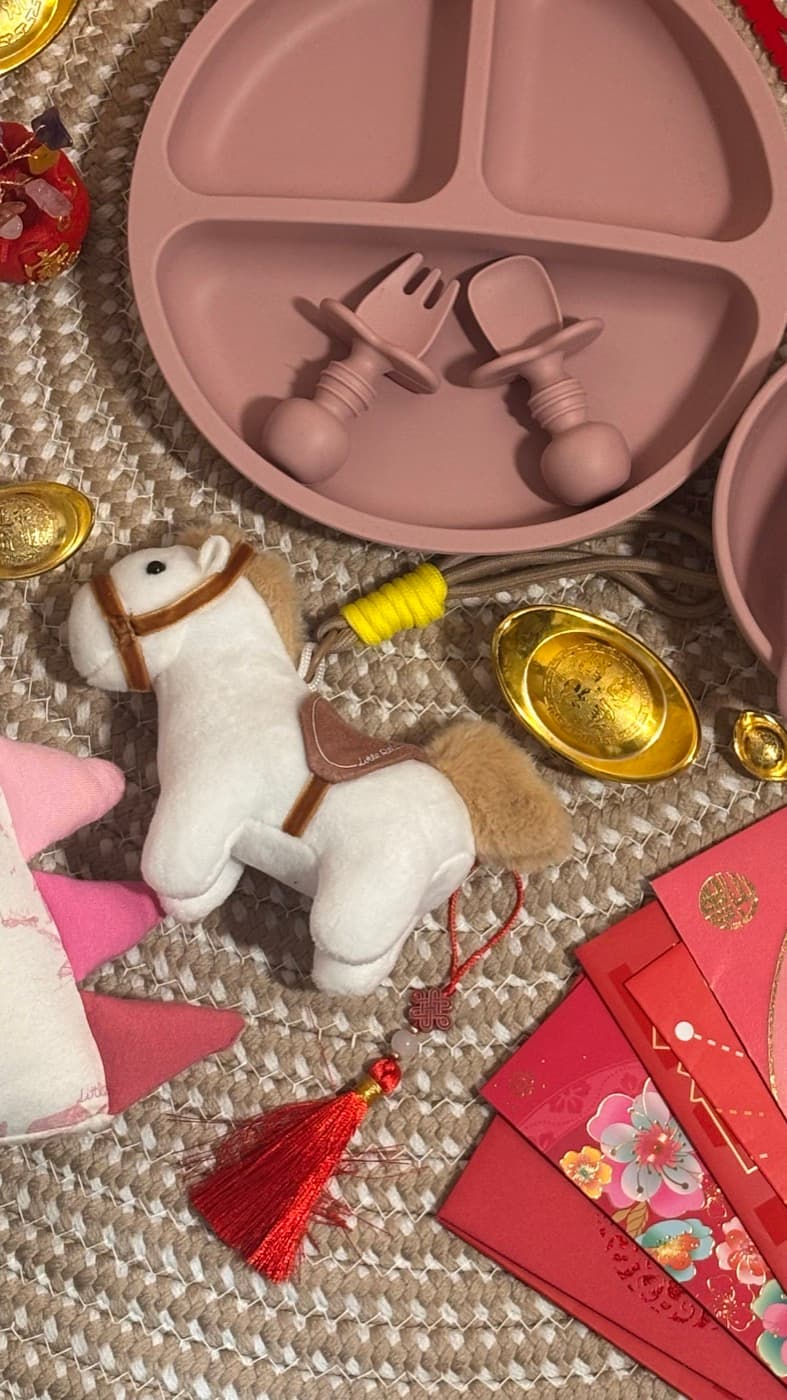
Lunar New Year is marked across China, Korea, Vietnam, Singapore, Malaysia and diaspora communities everywhere, on a date between late January and late February, with red decorations, family meals, red packets for children and a new outfit for the baby. Diwali, the festival of lights, is observed by Hindus, Sikhs, Jains and some Buddhists, usually in October or November, with oil lamps, rangoli patterns on the floor, sweets and new clothes.
Hanukkah runs eight nights, usually in December, lighting one additional candle each night, with fried foods and dreidels and a nightly ritual that suits very small children beautifully. Christmas falls on 25 December for most churches and 7 January for many Orthodox Christians, and varies enormously by country, from midnight mass to a barbecue on a beach in the southern hemisphere.
Eid al-Fitr and Eid al-Adha are the two major Islamic festivals, on the lunar Hijri calendar, so they shift roughly eleven days earlier each Gregorian year, and both bring new clothes, family visiting, gifts and money for children. Kwanzaa runs from 26 December to 1 January, an African-American cultural celebration built around seven principles, one per night, each marked with a candle.
Día de los Muertos falls on 1 and 2 November and is primarily Mexican: an altar for relatives who have died, marigolds, photographs and their favorite food, and the mood is warm. Vesak celebrates the Buddha's birth, enlightenment and death, usually in April or May, with lanterns, temple visits and vegetarian food, and it's a significant one here in Thailand. I'm not sure I've got every date right, so check the year's calendar.
The solstices mirror between hemispheres, so December is midwinter in the north and midsummer in the south, and they're celebrated in many secular and pagan traditions, a good anchor for families who want a seasonal marker without a religious one. Thanksgiving is the fourth Thursday of November in the United States and the second Monday of October in Canada, and it's a harvest and gratitude meal, which took me a while to fully absorb after we left.
In Chinese, Korean and several other East Asian traditions, a baby's first month and hundredth day are celebrated in their own right, often the first occasion on which the baby is formally presented to the extended family.
Including a baby in any of it
Modestly. A baby's experience of a holiday is sensory: light, music, unfamiliar smells, being handled by a great many people. The version that works is short, early in the day, and abandoned without a shred of guilt the moment it stops working. Pick one sensory element and let go of the rest. Lighting a candle. A particular song. One food smell coming out of the kitchen. Keep it before the second nap, because almost every holiday disaster with a small child is a scheduling problem.
Give her the safe fragment of the tradition: an empty red packet to hold, a wooden dreidel too big to swallow, a marigold head, an unlit lamp. Photograph the small moment, since the staged photo is for the adults and the baby knows it perfectly well. Have an exit. Deciding in advance that you'll leave after an hour makes that hour far more enjoyable for everybody.
The festivals, one at a time
What's dangerous
Holidays concentrate exactly the hazards a baby-proofed house has usually removed, and they do it in somebody else's home. The list is short and predictable, which makes it easy to run through on arrival.
Open flame first. Candles, oil lamps and sparklers are central to several of these festivals, so nothing lit within reach and nothing left burning in a room with a mobile child. Then small objects: coins, decorative beads, dreidels, small ornaments, nuts and hard candies are all choking hazards under three.
Button batteries in decorations, singing cards and toys get their own line, because swallowing one is a medical emergency and never a wait-and-see. On food, watch for whole nuts, hard candies, uncut grapes and cherry tomatoes, and honey under twelve months, which has a botulism risk.
Noise counts for more than people expect, since firecrackers and fireworks are loud enough to damage infant hearing, so keep your distance, use ear protection, or stay in. Watch crowds and heat together, because a baby passed around a warm room full of delighted relatives overheats much faster than the adults holding her.
When a family keeps more than one tradition
Decide, and earlier than feels necessary. Families who work it out in advance tend to land on one of three approaches: keep both fully, keep both in a reduced form, or keep one at home and visit the other. All three work perfectly well. What causes friction is leaving it undecided until the week itself, at which point it becomes a negotiation conducted by exhausted people.
For a child, growing up inside more than one tradition is a straightforward gift, provided both are presented as belonging to her. Use the actual names for things. Learn a few words in the relevant language if it isn't yours, because grandparents notice immediately and eventually so does the child.
If you don't celebrate anything in particular
Then invent something small and repeat it. The mechanism that makes holidays count to children is repetition: the same thing, at roughly the same time each year, done the same way.
A specific meal. A walk somewhere fixed. One decoration that comes out annually. Within three or four years a child will insist on it, and that's exactly how every tradition on the list above began.
Questions from the group chat
How do you celebrate multiple cultural holidays in one family?
Decide well in advance, never during the week itself. Most families settle on keeping both fully, keeping both in reduced form, or keeping one at home and visiting the other. Use the real names for each celebration so the child understands both as theirs.
How can a baby take part in a holiday?
Through one sensory element and not the whole event: a candle being lit, a particular song, a food smell. Schedule it before the second nap and keep it short. Babies experience holidays as atmosphere, not as narrative.
What are the main holiday safety risks for babies?
Open flames, small swallowable decorations, button batteries in lights and singing cards, choking foods such as whole nuts and hard sweets, honey before twelve months, firework noise, and overheating in crowded rooms.
Is it appropriation to celebrate another culture's holiday?
Being invited to a celebration and taking part respectfully isn't appropriation. The problem arises when the decorative parts of a tradition are borrowed without the meaning or the people. Asking someone whose holiday it is resolves nearly every case.
The evidence
This guide is general information, written to help you understand a topic and ask better questions. It is not medical advice and does not replace your own doctor, midwife or paediatrician. Anything that worries you about your baby belongs with them.