

4 September 2026 · Veronica Chi
Business & Product Director · Mother of two
Skincare in Pregnancy: What to Skip, What's Fine
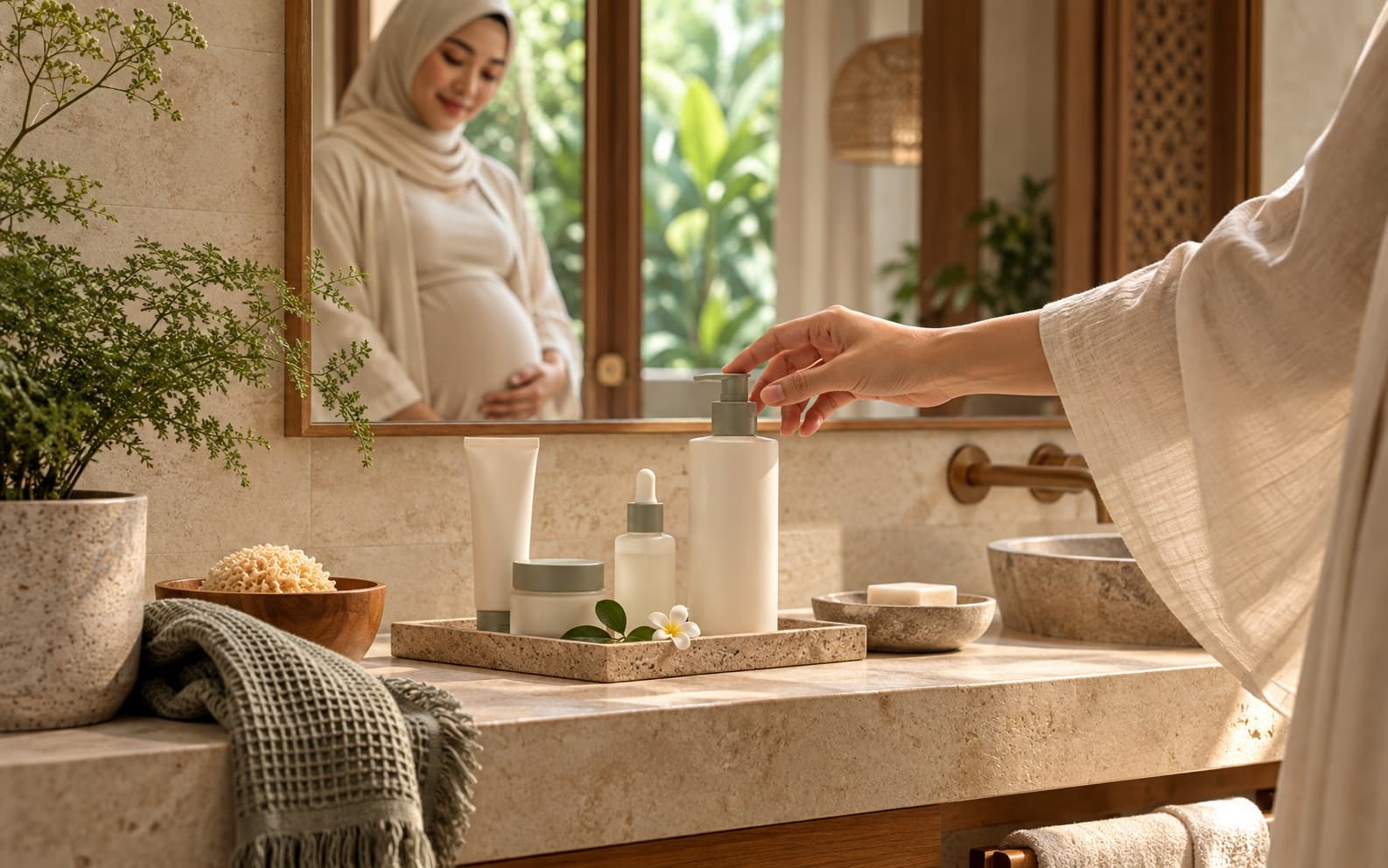
Most of what a pregnant woman is told to throw away is fine. A small number of things aren't, and it helps to know exactly which. Otherwise you end up where a lot of women do: stopping everything, buying an expensive range labelled for pregnancy, and still not knowing what the rule was.
The stop list
It's short, and the first item accounts for most of the concern.
| Ingredient | Why | Usually found in |
|---|---|---|
| Oral isotretinoin | Known to cause birth defects | Prescription acne treatment |
| Topical retinoids | Precaution by analogy with the oral form | Anti-ageing and acne creams |
| High-dose salicylic acid | Avoided at peel strength | Chemical peels, strong acne treatment |
| Hydroquinone | High skin absorption | Skin-lightening products |
| Some essential oils | Avoided in the first trimester | Aromatherapy blends, massage oils |
Two of those need explaining. Topical retinoids are a precaution: the evidence of harm concerns the oral drug, and creams are avoided because they belong to the same class, not because a cream has been shown to do damage. Low-strength salicylic acid in a face wash is broadly considered acceptable; it's the peel-strength product that's avoided.
Hydroquinone matters more in this region than a guide written elsewhere would suggest, because skin-lightening products are widely sold here and it's a common active in them.
What's fine
- Mineral sunscreen with zinc oxide or titanium dioxide, and modern chemical filters are also considered acceptable
- Hyaluronic acid, glycerin and ceramides
- Niacinamide
- Azelaic acid, which is often the substitute a dermatologist suggests for a retinoid
- Low-strength glycolic and lactic acid
- Plain emollients and oils with no active in them
Sunscreen deserves its own line. Melasma, the darker patches that appear across the cheeks and forehead in pregnancy, is driven by sun exposure on top of the hormonal change, and daily sunscreen is the only measure with real evidence behind it. On the equator that's a year-round instruction rather than a seasonal one.
Nearby
Reading the shelf
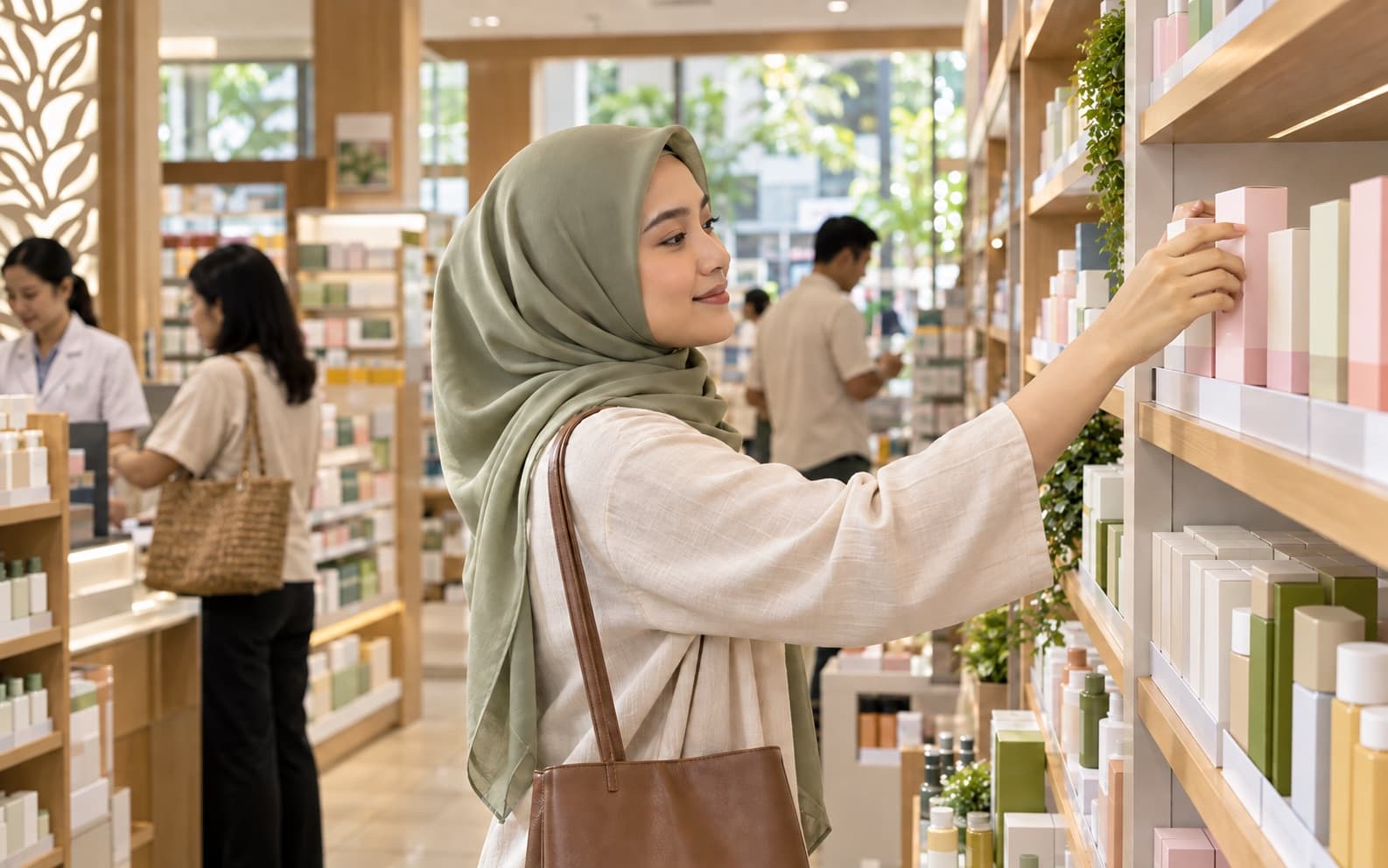
Three habits get you through a pharmacy aisle without looking anything up.
Read the ingredient list, not the front of the box. Pregnancy-safe is not a regulated claim in Singapore or anywhere else, and a product carrying it may contain something on the list above. The ingredient list is the only part of the packaging that has to be true.
Learn the four names that matter and scan for those alone: retinol, retinal, retinyl palmitate and adapalene are the retinoid family, and hydroquinone is its own word. Everything else on a typical list is a moisturiser, a preservative or a fragrance.
Ask the pharmacist, not the shop assistant. They're free, they're standing there, and this is the question they're qualified to answer.
Where this stops
Acne, eczema and melasma in pregnancy are managed by a doctor, not by a shelf. There are treatments considered acceptable during pregnancy for all three, and a dermatologist can prescribe them. Stopping a prescribed treatment without asking has its own risks, so call your doctor before you stop.
I'm not certain whether the caution around topical retinoids goes further than the evidence requires. Every authority I've read still gives the same advice, so I give it too.
On the specifics
Is retinol safe during pregnancy?
It's avoided. The clear evidence of harm concerns oral isotretinoin, and topical retinoids are avoided as a precaution because they belong to the same class. Azelaic acid is a common substitute.
Is salicylic acid safe during pregnancy?
Low strengths in a face wash are broadly considered acceptable. Peel-strength treatments are avoided. If in doubt, ask a pharmacist, who can read the percentage off the box with you.
Does pregnancy-safe on a label mean anything?
No. It isn't a regulated claim, and a product carrying it can still contain an ingredient on the avoid list. Read the ingredient list, which is the part of the packaging that has to be accurate.
What can I use for melasma while pregnant?
Daily sunscreen is the measure with the strongest evidence, and it matters year-round on the equator. Hydroquinone is avoided. A dermatologist can advise on treatments considered acceptable during pregnancy.
Sources
- NHS: pregnancy and medicines
- American College of Obstetricians and Gynecologists
- HealthSciences Authority Singapore
This guide is general information, written to help you understand a topic and ask better questions. It is not medical advice and does not replace your own doctor, midwife or paediatrician. Anything that worries you about your baby belongs with them.