

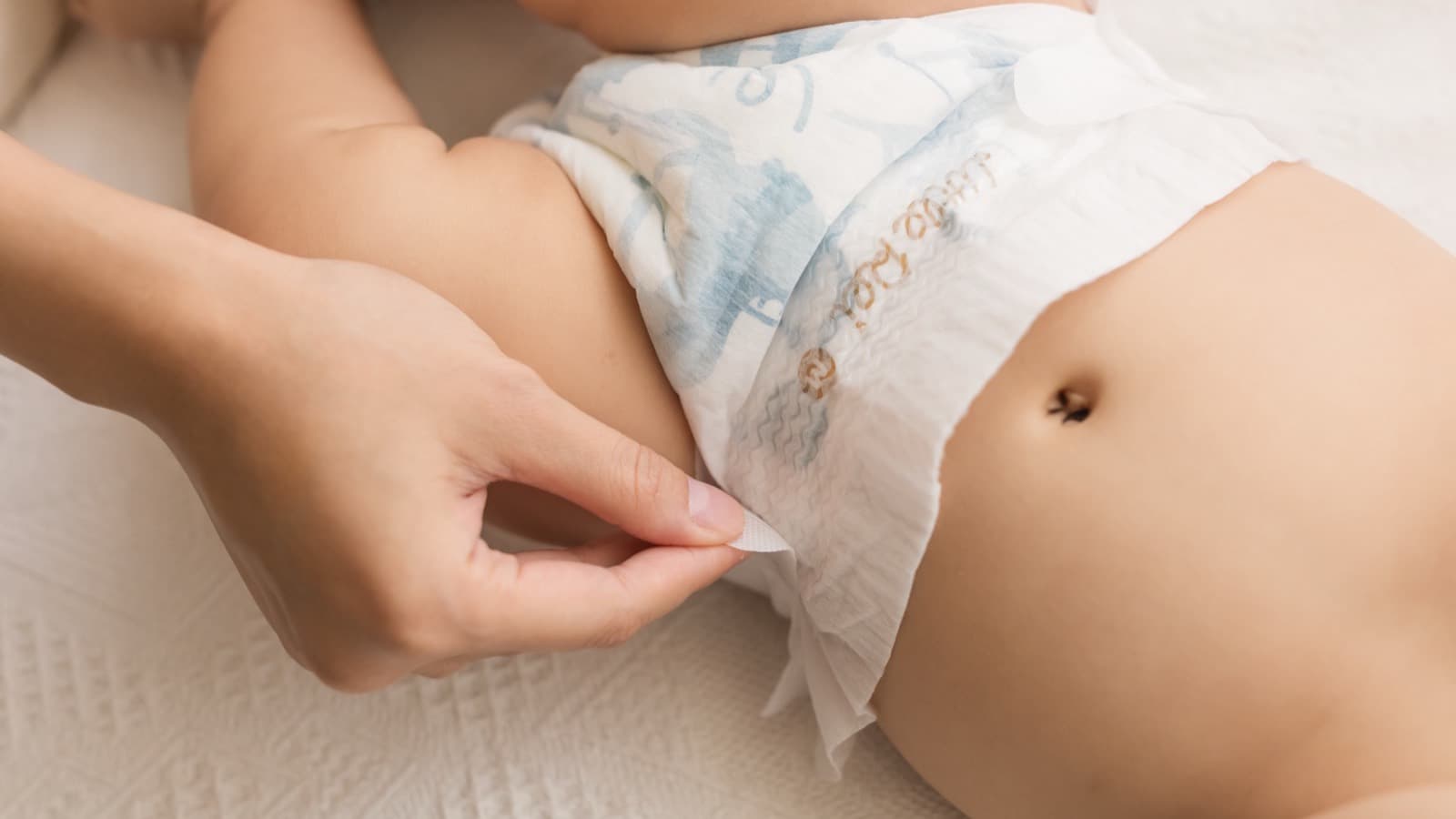
The first diaper I changed on my own, in the hospital, took eleven minutes and I got most of it wrong. By Charles I could do it in the dark with one hand while holding a conversation, which is a skill nobody puts on a CV and probably should.
This is the version I wish somebody had shown me, instead of leaving me to work it out from the picture on the packet.
What has to be within reach
Everything, before you undress her. This is the one rule here that's about safety.
Babies learn to roll earlier than you expect, and the first roll always seems to happen while you're reaching for something. So keep one hand on her at all times. If you have to take two steps to fetch a wipe, the station is badly laid out. I design things for a living and I still got this wrong with my first.
- A clean diaper in the current size, and one more behind it. Ours was the Little Rei newborn tape, which is cut for babies between two and five kilos.
- Warm water and soft cloths, or wipes. Water and cloth is gentler and cheaper at home; wipes are what you take out.
- Barrier cream with the lid already loosened.
- A change of clothes, because optimism isn't a strategy.
- A lined bin close enough to drop into without turning away from the mat.
- Somewhere for the dirty diaper to go before it reaches the bin. In a flat with a bin chute down the corridor, this matters more than it sounds.
The nine steps
Slower than it needs to be the first time and automatic within a fortnight. Talk to her throughout. It settles her, and it stops the whole thing from being something that's done to her.
- Wash your hands and lay out everything above.
- Put her down on her back on the mat and keep one hand on her.
- Open the clean diaper and slide it underneath before you undo the dirty one, so there's already something in place.
- Undo the tabs and fold them back on themselves so they can't stick to her skin.
- Use the front of the dirty diaper to wipe the bulk of it downward and away, then fold it under her.
- Clean front to back, every time, in the creases and the folds of the thighs. Front to back always, for girls and boys both.
- Gently lift her by both ankles with one hand, take the dirty diaper away and slide the clean one into position.
- Let the skin dry completely before the diaper goes on. Ten seconds of air does more than anything else here to prevent rash.
- Fasten so that two fingers fit at the waist, check the leg cuffs are pulled out and not tucked in, and dress her.
Setting up for it
The cord stump
Fold the front of the diaper down below it so air can reach it, or use the newborn diapers that come with a notch cut out.
Keep it clean and dry and otherwise leave it alone. No antiseptic, no covering, no cleaning unless it's been soiled, in which case plain water and careful drying. It comes away somewhere between five and fifteen days.
Spreading redness on the skin around the base, a smell, pus, or a baby who seems unwell alongside it needs a doctor the same day.
Girls and boys, briefly
For girls, wipe front to back and don't clean inside the labia. Some white discharge, and even a little blood in the first week, is normal and is a response to your hormones.
For boys, don't retract the foreskin. It's attached at this age and pulling it back causes damage. It separates on its own over years. Point the penis downward inside the diaper before you fasten it, which prevents most of the leaks up the front. Most. I never found out where the rest came from.
How not to get weed on
A clean cloth laid over the area the moment the diaper comes off. That's it, and it works most of the time.
Cold air is the trigger, so the gap between one diaper and the next is the danger window. It happens to everybody, it'll happen to you, and the wall isn't personally targeted.
Mentioned above
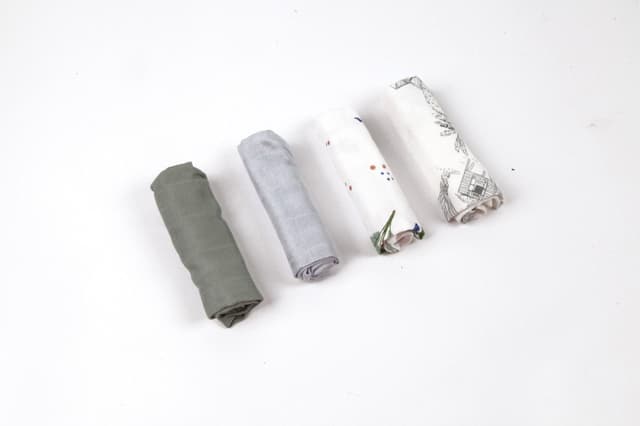 Bamboo Wash Cloth 4pc (Rustic Rainforest)S$25.00Shop now
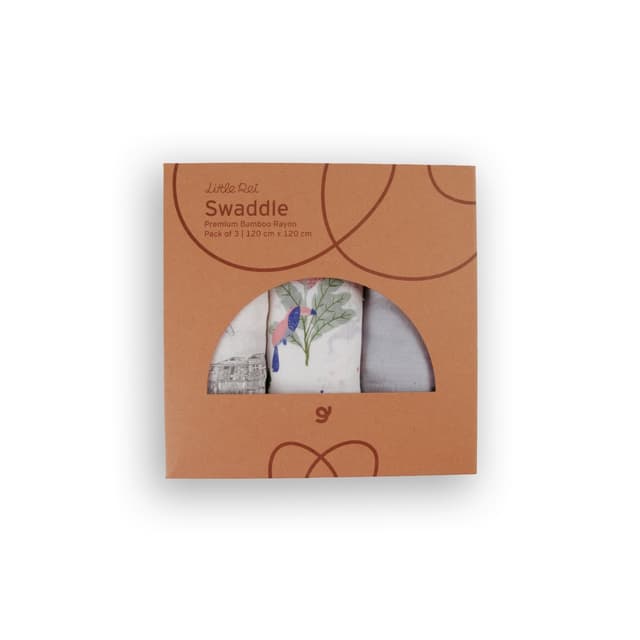 Bamboo Swaddles (3pc)S$69.00Shop now
What never to do
A short list, and the first one is the only one with real consequences.
- Never walk away, not for a second, not to answer the door. A changing mat on the floor is safer than any raised surface if you can't guarantee that.
- No talcum powder. It has an inhalation risk and does nothing that keeping the skin dry doesn't do better.
- Never fasten it tight. Two fingers at the waist, and a red ring around her legs or waist means it's too tight or the wrong size.
- Don't scrub. Newborn skin is thinner than yours and rubbing is what turns redness into a rash.
- Don't skip the drying. In this climate, a diaper closed over damp skin is the main cause of most rash.
Next questions
Asked at the playground
How do you change a newborn's diaper step by step?
Lay her on her back, unfasten and fold the tabs, lift by both ankles, sweep with the old diaper, clean front to back, dry properly, slide the clean one under with the back higher, fasten snug, and pull the leg cuffs outward.
How do you change a diaper around the umbilical cord stump?
Fold the front of the diaper down below the stump so it's in open air. Keep it dry and leave it alone. It falls off between five and fifteen days.
Should you use wipes on a newborn?
Cotton wool and warm water for the first few weeks, then fragrance-free wipes. Avoid scented or alcohol-based wipes on newborn skin entirely.
How tight should a diaper be?
Snug enough not to gape, loose enough to slide two fingers under the waistband. A red mark still visible ten minutes later means it's too tight.
How do you stop a baby weeing during a change?
Lay a clean diaper or muslin loosely over the area for a few seconds after removing the old one. Cold air on warm skin is what sets it off.
This guide is general information, written to help you understand a topic and ask better questions. It is not medical advice and does not replace your own doctor, midwife or paediatrician. Anything that worries you about your baby belongs with them.