

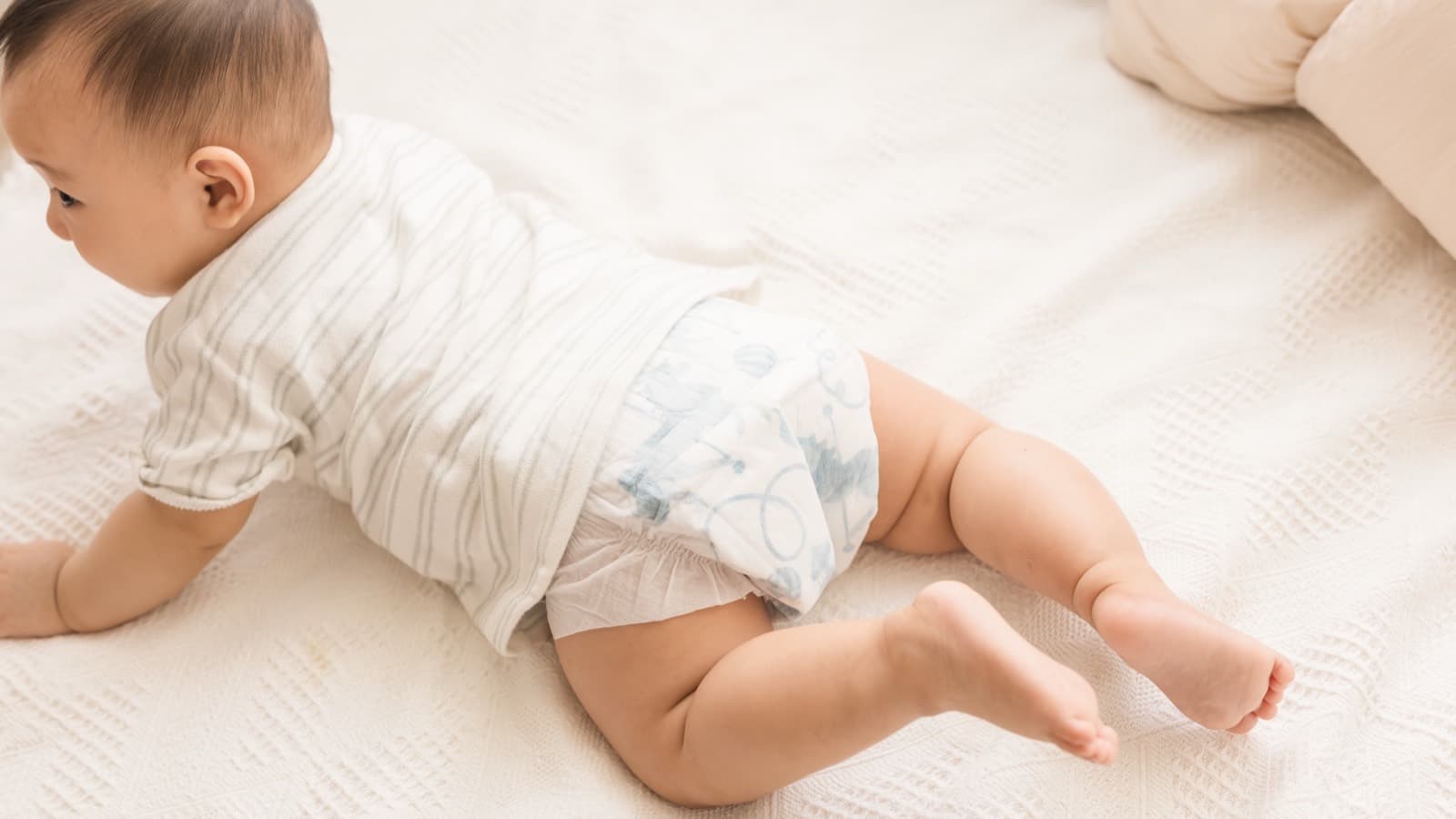
Every two to three hours in the daytime, and immediately after any dirty one. That's the answer, and the interesting part is why it's shorter here than in most of the guides you'll read.
How often, in practice
A newborn goes through somewhere between ten and twelve diapers a day, which works out at roughly every two to three hours while she's awake, plus a change at every feed and immediately after every dirty one.
It settles as she gets older. By three months you're down to eight or ten a day, six to eight by six months, five or six by a year, and the intervals stretch as the bladder does.
| Age | Changes per day | Interval while awake |
|---|---|---|
| 0-6 weeks | 10–12 | Every 2-3 hours, plus after every stool |
| 6 weeks-3 months | 8–10 | Every 2-3 hours |
| 3-6 months | 6–8 | Every 3-4 hours |
| 6-12 months | 5–6 | Every 3-4 hours, checked more often in this humidity |
Dirty diapers are the exception to all of this and they're changed at once, at any hour, awake or asleep. Stool against skin is what causes rash, and the enzymes in it start working within minutes.
Does Singapore's climate change the interval?
Yes, and this is the part written-elsewhere guides don't cover.
The inside of a diaper is warm and enclosed to begin with. In a flat at thirty degrees with eighty percent humidity, nothing evaporates and nothing dries, so a diaper that would be merely damp in a temperate climate stays wet against the skin. Add a baby who sweats in the folds of her thighs and you have conditions that cause rash a lot faster.
So err on the shorter interval in the warm months, check more often than you think you need to on days out, and give her a stretch with nothing on at all when you can. Ten minutes on a towel with the diaper off does more for her skin than any cream in the drawer. I'd guess we do it four days in seven. I'm not sure that's enough.
The technique in full
Should I wake a sleeping baby to change them?
For a wet one, no. For a dirty one, yes.
Sleep is doing real work and a wet diaper on healthy skin will wait until she wakes. Modern diapers hold a great deal and keep the moisture away from the skin, which is what they're engineered to do.
Stool is different, and I wouldn't leave it even for a full night's sleep, because the damage happens fast. Change her with the lights low and the minimum of handling, and there's a whole guide on doing that without fully waking her.
The exception is a baby who already has a rash. Then wet counts too, and you accept the disruption for a few nights until the skin recovers.
The ninety-second change
Once you've done a few hundred, the whole thing takes about ninety seconds. Getting there's mostly about the setup. Everything within one arm's reach before you start. A second smaller station wherever you spend your evenings, so that the ten o'clock change doesn't involve walking to another room. A bag packed the night before. Charles is with his grandmother on weekdays, which means our changing station has to work for somebody who didn't build it. That constraint made it better for me too.
Mentioned above
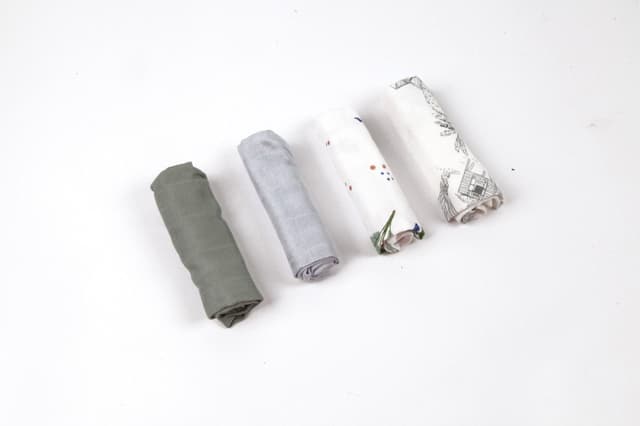 Bamboo Wash Cloth 4pc (Rustic Rainforest)S$25.00Shop now
 Bamboo Hooded Towel & Wash Cloth Set (Outdoor)S$39.90Shop now
When to ask a doctor
The count itself is one of the better things you can report to a doctor, so know what a concerning one looks like.
- Fewer than six heavily wet diapers a day after the first week, or urine that is dark and strong-smelling.
- A dry diaper for more than six to eight hours in a baby who normally soaks them.
- No wet diaper at all in twelve hours, which needs same-day attention.
- A rash that isn't settling within two or three days of more frequent changes and barrier cream.
- Blood or mucus in the stool, or stools that have become watery and very frequent.
- Fewer wet diapers alongside a baby who's sleepy, floppy or feeding poorly, which is urgent.
What other parents wanted to know
How many times a day should I change a newborn's diaper?
Ten to twelve times a day in the first six weeks, dropping to eight to ten by three months and five to six after six months. Change every two to three hours while awake, and immediately after any stool.
Should I wake my baby at night to change their diaper?
No, not for wetness alone. Change overnight only for stool, a saturated nappy, or when the baby has already woken for a feed. Keep night changes dim and dull so sleep resumes easily.
Does Singapore's humidity mean more frequent changes?
Effectively yes. A diaper seals skin against air, and in high humidity that skin doesn't dry out between changes. Err toward the shorter end of the usual intervals and treat a damp nappy as a reason to change and never to wait.
How many wet diapers should a newborn have?
From about day five, six or more properly wet nappies in twenty-four hours suggests adequate feeding. Consistently fewer, especially with a sleepy or unsettled baby, deserves raising with your doctor or a lactation consultant.
Why does my baby's diaper leak even when it isn't full?
Most often the leg cuffs are tucked inward and not pulled out, or the fit is too loose at the waist. Aim for two fingers' clearance at the waist and always run a finger around the cuffs after fastening.
This guide is general information, written to help you understand a topic and ask better questions. It is not medical advice and does not replace your own doctor, midwife or paediatrician. Anything that worries you about your baby belongs with them.