

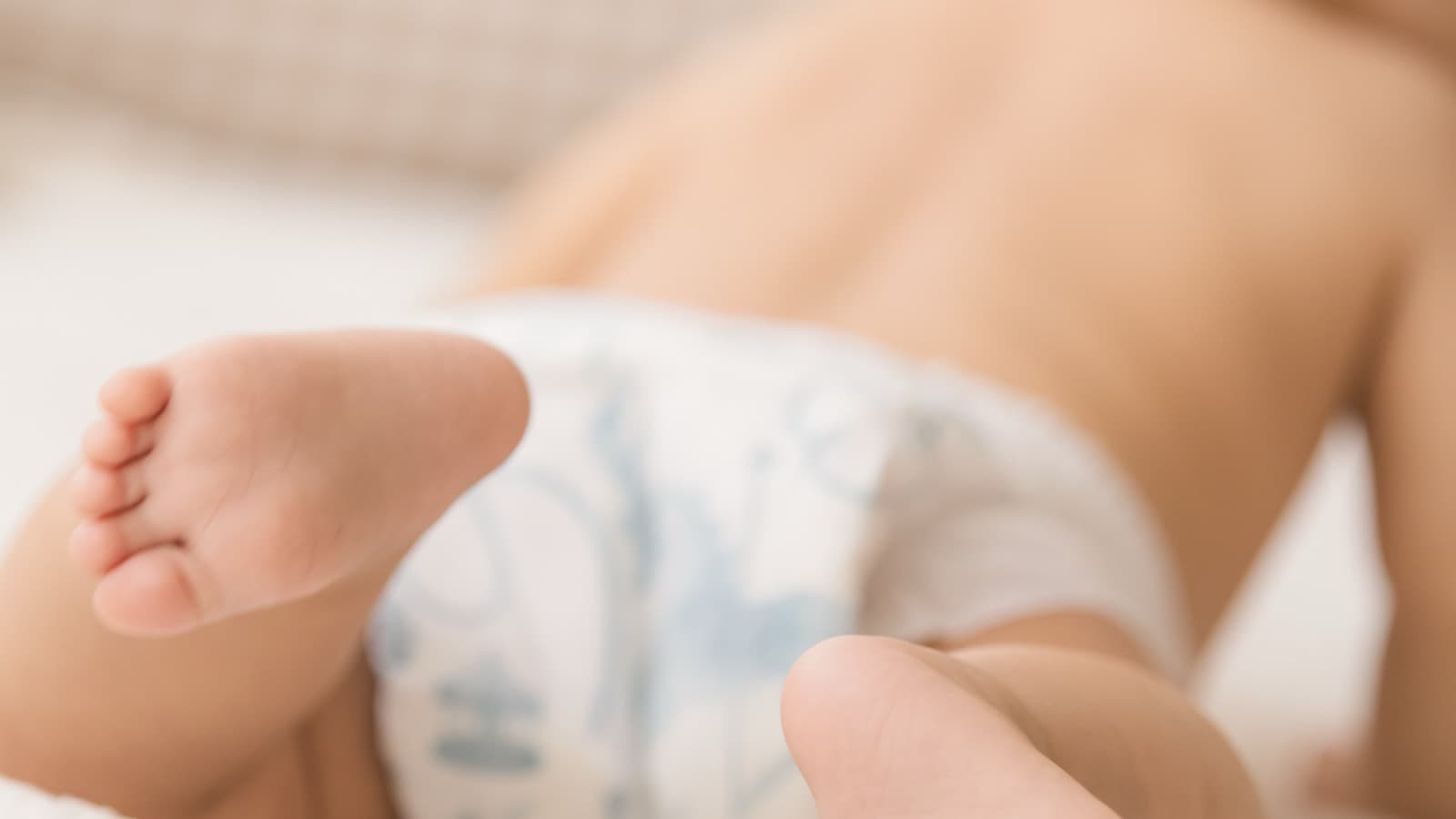
There's a specific sound. Then a pause, while everybody in the room performs the same silent calculation about whose turn it is.
The up-the-back blowout is a rite of passage and it arrives, without exception, on the day you've dressed the baby in something you like. It's also not random, and it isn't a sign that you bought the wrong diapers. It's mechanics, and mechanics can be adjusted.
Why it goes up the back
Newborn stool is loose and it arrives with force. A diaper is built to absorb liquid downward and outward through its core, but very loose stool doesn't absorb at all. It flows, and it flows toward whichever gap offers least resistance. In a baby lying on her back, that gap is the waistband behind her.
Three things make it worse: a gap at the back waistband, a diaper too small in the rise so the back is low, and a baby who has just fed and is now horizontal, which describes most newborns for most of the day.
On the stool itself
The fit fixes
Blowouts are a containment failure at the back, almost every time, and the back is the part nobody checks.
Pull the back panel higher than the front, which is the most effective change available and costs nothing at all. Run a finger around the whole waistband after fastening, because if you can slide a finger flat into a gap at the back then so can everything else.
Pull the leg cuffs outward, since tucked cuffs cause leg leaks and a leg leak frequently becomes a back leak the moment you pick her up. Size up if the tabs are fastening at the outer edge or the rise no longer reaches the belly button, because a diaper too small in the rise can't seal at the back however good your technique is.
Check the fit again after a feed. Babies change shape a good deal between empty and full, and the fit you set an hour ago isn't the fit you have now.
Is a blowout ever a health signal?
Occasionally. Frequent, unusually watery stools are a doctor's question, particularly alongside a fever, blood or mucus, an unsettled baby, or fewer wet diapers than usual. Dehydration moves quickly in small babies and faster in this heat.
Routine newborn blowouts in a baby who's feeding and gaining well are simply what the first months look like. Breastfed newborn stool is loose by design.
Getting the bodysuit off
Baby bodysuits have envelope folds at the shoulders. They aren't a manufacturing quirk and they aren't there for stacking sizes. They exist so that a soiled bodysuit can be pulled down over the shoulders and off past the feet, without going anywhere near your baby's face.
Most of us discover this in about month four, having spent the preceding sixteen weeks pulling soiled clothing over a baby's head. Please consider this your early notification. I found out from a friend at a playgroup and thought about it for the rest of the day. I'm still not sure why nobody prints it on the label.
Mentioned above
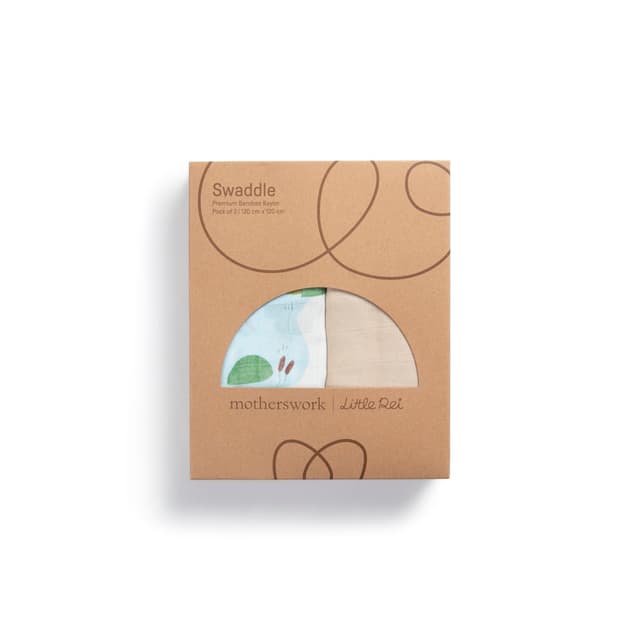 Bamboo Swaddles (2 pc)S$49.00Shop now
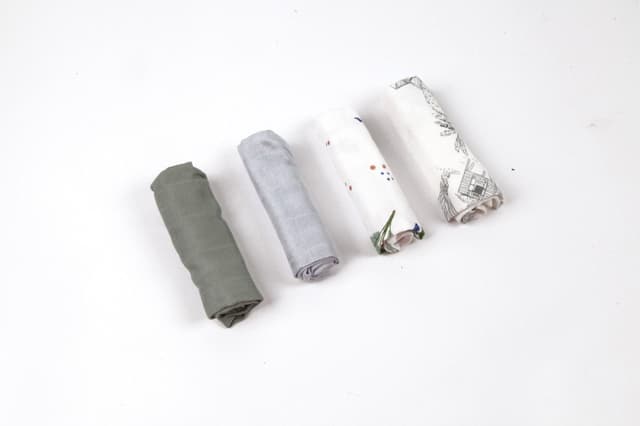 Bamboo Wash Cloth 4pc (Rustic Rainforest)S$25.00Shop now
The out-of-the-house kit
A blowout at home is a laundry event. A blowout at Takashimaya is a logistics event, and the difference lies entirely in what's in your bag. Carry a full change of clothes, because you should assume total loss. Carry a wet bag or a sealable plastic bag, since the nursing rooms here are excellent and are still not laundries. Carry more wipes or cloths than seems reasonable, then double whatever number you first thought of. Carry a muslin, which will serve as a changing mat, a screen, a towel and eventually as the thing you wrap the entire situation in. Have a spare top for yourself, which you'll start doing after this happens to you exactly once.
This guide is general information, written to help you understand a topic and ask better questions. It is not medical advice and does not replace your own doctor, midwife or paediatrician. Anything that worries you about your baby belongs with them.