

Diaper sizing is the only system in modern life where the ranges overlap, the units are inconsistent between brands, and the correct answer is frequently to try it and see. A size 3 in one brand is a size 2 in another, and the weight printed on the packet is a suggestion offered in good faith by somebody who has never met your baby.
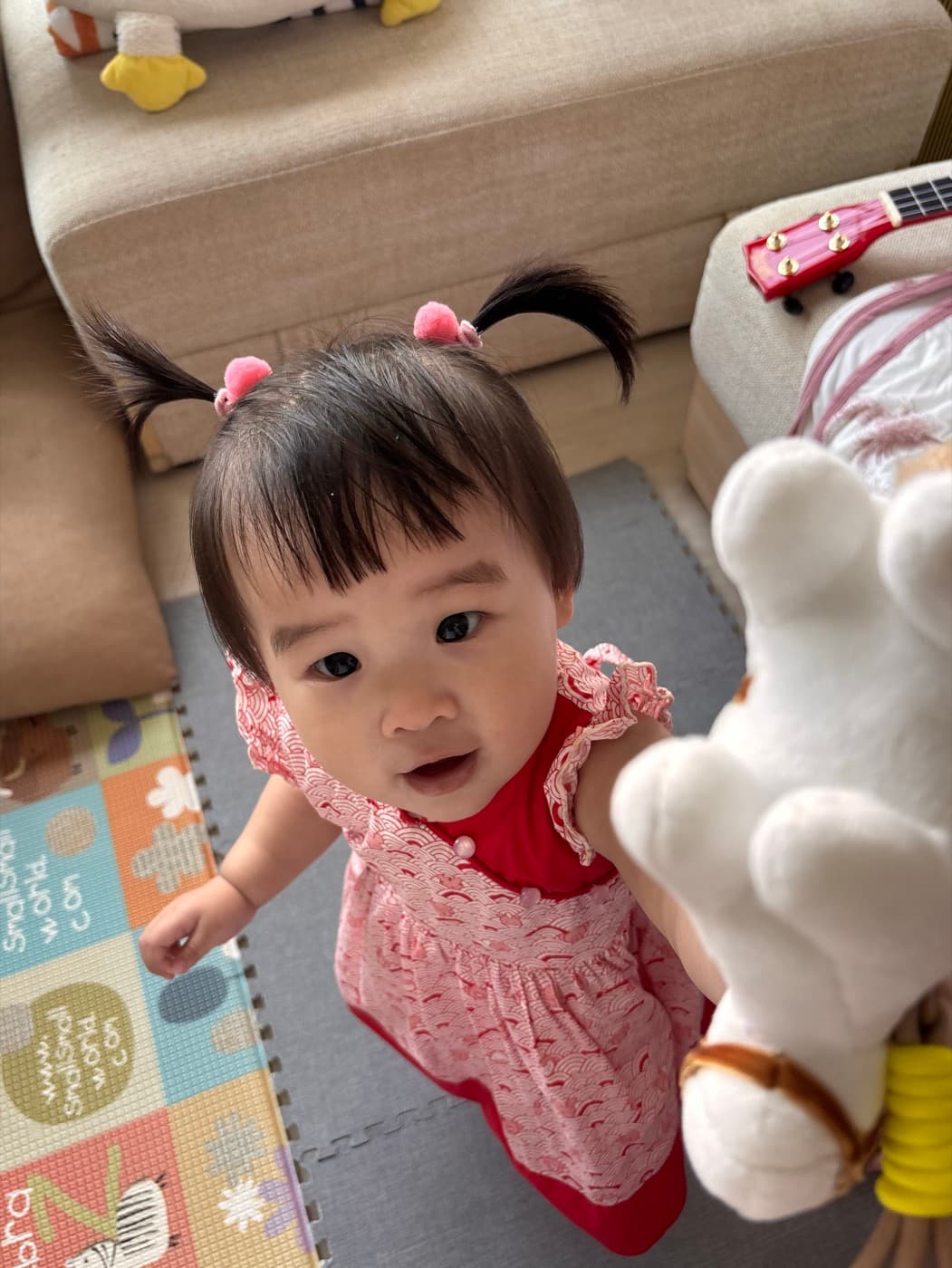
Charles is one and has been in three brands. Richard, at the same age, suited none of them. Same parents, same flat, entirely different thighs.
The signals that matter
None of them is the number on the box, and all of them are visible on her body in about ten seconds.
| Size | Weight range | Typical stage |
|---|---|---|
| Newborn | Up to ~5kg (11lb) | First 2-4 weeks; some babies skip it |
| S / Size 1 | ~4-8kg (9-18lb) | First month or two |
| M / Size 2 | ~6-11kg (13-24lb) | Longest-worn size of the first year |
| L / Size 3 | ~9-14kg (20-31lb) | Around the time they start moving with intent |
| XL and up | 12kg+ (26lb+) | Pants once she's standing, and no more tapes |
| Signal | Too small | Too big |
|---|---|---|
| Marks on the skin | Red marks lasting 10 minutes | None |
| Tabs | Fastening at the very edge | Crossing over toward the middle |
| Waistband | Digging in; no finger room | More than two fingers' slack; visible gap |
| Leaks | A flood; diaper heavy and saturated | A trickle; diaper still feels light |
| Rise | Sits below the belly button | Rides up toward the ribs |
| Leg cuffs | Cutting into the thigh crease | Loose enough to see a gap at the groin |
A leak with a heavy diaper means too small. A leak with a diaper that still feels light means too big. That one distinction resolves most sizing arguments.
Four signs, and any one of them on its own is enough. Red marks at the waist or thighs still visible ten minutes after a change, because a pressure mark means the fit is wrong. Tabs fastening right at the outer edge, or crossing further toward the middle than they used to. Leaks that aren't explained by tucked cuffs or a diaper left on too long, thigh leaks in particular. A diaper that no longer covers the whole bottom, or whose rise is below the belly button once fastened. Frequent blowouts up the back are often a sizing message too, though more often they're a fit-and-technique message, and that one has its own guide below. Too big is the other half of the same question, and it presents completely differently, because a diaper that's too large rarely leaves a mark on anything. It gaps.
Why the weight ranges overlap
Babies aren't cylinders. Two babies at identical weights can have entirely different proportions, a long torso with slim thighs, or the reverse. The fit that counts is around the thigh and across the rise, neither of which tracks neatly with mass.
The overlap is the manufacturer admitting this. When your baby is in the shared zone between two sizes, the right size is whichever one leaves no marks and no gaps. If she's at the top of a range and leaking, size up even if the weight chart says you have months left in it.
What the wrong size looks like
How the sizes usually run
Treat all of this as a map, because the brand you settle on will differ. The fit at the thigh is what you judge on.
Newborn runs to roughly 5kg, and many babies spend two to four weeks there while some skip it altogether, so you buy one small pack and no carton. S, or size 1, covers roughly 4 to 8kg and usually the first month or two.
M, or size 2, covers roughly 6 to 11kg and is typically the longest-worn size of the whole first year. L, or size 3, runs roughly 9 to 14kg and tends to arrive around the time they start moving with real intent. Charles hit L at ten months, I think. I may be a few weeks out.
XL and beyond starts around 12kg, and by that point you'll be buying pants, because fastening tapes onto a standing toddler is a losing proposition that I lost repeatedly with Richard.
Should I buy the big box?
The per-piece price on a carton is better and it's the right choice for the size your baby is settled in the middle of. It's the wrong choice for newborn and size 1, where a growth spurt can strand you with three hundred diapers your baby outgrew on Tuesday.
A sensible approach is small packs until she's past newborn and clearly established in S or M, then a carton in the size she's in the middle of, and one small pack of the next size up kept in the cupboard. Growth spurts don't send advance notice.
One piece of thoroughly local advice: buy the next size before you run out. There's no errand less enjoyable in Singapore than a ten o'clock trip to a 24-hour pharmacy for a size you knew last week you were going to need.
Related decisions
This guide is general information, written to help you understand a topic and ask better questions. It is not medical advice and does not replace your own doctor, midwife or paediatrician. Anything that worries you about your baby belongs with them.