

27 August 2026 · Roshni Mahtani Cheung
Cofounder, Little Rei · Mother of one
She hated thick clothes but slept best swaddled. It took me ten years to work out why.
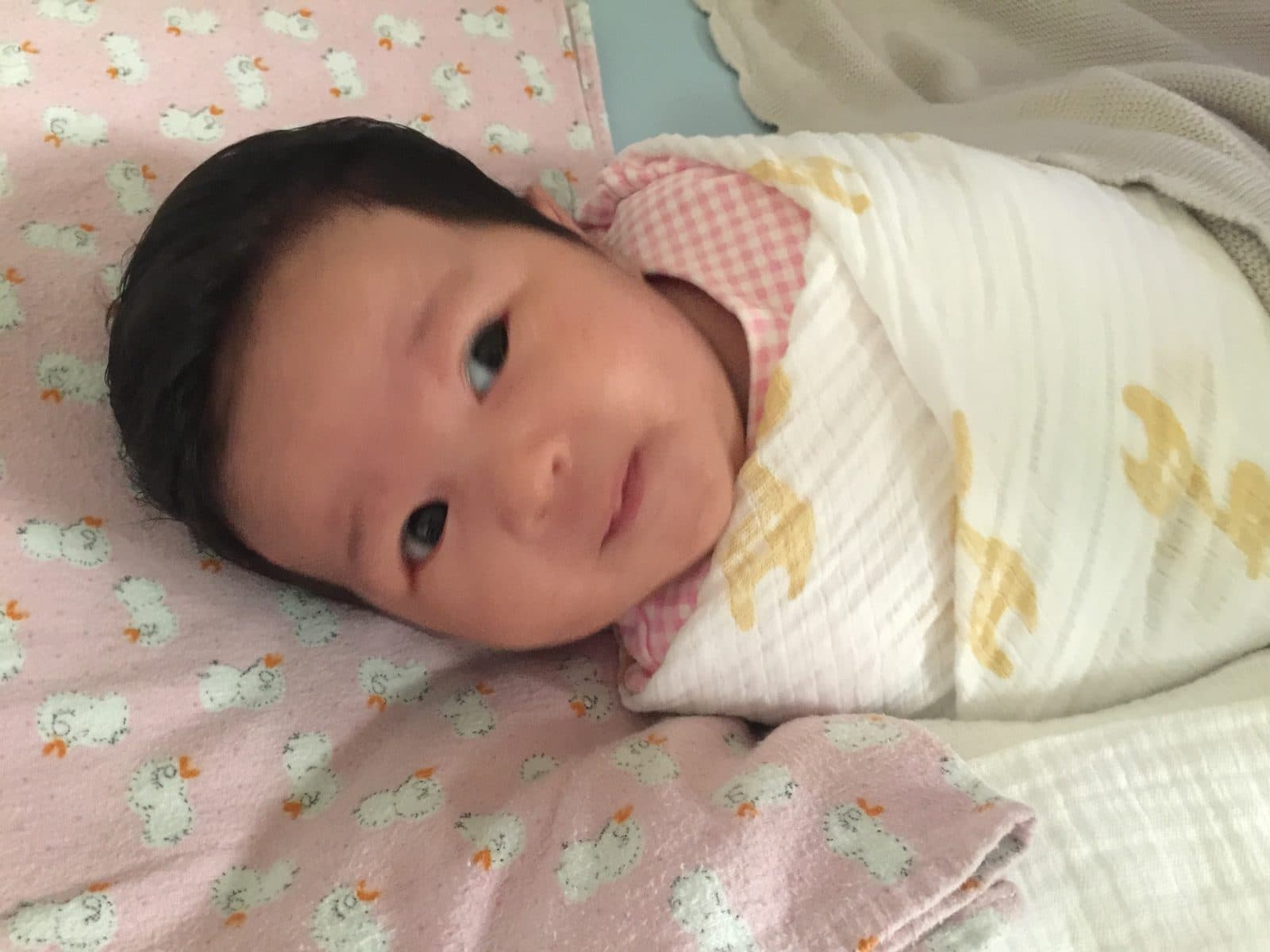
Shan is ten now. She sleeps well, and has done for years, and the reason is almost embarrassingly simple: soft sheets, soft clothes, and nothing that traps heat.
I didn't know any of that when she was a baby, when all I knew was that she was awake. She tossed and turned for half the night, most nights, and she was fussy in a way I could never pin to anything. I went through the list every parent goes through, hungry, wind, too warm, teeth, a leap, illness coming, and none of it explained a pattern that never really stopped.
The part I couldn't make sense of was the contradiction.
The contradiction that confused me for years
She hated thick clothes. Anything heavy or stiff and she'd arch and squirm and make it very clear.
She also wanted to be held, so I carried her everywhere, and being against me was the thing that settled her fastest.
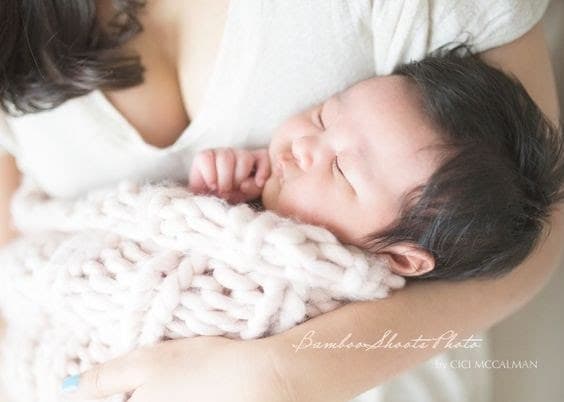
Shan asleep on me at a few weeks old. Being held was always the thing that worked fastest. Photograph by Cici McCalman, BambooShoots Photo.
She slept best swaddled, wrapped firmly, arms in, which made no sense to me at all. How does a baby who objects to a thick sleepsuit want to be wrapped up tight?
The answer, which I only understand now, is that those are two separate things, and I'd been treating them as one.
Occupational therapists draw a distinction here that I wish somebody had drawn for me at the time. Firm, even pressure, a hug, a carry, a snug wrap, tends to settle a child's nervous system, while light, unpredictable touch and rough or heavy texture tend to do the opposite: they alert, and they irritate.
For a child who's over-responsive to touch, those two run in opposite directions, since deep pressure is often welcome where a stiff label at the back of the neck isn't.
That was Shan exactly. She never minded being held snugly; she minded the cloth. Wrapped firmly in a thin muslin she slept, and in anything thicker she fought it. I spent months deciding she'd gone off swaddling, when what she'd gone off was the fabric I happened to be swaddling her in.
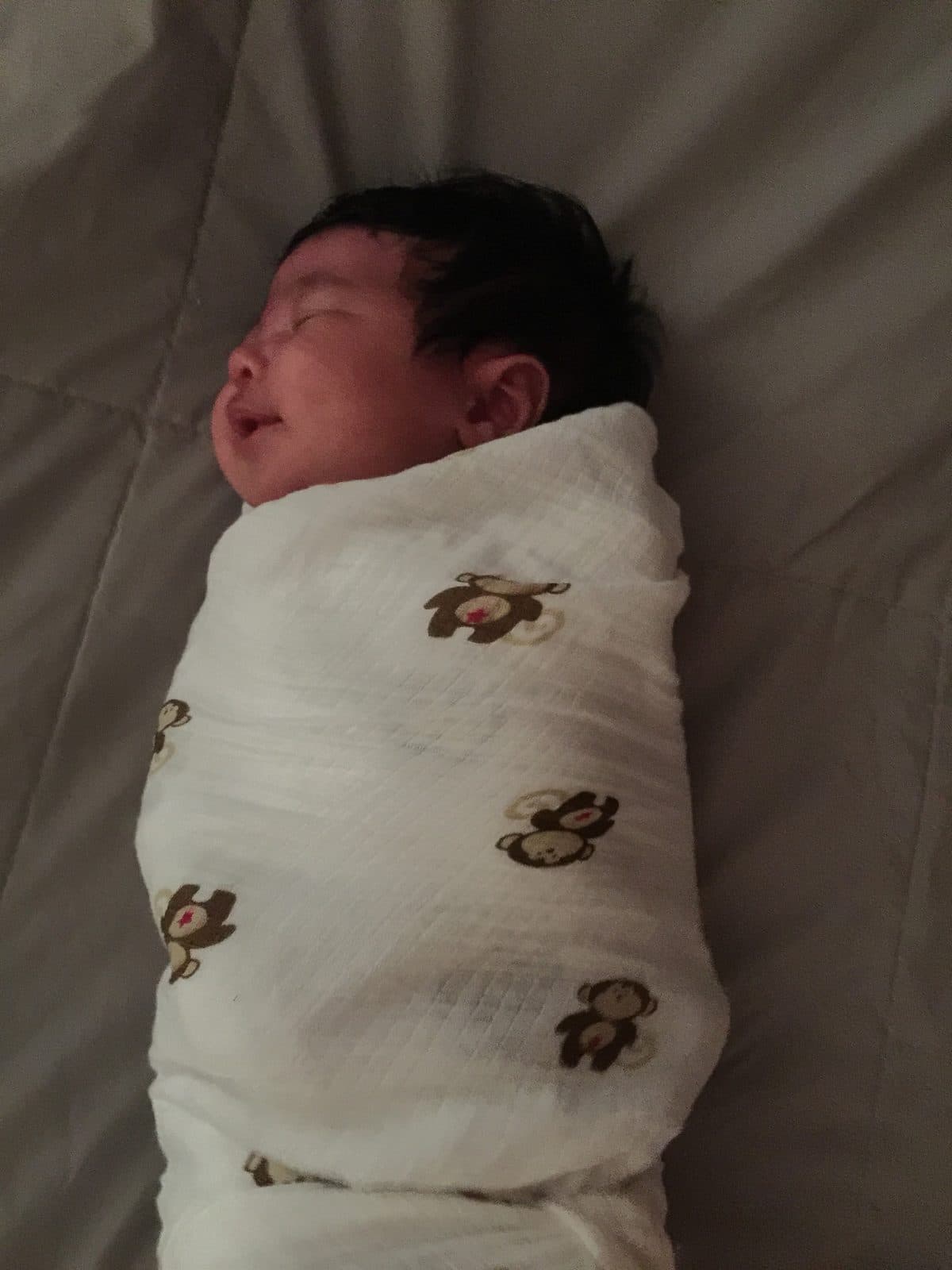
Wrapped firmly, arms in, in a thin muslin. This is the version that worked, and it looks almost identical to the version that didn't.
Breathability mattered as much as softness, which makes sense here, because a thick wrap in Singapore is a hot wrap. A baby who's too warm and a baby who's bothered by her fabric look identical from the doorway, and Shan was regularly both at once.
The blanket, and the frozen toes
Here's the detail that finally settled it for me, years later.
When she was older she'd throw her blanket off. Not kick it loose in her sleep. Throw it off, because she couldn't stand how thick it was.
Then her toes would be freezing, properly, startlingly cold, and she'd not pull the blanket back over herself. She'd work her feet under my legs and steal the warmth off me.
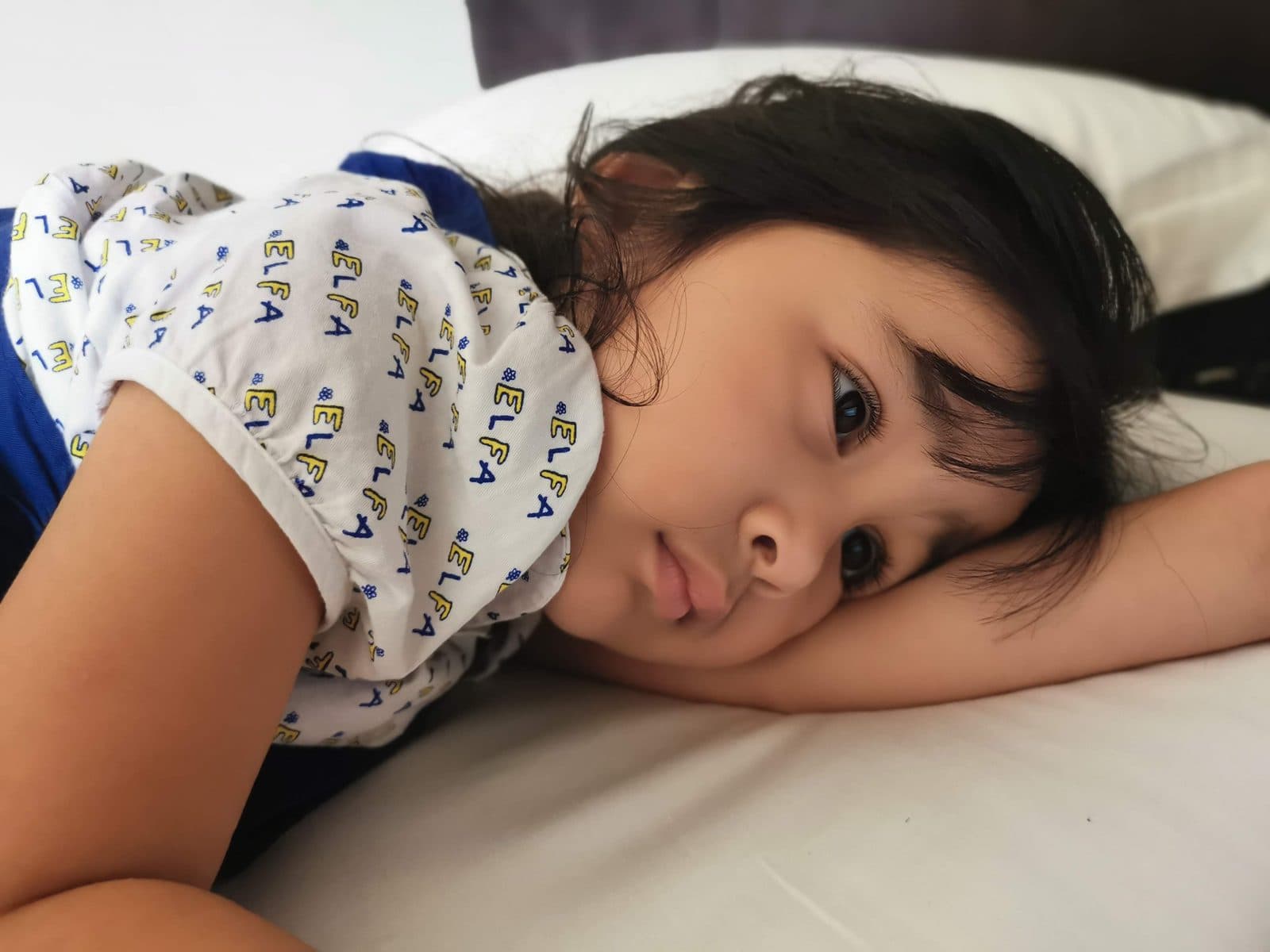
Older, and no blanket on her, and she'd rather be cold than have that particular weight on top of her.
That one habit sums it up. She wasn't too warm. She was cold, and she still wouldn't have the blanket, because the problem was never the temperature. It was the cloth. She wanted warmth, just from a person and not from a blanket. It also breaks a rule I'd otherwise have believed, one most sleep advice repeats: a child who kicks the covers off is too hot. Sometimes. Not always. Shan threw hers off and was cold underneath it, and if I'd read that as overheating I'd have taken a layer away and made her colder.
Cold hands and feet on their own are normal in children and aren't a reliable guide to whether they're warm enough. That's true and it's in our own guides. What was telling was the pairing: refusing the cover, and seeking warmth from a person, at the same time. That combination isn't a temperature signal at all.
If she throws the covers off, check the back of her neck for whether she's too warm. Then ask a completely separate question about the cover itself: how heavy is it, what does it feel like, and would she accept a thinner one? For us the answer was always a thinner one.
I assumed for a long time that Shan was unusual. She isn't.
Ben-Sasson, Carter and Briggs-Gowan surveyed 925 children aged seven to eleven and found that 16% of parents reported at least four tactile or auditory sensations that bothered their child. Roughly one in six. I don't know what the figure is here, though I suspect it's the same and nobody has counted.
The same group also followed children from infancy into primary school, and that's the finding that stopped me: the pattern begins in the first year. It's already there in the cot, in the tossing and the fussing, but it's almost never recognised then, because a baby can't tell you and because nothing about it changes.
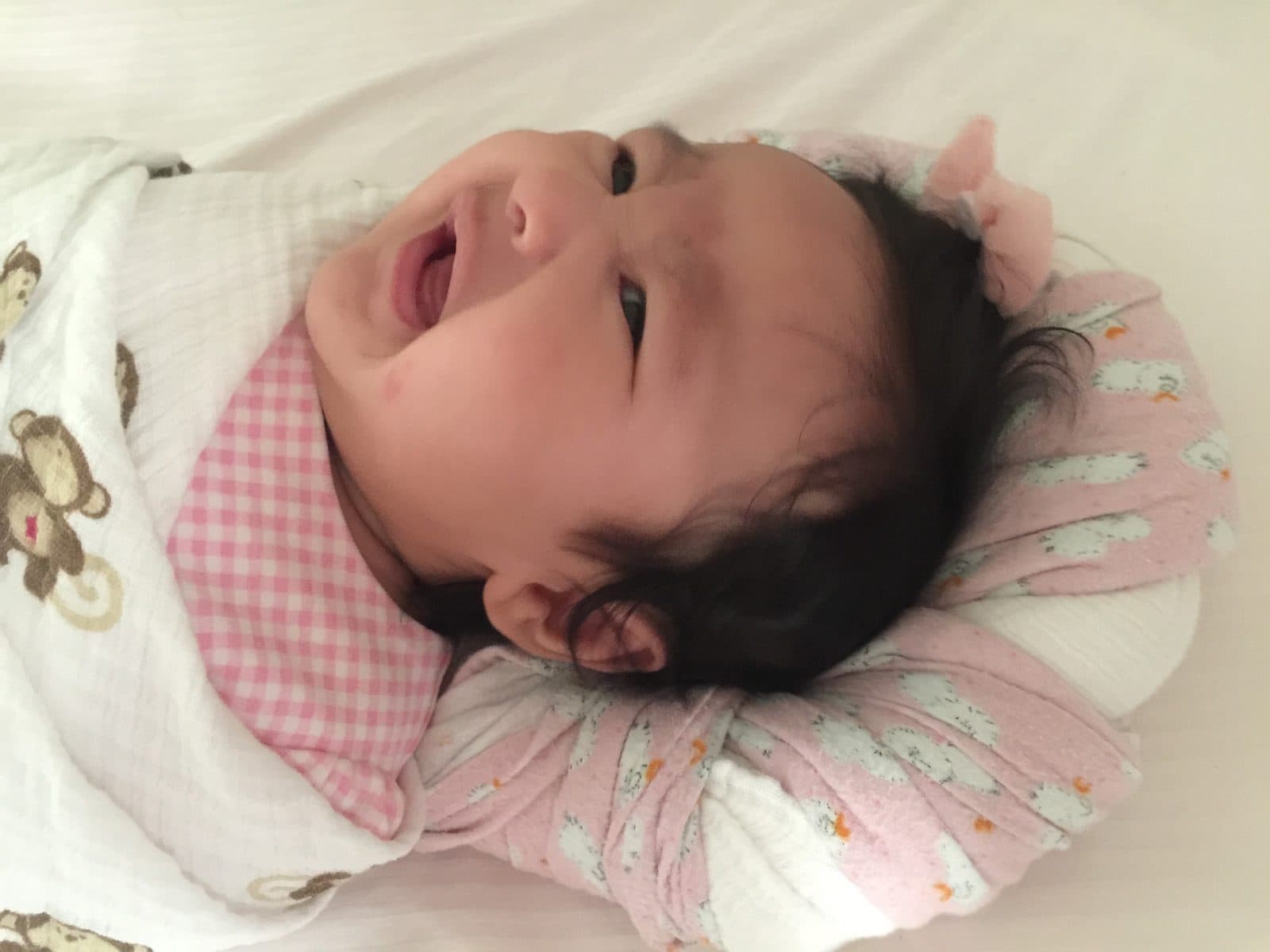
Same baby, same wrap, thicker cloth. For months I read this as a baby who had gone off being swaddled.
That's the trap. Every other reason a baby is unsettled is a change: a tooth, a leap, a hot week, an illness on the way. This one is constant, so it doesn't look like a cause at all. It looks like her personality.
What carrying her gave me
One thing I'd say to anybody in the middle of this: I carried Shan constantly, and it's the only reason I have any of this information at all.
You notice things against your own body that you can't see from across a room. When she stiffened. What she settled into. Which tops made her squirm within a minute of going on.
I wasn't collecting evidence, and I didn't connect any of it at the time. But ten years later, when the pattern finally made sense, it was all there to look back on. Noticing is what let me connect it in the end, and noticing is free.
What I would check now, before buying anything
If I had that year again, I'd run all of these before deciding it was a phase, since every one costs nothing and uses what is already in the house.
- Cut the labels out. All of them, on everything she sleeps in. Cheapest test there is, and the one I would now do first.
- Turn a seamed sleepsuit inside out for two or three nights and watch what happens.
- Wash the sheet again with no fabric softener at all. Softener works by leaving a coating on the fibre, which is exactly what sensitive skin doesn't want.
- Swap anything synthetic for the thinnest, softest, most breathable thing already in the drawer. Not a new one. The one you have.
- Rule out temperature first, and properly. In this climate it is more often the answer and it's faster to test.
- Change one thing at a time and give it two or three nights. Changing four things at once tells you nothing, which I can confirm, because that's what I did.
What I wouldn't do is the thing I did, which was to decide the swaddle had stopped working and abandon it, when it hadn't stopped working at all. The wrap was right and the cloth was wrong, and those are very different problems with very different answers.
The guides that cover the parts of this properly
Shan still sleeps with her Little Rei pillow, as she has for years, and there's a small one that lives in the car, which she sleeps on all the way to school and reaches for on a long drive without thinking about it.
It's also, to my mild amusement, her favourite present to give her friends.
One thing to be plain about, because this is largely a baby guide and Shan is ten. A pillow isn't a baby object. Under twelve months there's no pillow, no soft toy and no loose bedding in a cot at all. A first sleeping pillow usually waits until a child moves out of a cot and into a bed, commonly somewhere between eighteen months and three years, which we've written out properly elsewhere and none of which has changed. The pillow is the end of this story, not the beginning.
I'm a mother, and I run a textile company. I'm not a clinician, and material sensitivity isn't a thing to diagnose from a blog post, least of all one written by somebody who sells sheets.
If sensitivity to texture, sound or light is marked, get it assessed, because managing it at home isn't enough. The American Academy of Pediatrics is explicit that sensory processing disorder shouldn't be used as a standalone diagnosis, and that a child with pronounced sensory difficulty should be properly evaluated, because it can go alongside things that need identifying early. That's a conversation with a doctor, not a change of bedding.
What I can tell you is only the thing I know. I spent a year hunting for what had changed when nothing had changed, and the answer was in my hands the entire time.
Mentioned above
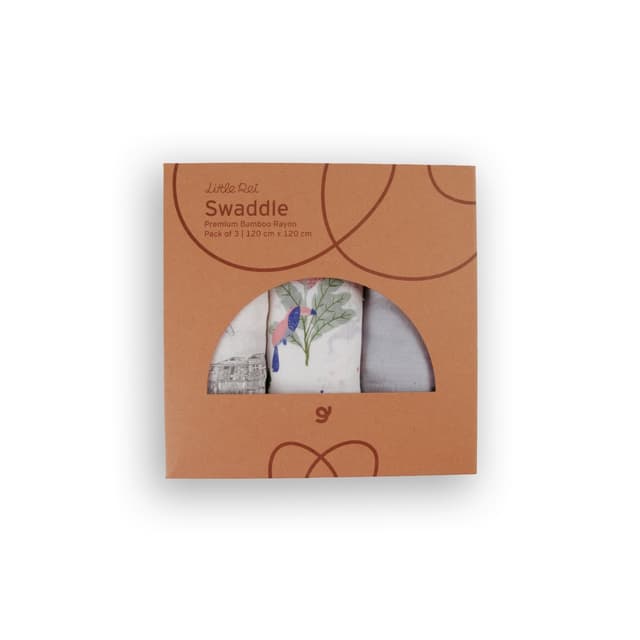 Bamboo Swaddles (3pc)S$69.00Shop now
This guide is general information, written to help you understand a topic and ask better questions. It is not medical advice and does not replace your own doctor, midwife or paediatrician. Anything that worries you about your baby belongs with them.