

22 May 2026 · Veronica Chi
Business & Product Director · Mother of two
The Huggable Little Pillow You and Your Toddler Will Love
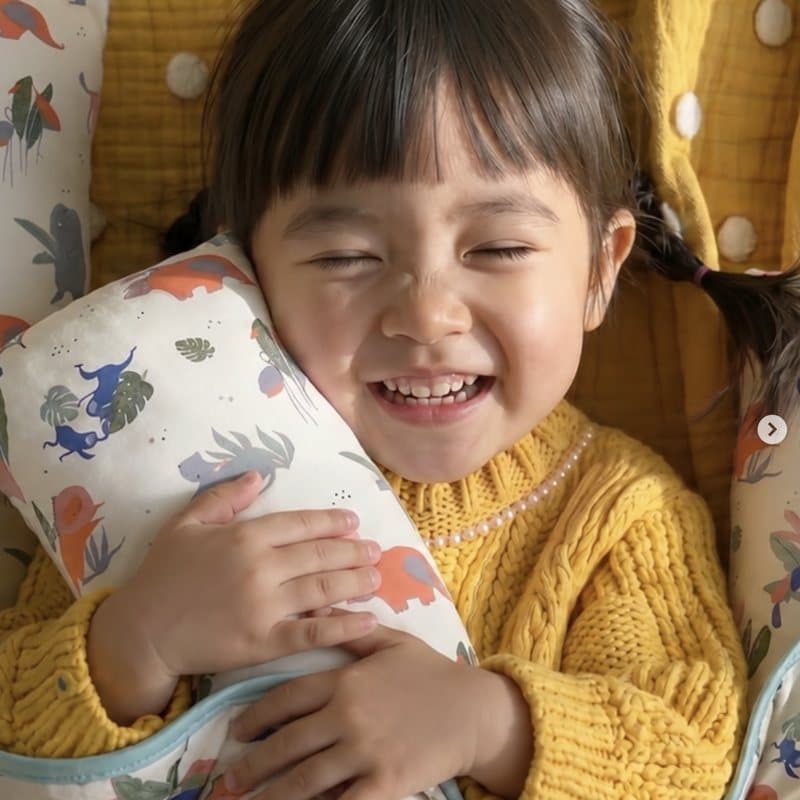
I sell buddy pillows, so the right thing to do here is put the safety guidance above the sales pitch. Pillows don't belong in a baby's sleep space, the age at which one becomes appropriate is later than most people assume, and a pillow a toddler carries around in the daytime is a different object from a pillow they sleep on.
When a child can use a pillow
Later than most people assume, for a safety reason.
| Age | In the sleep space | Notes |
|---|---|---|
| Under 12 months | No pillow, ever | Nothing soft in the cot; a sleep sack replaces bedding |
| 12-18 months | Comfort object low-risk; pillow still unnecessary | A cot mattress is flat by design |
| 18 months, 3 years | The usual first-pillow window | Generally alongside the move to a bed |
| First pillow | Small, firm, thin | An adult pillow pushes a short neck forward |
Not in the first year, unambiguously. Safe-sleep guidance across countries is consistent: a baby under twelve months sleeps on a firm flat surface with no pillows, no loose bedding, no bumpers and no soft toys, because soft objects in a sleep space raise the risk of suffocation and of sudden infant death.
After twelve months the risk falls sharply, and most guidance still suggests waiting, commonly until the child moves out of a cot and into a bed, which is often somewhere between 18 months and three years. The practical reasoning is that a cot mattress is flat and a child in a cot doesn't need head elevation, so a pillow there's an object to climb on more than an object to sleep on. If in doubt, ask your own health visitor, nurse or doctor.
- Under 12 months, no pillow, no soft toys, no loose blankets in the sleep space. A sleep sack replaces bedding.
- 12 to 18 months, a comfort object in the cot becomes lower risk; a sleeping pillow is still usually unnecessary.
- 18 months to 3 years, the usual window for a first pillow, generally alongside the move to a bed.
- A first pillow should be small, firm and thin. An adult pillow is too tall and pushes the head forward.
- Daytime cuddling is a separate question. A supervised, awake child can hug a pillow long before one belongs in their bed.
Why do toddlers attach to a pillow so intensely?
Because it's doing a real psychological job. A comfort object, which the developmental literature calls a transitional object, helps a child bridge the gap between being soothed by a parent and soothing themselves. It's portable, it smells like home, and it's reliably available when a person isn't, and that's the reason the attachment is so specific and so stubborn. It isn't the type of pillow but that pillow, the one that smells right and feels right and has been through everything. Roughly half of children form an attachment like this, usually somewhere between about eight months and two years, and it goes with easier separations. It fades on its own, typically during the preschool years, and doesn't need to be broken.
The rest of the bed
What makes a good first one
Flat, firm and washable. Every appealing feature beyond that is working against you.
- Small and low. A toddler's neck is short and a thick pillow tips the head forward. A thin, firm pillow keeps the spine roughly neutral.
- Firm, never plush. A pillow the head sinks into has exactly the property you're trying to avoid.
- A removable, washable cover. It'll be vomited on, and the ability to wash the cover while the child keeps the pillow prevents a great deal of grief.
- Breathable fabric. Small children sweat heavily through the head and a pillow that traps heat and moisture wakes them and irritates skin.
- A certification you can check, OEKO-TEX Standard 100 or an equivalent, since this is an object pressed against a face for hours a night.
- Buy two identical ones if you can. The best piece of comfort-object advice anyone gives: a rotating spare means one can be washed, and a lost pillow isn't a catastrophe.
Mentioned above
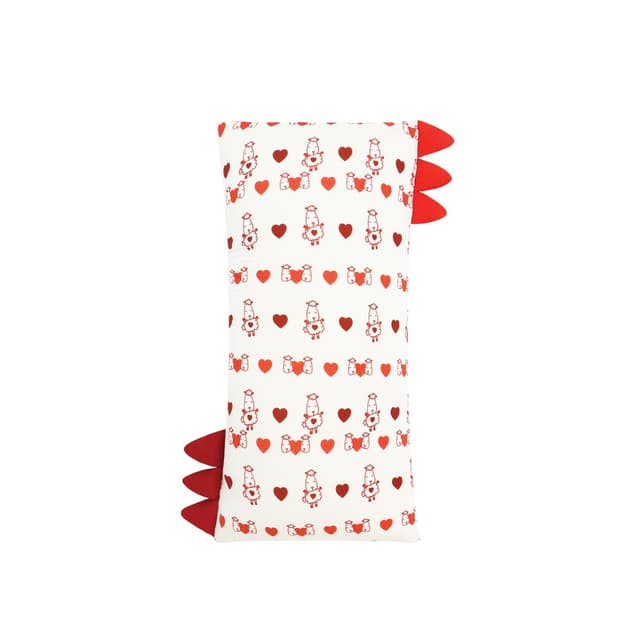 Baa Baa Sheepz Hearts Buddy Pillowfrom S$29.00Shop now
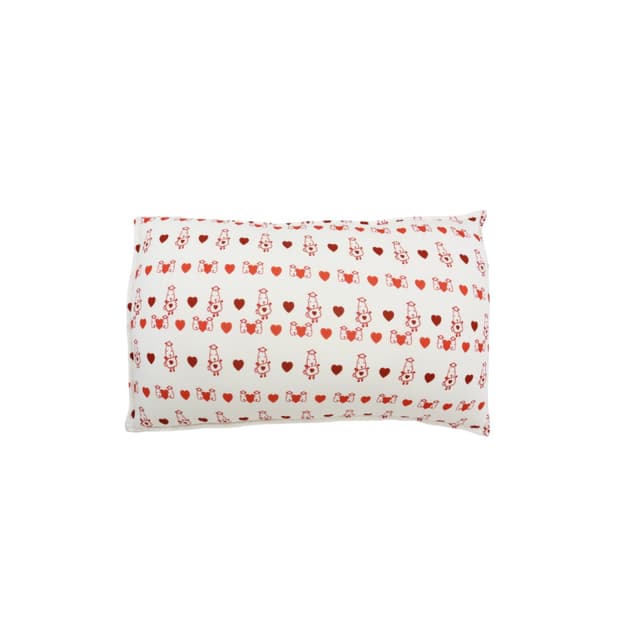 Baa Baa Sheepz Head Pillow (Kids)S$59.00Shop now
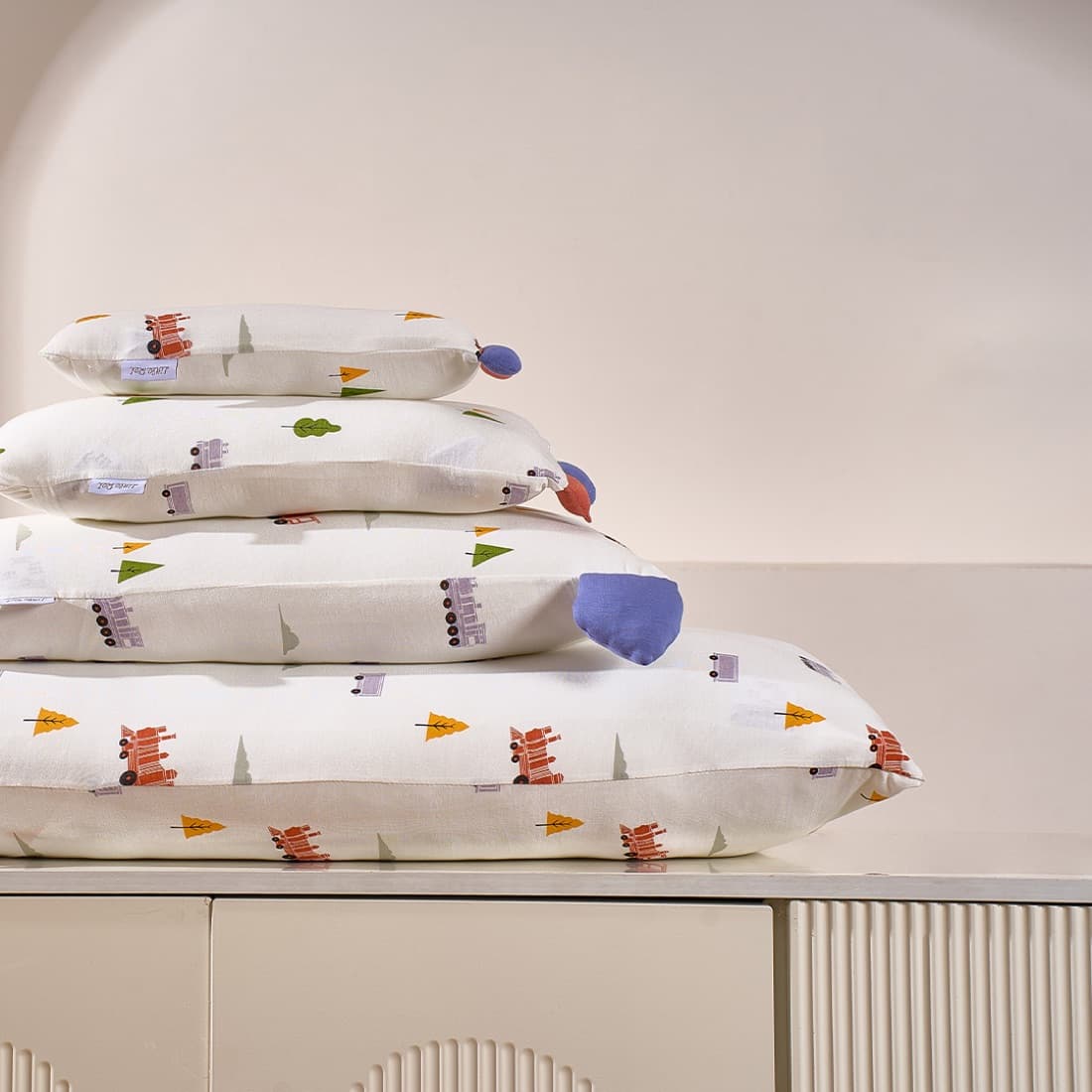
Ours are bamboo-cased and come in a few shapes: a long buddy pillow that a child can put an arm over, a smaller head pillow, and separate cases so the same pillow can be washed without disappearing. The long shape is the one children tend to bond with, because it can be hugged as well as slept on.
How do you introduce one?
Gradually, and in the daytime first. A pillow introduced as a bedtime rule is an imposition. One that has been carried around, sat on the sofa with and taken in the car becomes theirs before it ever arrives in the bed. A fortnight, I'd guess, though I haven't timed it.
- Let them use it awake for a week or two before it goes anywhere near sleep.
- Sleep with the cover yourself for a night, or keep it in your bed, so it smells familiar.
- Introduce it in a stable week, not during illness, travel or a house move.
- Wash the spare and rotate the two, so both smell the same and neither becomes irreplaceable.
- Don't remove a comfort object to encourage independence. It supports separation and doesn't undermining it.
What should you watch for
Keep pillows out of the cot until you've decided the child is old enough for one, and keep them away from the face of a sleeping baby regardless of age. Check seams and any attached parts periodically, since a pillow with a detachable feature becomes a small-parts problem once it starts to wear. Wash covers regularly, more often in hot or humid conditions where they hold sweat.
Treat the attachment itself as a good sign. A child who can settle themselves with an object has acquired a real skill, and the pillow is the least of what's going on. It happens to be the part you can buy.
Sources
This guide is general information, written to help you understand a topic and ask better questions. It is not medical advice and does not replace your own doctor, midwife or paediatrician. Anything that worries you about your baby belongs with them.