

9 June 2026 · Veronica Chi
Business & Product Director · Mother of two
Why Should You Use a Nursing Pillow?
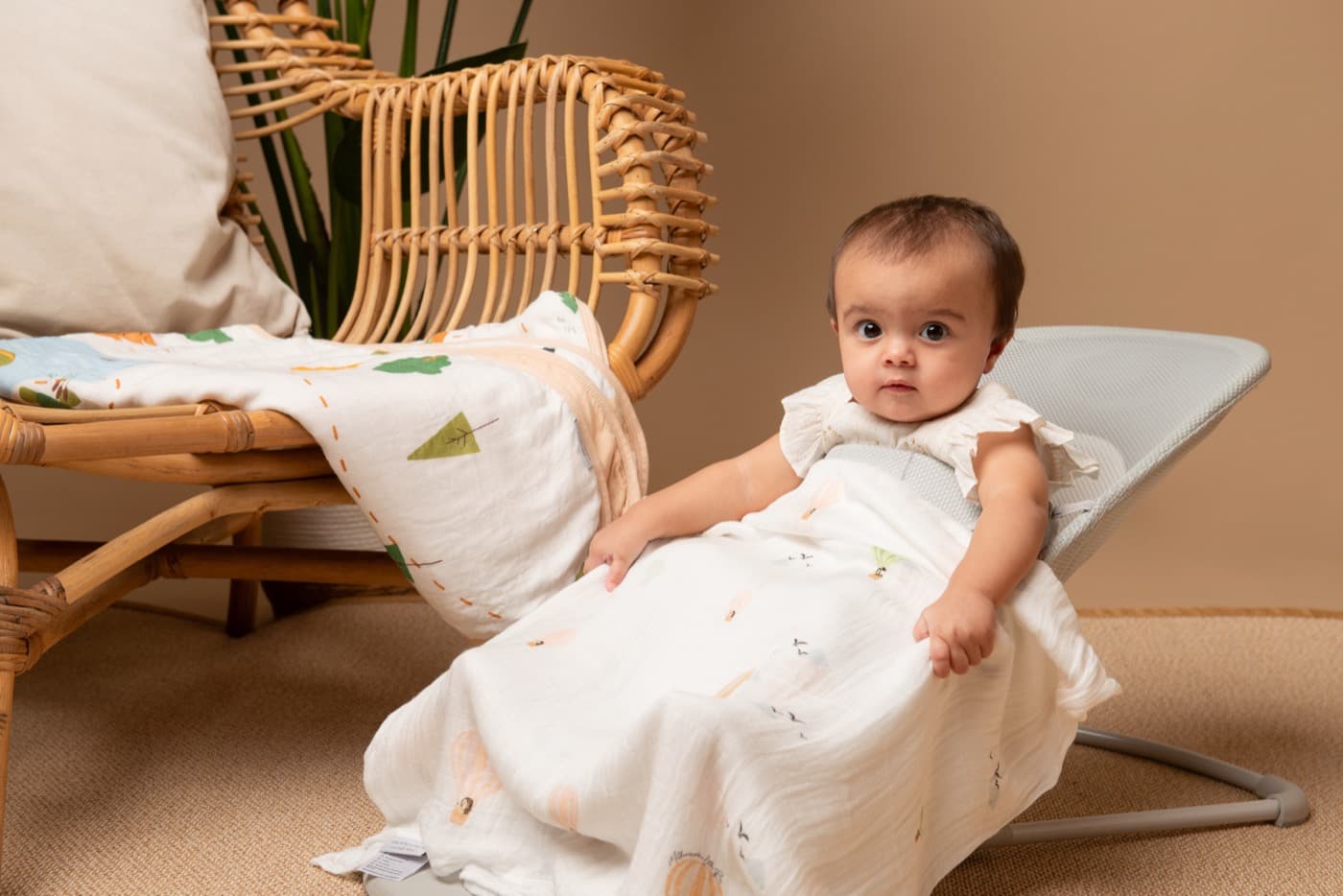
This is a product page with a safety warning in the middle of it, and I'd rather put the warning at the top.
A nursing pillow is a feeding aid. It isn't a sleep surface, it isn't a lounger, and it isn't somewhere to leave a baby unattended. Safety regulators have recorded infant deaths associated with nursing pillows where babies were left to sleep on or against them, and the mechanism is the one that makes all soft surfaces dangerous: a young baby whose head falls forward or whose face turns into padding can't reliably move herself out of it.
Used for feeding, with an adult present and paying attention, it's a good object. Used for anything else it's a hazard. Everything below assumes the first.
What does a nursing pillow do?
It brings the baby up to the breast, so that you aren't bringing the breast down to the baby.
The difference is postural. A feed takes twenty to forty minutes in the early weeks and happens eight to twelve times a day, which is several hours a day held in one position. Without support most people compensate by rounding the shoulders and craning the neck forward, and the resulting neck, upper back and wrist pain is one of the most common physical complaints of the first months. It's also entirely preventable, mostly, though I suspect some of it is the sleep, which no pillow fixes.
A pillow that takes the baby's weight lets your shoulders drop and your back stay against the chair. That's what you're buying.
Does a nursing pillow help with latching?
Indirectly, and only modestly.
A stable, well-supported baby at the right height is easier to position, and position is one of the things that determines whether a latch is deep. It removes an obstacle. It doesn't fix a latch.
If feeding hurts beyond the first few seconds, if you hear clicking or see dimpled cheeks, or if she's feeding constantly and not gaining, that's a latch problem and the answer is having somebody experienced watch an entire feed in person. That's the highest-value thing available to you in the early weeks and no cushion substitutes for it.
On the feed itself
How to choose one
Four things, and firmness is the one people get wrong.
- Firm, and never soft. A pillow that compresses under the baby's weight lets her sink, which defeats the height it was bought for and makes the surface less safe.
- The right height for you, which depends on your torso and your chair. A pillow that is too thick pushes the baby above the breast and creates a shallow latch, which is worse than no pillow at all.
- A removable, washable cover, because it'll need washing more often than you expect.
- A firm strap or a shape that stays put, since a pillow that slides during a feed makes you compensate with your arms, which is the problem you were solving.
Do you need one? No. A folded bath towel or two ordinary cushions from the sofa do this job. Plenty of people feed four children without ever owning one. What a purpose-made pillow buys you is convenience and a firm consistent height, and if the budget is tight this is a comfortable place to save.
Mentioned above
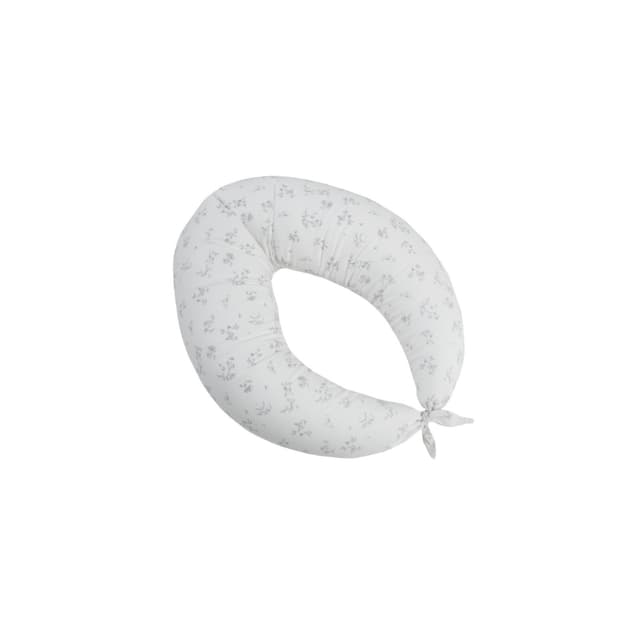 Cambrass Moon Nursing PillowS$129.00Shop now
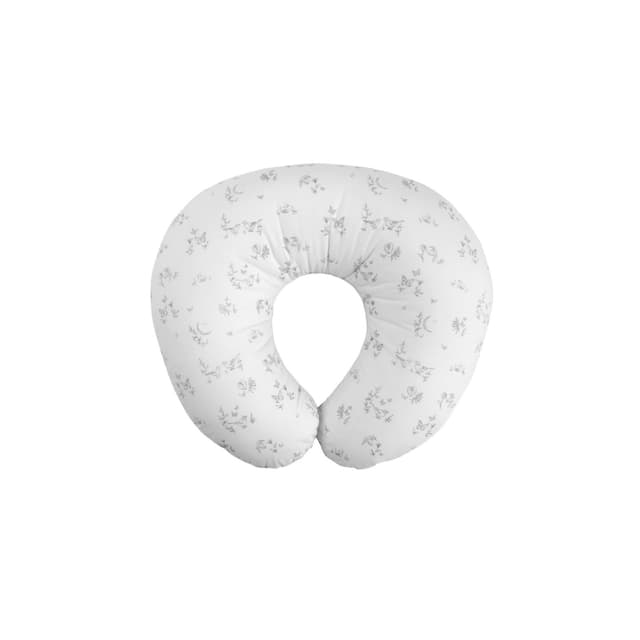 Cambrass Small Nursing PillowS$69.00Shop now
Whether a is nursing pillow safe for baby to sleep on
No. Not for a nap, not for five minutes, not while you're in the room.
Babies fall asleep during feeds constantly and that's normal. What has to happen next is that she's moved to a flat, firm, clear surface on her back. The pillow isn't a place she stays.
- Never leave her on or against it unattended, at any age.
- Never put it in the cot, and never use it as a prop, a positioner or a barrier.
- Never use one on a sofa or a bed where she could roll into a gap.
- Don't use one to prop a bottle, which is a choking risk as well as a feeding one.
- Take her off it the moment the feed ends, even if she's asleep, especially if she's asleep.
- Don't fall asleep holding her while she's on it, which is the version that catches exhausted people at four in the morning.
I sell these. I'd still rather you bought a cheaper one and followed that list than bought ours and didn't.
Questions we get
Do I really need a nursing pillow?
It isn't essential, but with eight or more feeds a day in the newborn months, raising baby to breast height saves your back, shoulders and wrists.
Can baby sleep on a nursing pillow?
No. Nursing pillows are for supervised feeds only. For sleep, always move baby to a flat, firm cot with nothing loose around them.
Does a nursing pillow help after a c-section?
Yes. It lifts baby's weight away from the incision and lets you feed upright without pressure on your tummy while you heal.
Can I use a nursing pillow for bottle feeding?
Yes. The posture benefits are identical, so partners and grandparents get the same comfortable, upright feeds.
What shape of nursing pillow is best?
A crescent or moon shape that hugs your waist suits most positions. Smaller pillows suit petite frames and feeds away from home.
Sources
- US Consumer Product Safety Commission: Nursing pillows: safe sleep warning
- NHS: Breastfeeding: positioning and attachment
- American Academy of Pediatrics: A Parent's Guide to Safe Sleep
- HealthHub: Ministry of Health Singapore
This guide is general information, written to help you understand a topic and ask better questions. It is not medical advice and does not replace your own doctor, midwife or paediatrician. Anything that worries you about your baby belongs with them.