

Every nature craft list assumes an autumn. Fallen leaves in four colours, acorns, conkers, pine cones. None of that grows here, but the local substitutes are better than they sound.
Something worth collecting falls in Singapore every week of the year. There's just no change of season to tell you. You lose the seasonal drama and gain a supply that never runs out, and a walk to the void deck and back is usually enough to stock a whole afternoon.
What deserves collecting
The tropics hand you completely different materials from every craft book on the shelf, and in several cases better ones.
| Find | Where | Craft |
|---|---|---|
| Frangipani flowers | Everywhere, year round | Floating bowls; pressing; garlands |
| Rain tree pods | Park connectors, roadsides | Rattles; painting; sorting |
| Rubber seeds | Older estates, parks | Polishing; counting; printing |
| Saga seeds | Under saga trees | Counting; jars. NOT for under-threes |
| Bougainvillea bracts | Estate planting everywhere | Pressing; collage; colour sorting |
| Casuarina needles | East Coast, beaches | Nest building; texture play |
| Sea almond leaves | Coastal parks | Big leaf printing; rubbings |
| Coconut husk fibre | Beaches, after a storm | Texture boards; brushing |
| Shells and coral rubble | Changi, Pasir Ris | Sorting; painting; sound jars |
Saga seeds are the classic Singapore childhood object and also the wrong size and shape for a small airway. Beautiful in a jar on a high shelf, not in a toddler's hand.
The crafts themselves
All of these are doable at the table with whatever you picked up on the way home. Leaf rubbings are the one craft that works from about two and still pleases a six-year-old: a sea almond or rain tree leaf under paper, rubbed with the side of a crayon. Flower pressing between two sheets of kitchen roll under a stack of books works well with frangipani and bougainvillea, and four days is enough in this humidity provided you change the paper. Nature paint brushes are a bunch of casuarina needles or leaves bound to a stick with a rubber band, and they make marks nothing else makes. A texture board of coconut fibre, a smooth pebble, a rough pod and a leaf glued to card suits a baby who's sitting up, with supervision. Pod rattles are two rain tree pods taped together with a few seeds inside, then painted. They're loud, and toddlers adore them. For clay printing, press a leaf, a shell or a pod into flattened clay and lift it off. The print it leaves is often more interesting than the object.
A colour hunt costs nothing and turns a walk into an activity: go out with a strip of card in one colour and find things that match. Floating flowers in a shallow bowl of water, which is a real thing people do here, will hold a two-year-old longer than any toy in the house.
More to do
What not to pick up
Imported craft lists can't help with this part, because the hazards here are different. Know these before you send a three-year-old off to collect.
Saga seeds, rubber seeds and any hard round seed are perfect choking size and extremely tempting, so not with an under-three. Anything with milky sap is out, because several common ornamental plants here leak a latex that irritates skin and eyes badly.
Caterpillars, and especially hairy ones, cause a nasty contact rash and children pick them up on sight. Standing water in pods, tyres or containers should stay where it is, since Aedes mosquitoes breed in very small volumes and there's no reason to carry any home.
Mushrooms and fungi never go in the bag. Nor does anything from a drain or a monsoon canal, however interesting it looks. And leave fallen fruit alone, because it has usually been cut open by animals and is full of things you don't want on hands that go into mouths. I don't know what exactly. I've never wanted to find out.
What to do with what comes home
Wash it, dry it properly and use it within a few days. In this humidity anything organic goes mouldy in a container far faster than it would in a temperate climate, and a bag of leaves left in a cupboard for a week is a science experiment.
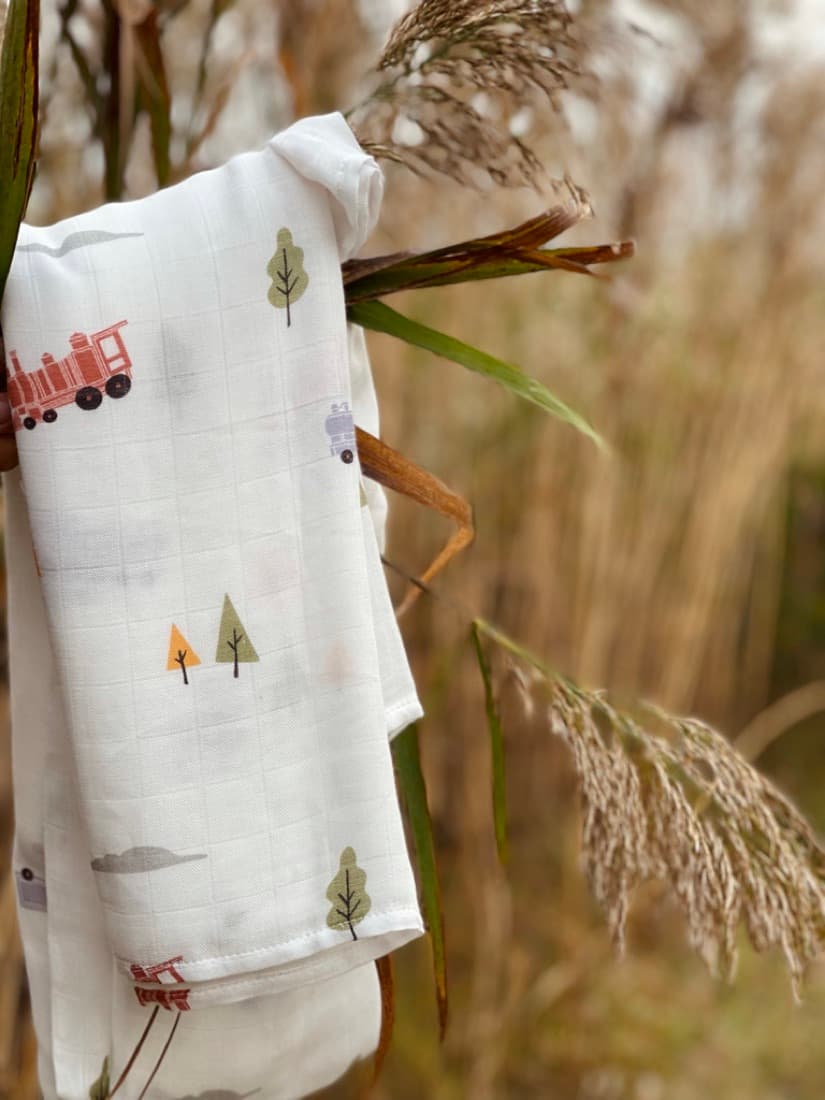
The practical version: rinse everything in a colander, lay it out on a muslin in the sun for an hour, and wash hands before and after. A muslin works as the collecting bag, the drying rack and the craft surface, which is more than a plastic tub can do.
Things parents ask me
What can children collect for nature crafts in Singapore?
Frangipani flowers, rain tree pods, bougainvillea bracts, casuarina needles, sea almond leaves, coconut husk fibre and shells. All available year round, with no season to wait for.
Are saga seeds safe for toddlers?
No. They're exactly the wrong size and shape for a small airway and very tempting to pick up. Keep them in a jar on a high shelf until at least three or four.
What should children not pick up outdoors in Singapore?
Hard round seeds under three, anything with milky sap, hairy caterpillars, mushrooms, fallen fruit, and anything holding standing water.
How do you dry leaves and flowers in a humid climate?
Rinse, then lay them on a cloth in the sun for an hour, and use them within a few days. Anything organic left sealed in a container here moulds within a week.
What nature craft works for a one-year-old?
A texture board of things glued to card, leaf rubbings with a crayon, and floating flowers in a shallow bowl of water, all with close supervision.
Reading
This guide is general information, written to help you understand a topic and ask better questions. It is not medical advice and does not replace your own doctor, midwife or paediatrician. Anything that worries you about your baby belongs with them.