

18 June 2025 · Roshni Mahtani Cheung
Cofounder, Little Rei · Mother of one
Why Does My Baby Cry During and After Feeds?

Most newborn crying has no cause you can find, which is the most freeing fact in early parenthood once you believe it. Crying at feeds is the exception. It usually does have a reason, and you can often find it, so give it some proper attention. The timing does most of the work for you. Crying during a feed is about how the milk is arriving. Crying after a feed is about what happened to it once it was in. So the first thing to work out isn't why she's crying. It's when.
Crying during a feed
Think of this as a delivery problem: the milk is coming too fast, or too slowly, or something is in the way.
- Fast let-down. The milk arrives faster than she can swallow, so she pulls off, splutters, cries, and goes straight back on. Look for coughing, gulping, milk spilling from the corners of her mouth, and clamping down. Feeding lying back so that gravity works against the flow helps, as does expressing a little before you start.
- Slow flow, or a teat that is too small. The opposite problem: she works hard for very little and gives up partway through, frustrated.
- Latch or positioning. Painful for you and inefficient for her. Have a whole feed watched in person by somebody who knows what they are looking at. This is the most helpful thing on the whole page, and the step most of us skip.
- Wind partway through. She stops, arches, cries, and then feeds happily once it has moved. Break mid-feed and hold her upright for a minute.
- A blocked nose. Babies breathe through the nose, so a cold makes feeding difficult. Saline drops before the feed make a big difference.
- Reflux. Distress that builds up partway in, with arching and pulling away.
- Distraction, from about four months. This isn't distress at all. She pulls off because something more interesting is happening over your shoulder. A quiet, dim room solves it.
- Teething, from around four to six months. Sucking increases the pressure in sore gums.
- Tongue tie, when feeding has been hard from the very start, with poor milk transfer and real pain. It can be assessed, and it can often be treated.
On the third of those: I didn't have a feed watched properly until Shan was nearly seven weeks old, and I'd spent the six weeks before that reading about latch on a phone in the dark, which is a poor substitute for somebody looking at your actual baby on your actual chest. It took about twenty minutes and it changed everything, and if there's one thing I'd push a new mother to do this week, it's that.
Crying after a feed
Now the question is what happened to the milk next. Broadly, that's air, acid, or something she reacted to.
- Wind, by a very wide margin the most common answer. Upright against your shoulder for five to ten minutes, and be patient about it. A bottle-fed baby usually needs more winding than a breastfed one.
- Reflux. Milk coming back up the food pipe. Common, usually harmless, and it peaks at around four months.
- Still hungry, through poor transfer at the breast or a feed that got cut short. Check nappies and weight before you guess.
- Overfeeding, in bottle-fed babies. A bottle can be finished long after the appetite has ended, particularly when the adult is setting the pace.
- Needing to pass a stool. Straining, going red, drawing the legs up, and then perfect contentment afterwards.
- Cow's milk protein allergy, which deserves considering when the crying arrives alongside eczema, reflux, mucus or blood in the stools, or diarrhoea.
On the first two
Reflux, kept in proportion
Most babies bring up some milk, and the overwhelming majority couldn't care less about having done it.
A happy spitter needs no treatment beyond more laundry and a shorter memory. It starts before eight weeks, peaks at around four months, and resolves as the valve at the top of the stomach matures and she spends more of her day upright. Shan's stopped at about five months, I think, though I didn't note the date, which I now find odd given how much of that year I wrote down.
It becomes something to act on when it starts causing distress and not merely mess. Frequent forceful vomiting. Arching and pulling away mid-feed. Weight gain flattening off. Refusing feeds outright. A cough that won't shift.
Take that to a doctor before you start anything yourself, because several quite different conditions look identical from the outside, and reflux medications aren't harmless. What you can do meanwhile is uncontroversial:
- Feed smaller amounts more often.
- Hold her upright for twenty to thirty minutes after a feed.
- Wind thoroughly and without hurrying.
- Never prop or incline the cot for sleep. Sleep stays flat and on the back whatever the reflux is doing, and this one isn't negotiable: inclined sleepers have been recalled, for good reason.
Cow's milk protein allergy
It's more common than most of us realise and is often mistaken for colic. It affects roughly two to three per cent of babies in the first year.
Here's a number to know before you go down this road, because it changes what's likely. Cow's milk protein allergy affects between 2 and 7.5 per cent of formula-fed infants and around 0.5 per cent of exclusively breastfed ones. It does happen in breastfed babies, through the mother's diet, which is the reason the advice to cut out dairy exists at all. But it's much rarer than the internet suggests, and that matters a great deal when you're thinking of restricting your own food for months on a suspicion, on four hours of sleep.
The giveaway is that it's almost never crying on its own. It's crying plus something else.
- Eczema, particularly eczema that is proving difficult to control.
- Reflux and vomiting.
- Diarrhoea, constipation, or mucus or blood in the stools.
- Poor weight gain, or refusing feeds.
- A family history of allergy, asthma or eczema.
If several of those apply, go to a doctor, and don't switch formula on a hunch or cut dairy out of your own diet unsupervised. A proper diagnosis means cutting the food out under supervision and then bringing it back. Done on your own, it tends to give an unclear answer and leave you on a restricted diet for months for nothing.
Mentioned above
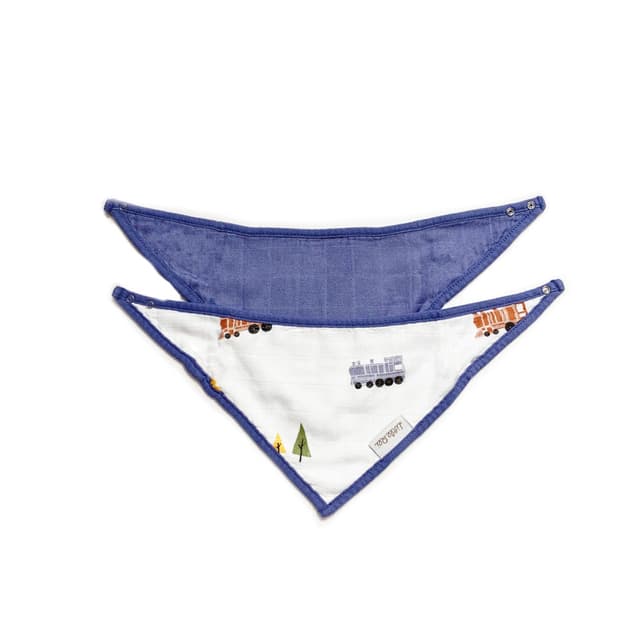 Bandana Bib 2 Pc - Blue TrainS$19.90Shop now
What helps most feeds, whatever the cause
These help whatever the cause is. Most of them are free, and none of them can do any harm.
- Feed before she's frantic. A baby crying hard can't latch well, and calming her first is faster than persisting.
- Use upright or laid-back positioning in preference to flat.
- Pace bottle feeds. Hold the bottle horizontal, take breaks, and let her set the rhythm.
- Feed in a quiet, dim room from about four months, when distraction takes over from everything else.
- Skin-to-skin before a difficult feed.
- Get one whole feed watched by a professional if feeding has been hard from the start. Most feeding problems have a fixable cause, and almost none of them are found by reading.
When to ask today, and not next week
These don't wait for the next appointment.
- Weight gain has flattened, or there are fewer wet nappies than usual.
- Forceful, projectile vomiting after most feeds.
- Green or bile-stained vomit, or blood in vomit or stools.
- Refusing feeds, or taking well under half the usual amount.
- A temperature of 38°C or above in a baby under three months.
- Inconsolable episodes with the legs drawn up and vomiting, which need assessment immediately.
This guide is general information, written to help you understand a topic and ask better questions. It is not medical advice and does not replace your own doctor, midwife or paediatrician. Anything that worries you about your baby belongs with them.