

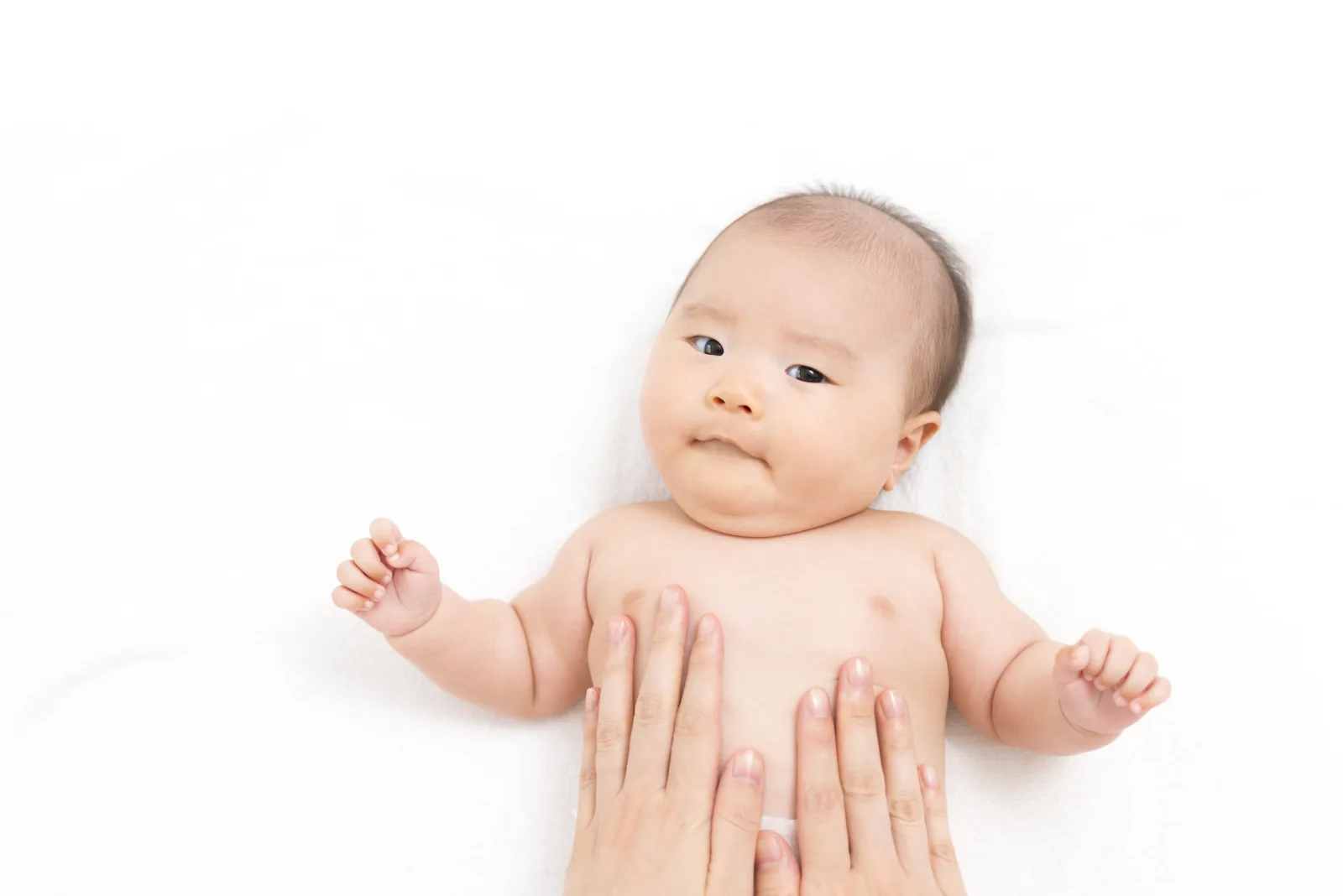
One of my five never burped. Not rarely: never, as far as I could tell, for her whole first year. I spent much of that year sure I was doing something wrong, standing in a kitchen in Athens at two in the morning patting a perfectly contented baby. I wasn't.
Some babies just don't take in enough air to bring anything up. A baby who doesn't burp isn't a baby with a problem.
The baby tells you, and not the clock
This is the thing I'd most like to pass on, because it swaps a rule for something you can see, and when you're tired, watching is easier than following rules.
A baby with trapped wind is uncomfortable and shows it. She squirms, pulls her knees up, arches, grimaces and won't settle after a feed. She often comes off the breast or bottle partway through, crying, and then goes straight back on. That's the baby to keep trying with. Or so I think. I've been wrong about wind more often than about anything else in fifty years of babies.
A baby who's settled, sleepy and comfortable after a feed doesn't need a burp brought up, whatever the clock says or whatever your mother-in-law says. If she's content, you're finished. Put her down.
If she's uncomfortable, this is the order I'd try things in. Most of it is about changing something instead of doing the same thing harder.
- Straighten her out. Get her fully upright with her back lengthened, since a curled baby has a kink in the way.
- Change the hold. Over the shoulder, then sitting on your lap, then across your lap. The movement between positions does more than any single one.
- Rub upward with a flat palm and don't pat, working from the lower ribs toward the shoulder.
- Walk about with her upright against your chest for a few minutes. Gentle movement while vertical works when stillness doesn't.
- Lay her down flat for a moment and then bring her back up. The change in position is often what releases it.
- Give it two minutes and stop. If nothing has come and she has settled, there was nothing there.
What I wouldn't do is any of it harder. Firmer patting and more jiggling both make things worse, because an upset baby swallows more air, which is the opposite of what you want. I know because I did it.
When the wind is lower down
Sometimes the air has already moved too far down for a burp to reach it, and holding her upright won't help, however patient you are. It has to come out the other end.
The signs are fairly clear: she pulls her knees up to her chest, goes red and strains, is unsettled in waves instead of all the time, and is relieved for a while after passing wind or a stool. That's lower wind, and it needs a different approach from patting her back.
- Bicycle her legs slowly while she lies on her back, which helps the gas move along.
- Knees gently up to the tummy and held for a moment, then released, a few times over.
- A warm bath, which relaxes everything and often does more than any manoeuvre.
- Tummy time while she's awake and supervised, which puts helpful pressure on the abdomen.
- A slow clockwise massage on the tummy, following the direction the bowel runs.
- Carrying her upright against you, which is the least technical and frequently the most effective.
Simethicone drops, gripe water and the various colic remedies have weak evidence at best. I've used all of them across five children, in three currencies, and I couldn't tell you that any of them did anything except give me something to do. If you want to try one, ask a pharmacist and treat it as an experiment, not a treatment.
Read next
Some babies simply never do
And that's the ordinary answer far more often than anybody tells you.
A well-latched breastfed baby may take in almost no air, so there's nothing to bring up. Some babies let it out during a feed without anyone noticing, and some pass it downward instead. None of that is a failure of technique.
The signs that count have nothing to do with burping. She's feeding well, gaining weight, has plenty of wet nappies and has stretches of contentment. If those four are fine, a baby who never burps is simply a baby who never burps, and you can stop standing in the kitchen.
Mentioned above
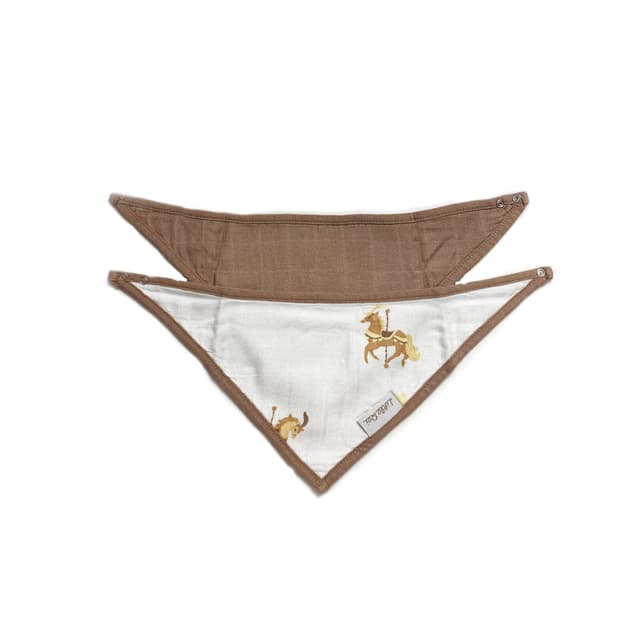 Bandana Bib 2 Pc - Carousel HorsesS$19.90Shop now
I watched my own daughter worry about exactly this with her first, forty years after I did, and I was able to tell her something nobody told me, which was to stop counting.
When it was never wind
Sometimes the picture doesn't fit wind at all. Here's what that looks like, so you don't keep trying to burp a baby who needs something else.
- Distress that arrives during feeds as well as after them, with arching and pulling away, which points at reflux.
- Crying that comes with eczema, blood or mucus in the nappy, diarrhoea or poor weight gain, which raises the question of cow's milk protein allergy.
- Frequent forceful vomiting, particularly projectile, which needs assessment.
- A baby who isn't gaining weight, or who has fewer wet nappies than usual.
- Inconsolable crying with the legs drawn up and vomiting, which needs immediate attention.
- A temperature of 38°C or above in a baby under three months, which is urgent regardless of everything else.
If the pattern does not fit wind
What I read before I wrote
- NHS: Colic
- American Academy of Pediatrics: Burping, hiccups and spitting up
- HealthHub: Ministry of Health Singapore
This guide is general information, written to help you understand a topic and ask better questions. It is not medical advice and does not replace your own doctor, midwife or paediatrician. Anything that worries you about your baby belongs with them.