

25 May 2026 · Nina Aramway
People & Culture · Grandmother of ten
Does a Baby Need to Burp After Every Feed?
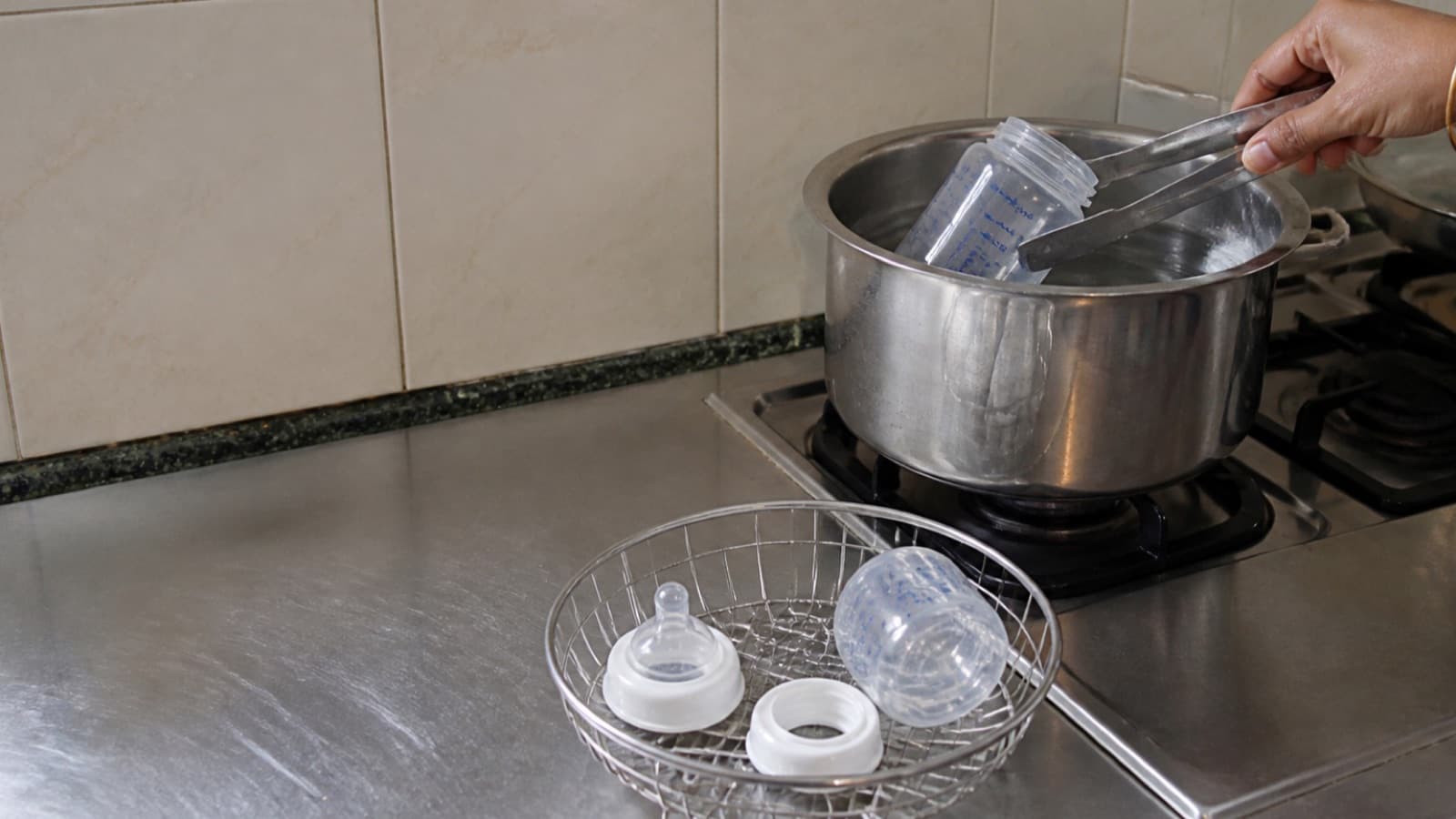
No. I want to spend some time on why, because this question comes before all the others, and the answer was more interesting than I expected when I went looking.
Why bother when it usually does nothing
I burped five babies after every feed, for twenty minutes at a time, because that's what I was taught and what everyone around me did, in Greece and later in Hong Kong. In all those years it never occurred to me to ask whether anyone had checked that it worked. Someone has, though not often, which says something about a habit nearly every parent follows. The clearest evidence is a small randomised trial published in 2015. It followed seventy-one mother and baby pairs for three months: half burped after every feed and half didn't. Burping made no difference to colic. The burped babies cried no less than the others, and they brought up more milk, roughly twice as many spit-ups a week as the babies who were left alone. That's the opposite of what burping is meant to do. It's one small study from a single centre, so it isn't the last word on anything. Still, it shows how little evidence lies under a habit most English-speaking parents treat as compulsory, and the evidence there is points the other way. There's a cultural clue too. Routine burping is close to universal in some countries and largely absent in others, and nobody has shown that babies in the second group suffer for it. When I moved to Hong Kong, the burping around me was gentler and shorter than what I'd been taught at home. Both sets of babies grew up perfectly well and are now arguing with their own children.
Here's my view, then. Give her a brief chance, because some babies do have air to bring up and feel better once it's out. Just don't treat it as a duty, don't keep going, and don't lie awake worrying about the feed where nothing came. I did that for years and it did nobody any good. I'm told my mother did the same. I'm not sure it stopped with me.
How much winding to expect
It depends almost entirely on how much air went in, which depends on how she's fed.
A well-latched breastfed baby often brings up very little, sometimes nothing. A bottle-fed baby usually brings up more, especially if the flow is fast or the teat isn't kept full. Either way it tails off as she gets older, feeds more efficiently and spends more of her day upright instead of lying across somebody.
| Situation | Burp attempts per feed | Notes |
|---|---|---|
| Breastfed newborn, good latch | Once, at the end | Often produces nothing. That's fine |
| Breastfed, fast let-down | At the change of sides and at the end | Gulping and spluttering means air |
| Bottle-fed newborn | Halfway and at the end | Or every 60-90ml on a larger bottle |
| Any baby, 4-6 months | Once, if at all | Most self-manage by this point |
| Night feeds | Briefly, upright, then straight down | Keep it dark, quiet and short |
Those numbers are a rough guide, not a target. A baby who brings up nothing all week and is comfortable isn't missing anything.
During the feed as well
At the natural pause, and not before one.
Halfway through a bottle is a sensible habit, and switching sides is the obvious moment when breastfeeding. What I'd avoid is interrupting a feed that's going well just to wind her. I was taught to do that too, and I now think it does more harm than good, because a calm feed matters more than a burp and a baby taken off one often won't go back to it.
The technique itself
Night feeds
Briefly, or not at all. I'd say this more strongly than most guides do.
Hold her upright for a minute after a night feed and put her down whether or not anything comes. Don't switch a light on, don't talk to her, and don't keep at it for ten minutes hoping for a result. At three in the morning sleep is what counts, for her and for you, and a burp isn't a good enough reason to lose it.
If wind was the problem, she'll let you know within a few minutes of going down and you can pick her up again. That's a much better deal than keeping her awake just in case.
If she falls asleep first
When to stop trying every time
Most babies need very little of this after about four to six months, and many need none well before that.
The sign is that nothing has come up for a week or two and she's settling fine without it. At that point, stop offering after every feed and keep it for the feeds where she seems uncomfortable. By the time she's sitting up on her own and eating solids, it will have dropped away without you deciding anything.
Nobody will tell you when to stop. You're allowed to just stop.
Mentioned above
 Bamboo Train Wash Cloth - 4pcS$25.00Shop now
 Maison Q Bandana Bib 2 Pc - Animal BalloonS$21.90Shop now
 Bamboo Swaddles (2 pc)S$49.00Shop now
Read next
Asked by every daughter I have
Does a baby need to be burped after every feed?
Try after every feed in the first few months, but expect a burp only some of the time. A settled baby who doesn't burp needs nothing more.
Is it normal for a baby not to burp after some feeds?
Yes. Roughly a third to half of feeds produce no burp at all, particularly for breastfed babies with a good latch, and it isn't a sign the winding failed.
Should I burp my baby during the feed?
At the natural break, the change of sides for a breastfed baby, roughly halfway for a bottle-fed one. Don't interrupt a baby who's feeding steadily and swallowing well.
Do I need to burp my baby during night feeds?
Briefly. Hold her upright for a few minutes in a dim, quiet room, and if nothing comes, settle her back down and don't persist.
How many times a day will I burp a newborn?
Eight to twelve times, since newborns feed that often. Each attempt only takes a couple of minutes, and many produce nothing.
What I read before I wrote
- Kaur, Bharti & Saini (2015), Child Care Health Dev 41(1):52-56, A randomized controlled trial of burping for the prevention of colic and regurgitation in healthy infants
- NHS: Bottle feeding advice
- American Academy of Pediatrics: Burping, hiccups and spitting up
This guide is general information, written to help you understand a topic and ask better questions. It is not medical advice and does not replace your own doctor, midwife or paediatrician. Anything that worries you about your baby belongs with them.