

25 February 2026 · Nina Aramway
People & Culture · Grandmother of ten
Why Does My Baby Spit Up When Burping?

Because you've just moved a full stomach into a vertical position and pressed on her back, so milk that was resting comfortably now has somewhere to go, and the valve at the top of a young stomach isn't much of a valve yet.
There's a more interesting part to the answer, though: the winding itself may be causing some of it. I'll come to that.
How much is normal
A great deal more than most people expect. Around half of all babies bring milk up regularly in the first months, it peaks at about four months, and the large majority have stopped by their first birthday, by which time you'll have stopped noticing.
| What you see | What it means | Action |
|---|---|---|
| A mouthful with the burp, baby unbothered | Normal posseting | Change the cloth. Nothing else |
| Several small possets a day | Normal, particularly 2-4 months | Feed smaller and more often; hold upright after |
| Milk with a curdled look or sour smell | It sat in the stomach a while. Still normal | No action needed |
| Forceful or projectile vomiting | Not posseting | See a doctor |
| Green or yellow-green vomit, or blood | Not posseting | Seek medical help the same day |
| Possetting plus poor weight gain or feed refusal | Needs assessment | See a doctor |
What counts is whether she's a happy spitter or an unhappy one. A baby who brings up milk but seems untroubled, feeds well and gains weight has a laundry problem. A baby who's upset by it, arches and pulls away from feeds, refuses feeds or isn't gaining weight needs checking. Keep those two clearly apart in your mind.
It always looks like more than it is. A tablespoon of milk on a muslin spreads into something that looks like the whole feed. Try pouring a tablespoon of water onto a cloth once, just to see. I did it with my third and stopped worrying that afternoon.
How to reduce it
Most of this is done during the feed and not after it.
- Cut the volume per feed and raise the number of feeds, so there's less sitting in the stomach at once.
- Keep her upright or semi-reclined during the feed, and hold her upright for twenty to thirty minutes afterward.
- Slow the feed down. Paced bottle feeding with the bottle horizontal, or feeding lying back if your let-down is fast.
- Wind gently and briefly. Firm patting and jiggling both bring up a lot more milk.
- Don't press on her tummy. In the shoulder hold, check your shoulder isn't digging into her stomach, and keep her legs free, not bent up at the hip.
- No bouncing, no vigorous play and no nappy change immediately after a feed if you can avoid it.
Here's what I didn't know when I had mine. The one randomised trial on burping found that babies burped after every feed brought up roughly twice as much as babies who weren't, and that burping made no difference to colic. It's a single small study, and not the last word, but it points clearly one way: if your baby brings up a lot and is otherwise well, winding her less, and more gently, is a perfectly reasonable thing to try. I'm told some paediatricians disagree. I'd like to hear their reasons.
That goes against everything I was taught, and against what I told my own daughters for years, and I won't be telling them that again.
Feed-side fixes
Spit-up or reflux?
They're the same process. The words just describe different amounts of trouble.
Bringing milk up is reflux in the literal sense, and in most babies it's just what a young digestive system does. It becomes gastro-oesophageal reflux disease, the kind that gets treated, when it's causing harm: distress, refusing feeds, poor weight gain, a cough that won't go, or blood.
The question is never how much came up. It's whether she minds.
The distinction in full
When to see a doctor
Almost all of this is laundry. The list below isn't.
- Forceful or projectile vomiting after most feeds, particularly in a baby under two months, which needs assessment promptly.
- Green or bile-stained vomit, or blood in vomit or stools, which is emergency care now.
- Poor weight gain, or weight crossing downward through centiles.
- Refusing feeds, or real distress and arching during them.
- A persistent cough, wheeze or repeated chest infections.
- Vomiting alongside fever, unusual drowsiness or fewer wet nappies.
- Bringing up milk that begins for the first time after six months, which is worth a look.
The laundry problem nobody warns you about
Milk stains set. Once milk dries into cloth it leaves a mark and a smell that ordinary washing won't shift, and in a warm, humid climate that happens within hours, as anyone who has left a muslin in a bag in Hong Kong in August will tell you.
Rinse it in cold water straight away (hot water sets the protein) and get it into the wash the same day. A muslin over your shoulder every time saves more clothes than anything else. Owning far more muslins than seems reasonable is the real answer, and the only one I've found in forty years.
I have five children and ten grandchildren, and the only piece of equipment I've ever recommended without reservation is a large stack of thin cloths within reach of wherever the feeding happens.
Mentioned above
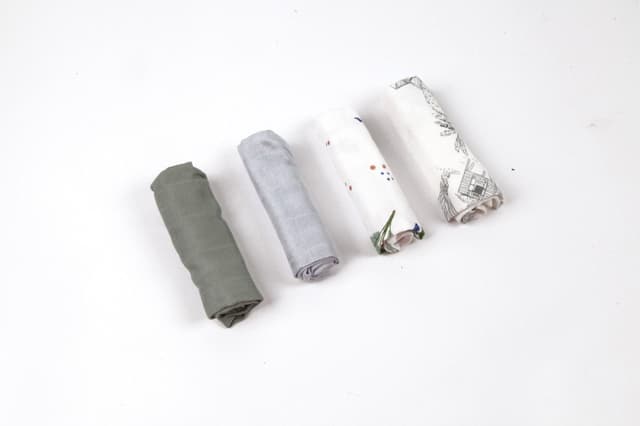 Bamboo Wash Cloth 4pc (Rustic Rainforest)S$25.00Shop now
 Bamboo Swaddles (3pc)S$69.00Shop now
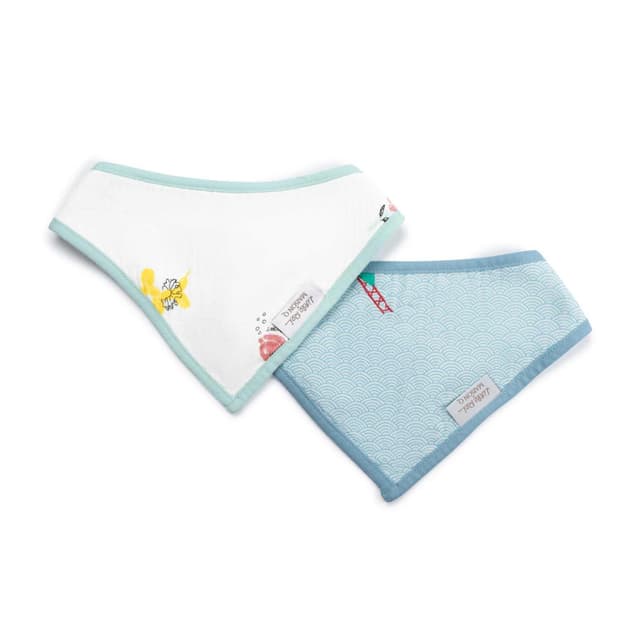 Maison Q Bandana Bib 2 Pc - Animal BalloonS$21.90Shop now
Read next
This guide is general information, written to help you understand a topic and ask better questions. It is not medical advice and does not replace your own doctor, midwife or paediatrician. Anything that worries you about your baby belongs with them.