

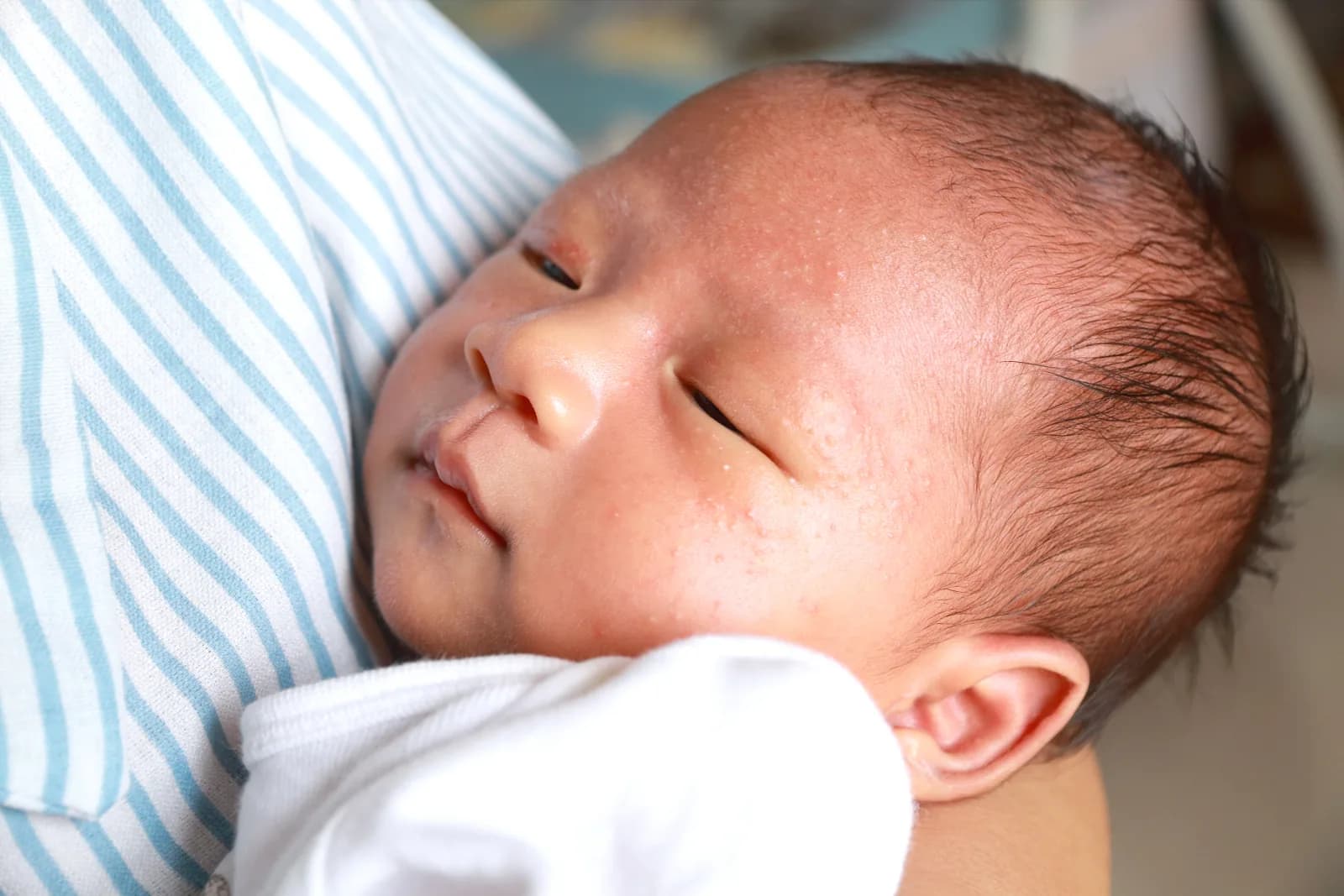
Charles had heat rash across the back of his neck for most of his first March, and I spent a fortnight treating it as a skin problem before I understood it was a temperature problem.
Creams won't touch it while she's still hot, and I tried three before I believed that. Once she's cool it goes on its own, usually within a day or two, sometimes by the next morning.
Why is heat rash so common in Singapore?
Because the mechanism is blocked sweat ducts, and we live somewhere that makes a baby sweat all year. A baby's sweat ducts are immature and narrow, so they block easily. Sweat that can't get out collects just under the skin and produces the pinpoint bumps. Add humidity above eighty per cent, which stops sweat evaporating even when it does escape, and you have a climate that produces this more or less continuously. Then add the way we live here. Most flats are air-conditioned in one room and not the others, so a baby moves between 24°C and 31°C several times a day. There's a walk to the MRT in the middle. There's a carrier, which is warm by design and puts a layer of fabric plus an adult's body heat against her back. There's a grandmother, or a mother-in-law, or in my case both, who's concerned that the baby will catch cold in the aircon and has added a layer while you weren't looking.
Nobody has failed at anything here. A hot country, a small body with poor cooling, and a grandmother who meant well.
How do I know it's heat rash and not something else?
The tell is that it follows the temperature. It appears where the child is hottest, it appears after she has been hot, and it settles when she cools down, and that behaviour is what separates it from everything else it resembles.
It shows up as tiny clear or red pinpoint bumps, in the neck folds, the armpits, the groin, across the back and shoulders, and anywhere a strap or a waistband goes. It isn't usually very itchy in babies and it doesn't weep or crust.
| Looks like | Where | Tell | |
|---|---|---|---|
| Heat rash | Tiny clear or red pinpoint bumps | Neck, folds, back, shoulders | Follows heat; settles when cooled |
| Diaper rash | Diffuse pink, creases spared | Under the nappy only | Follows the nappy, not the weather |
| Eczema | Dry, scaly, itchy | Cheeks, elbows, knees | Persists regardless of temperature |
| Infection | Pustules, weeping, crusting | Anywhere | Needs a doctor, not cooling |
If it is under the nappy
What settles heat rash at home
All of it is free, and the first item does most of it.
- Cool her down. Air-conditioning, a fan set to move air past her without blowing on her directly, or simply fewer clothes. This is the treatment and everything else is support.
- Take a layer off, and then consider taking another. One thin layer is enough indoors here for most of the year.
- A tepid bath or a wipe-down with a soft damp cloth, then air dry. Don't rub the skin dry, because friction on blocked ducts makes it worse.
- Leave the affected skin open to the air where you can. Nappy off on a towel for twenty minutes is very effective for rash in the groin.
- Loose, thin, breathable cotton or bamboo, with nothing tight over the rash.
- Keep the folds dry. Neck, wrists, thighs and behind the knees collect moisture in this humidity and want drying properly after every bath and after any feed that has gone wrong.
What to skip: thick creams, ointments and barrier balms, all of which block the ducts further and are the most common mistake. Talcum powder, which has an inhalation risk and does nothing. Anything medicated without being told to use it. I'd guess we spent S$60 on creams that first March. I haven't checked the receipts, and I don't want to.
Which fabrics make a difference
I design clothing for a living, so here's the fabric part in detail.
What counts is whether the fabric lets moisture off the skin and whether air can move through it. Thin bamboo viscose and cotton muslin both do this well. Thick jersey keeps heat against the body. Polyester and most synthetic blends keep both the heat and the moisture, and they're extremely common in cheap babywear because they're cheap.
Then look at the construction, which nobody does. A raised seam under a carrier strap, an elastic waistband in a fold, a heavy printed panel across the chest, a bib with a plastic backing, each of these creates a small hot patch, and small hot patches are exactly where heat rash begins. If the rash keeps returning in the same spot, look at what's on that spot. In our flat it was the popper strip on a particular brand of bodysuit, and I only found it by laying the rash pattern against the garment.
Mentioned above
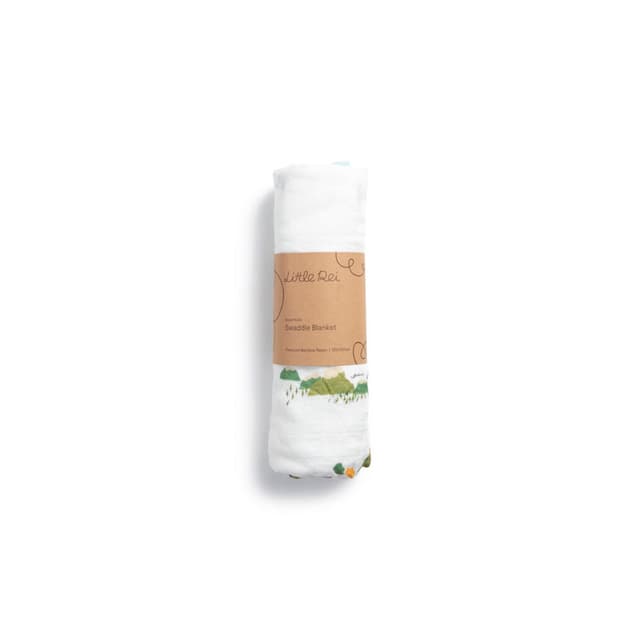 Bamboo Swaddle Single (Printed)S$29.00Shop now
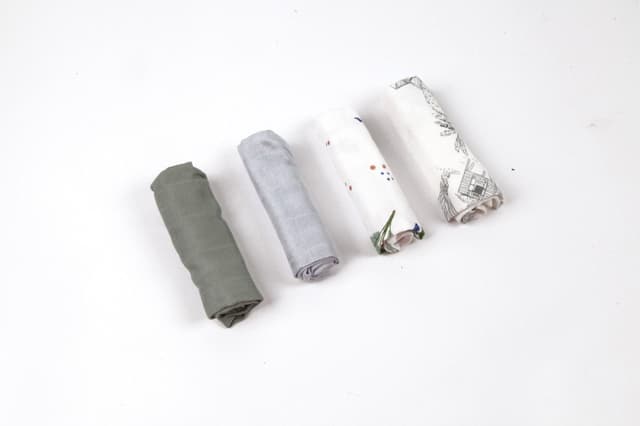 Bamboo Wash Cloth 4pc (Rustic Rainforest)S$25.00Shop now
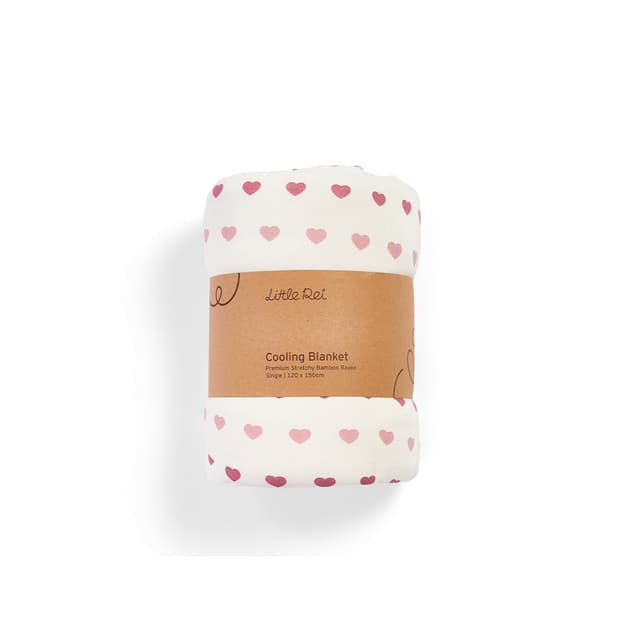 Bamboo Cooling Blanket (120x150cm)S$135.00Shop now
When to take your baby to a doctor
Heat rash itself almost never needs one. A doctor is for the following, none of which is heat rash.
- Pustules, yellow crusting, weeping, or skin that is hot, spreading and tender, which suggests infection.
- A fever alongside the rash, and any temperature of 38°C or above in a baby under three months, which is urgent regardless of the rash.
- A rash that doesn't settle within two or three days of proper cooling.
- A baby who's unusually floppy, drowsy, refusing feeds, or has had noticeably fewer wet nappies, which points at heat illness and needs same-day attention.
- Any rash that doesn't fade when you press a glass against it, which needs emergency care immediately.
- Dry, scaly, persistently itchy patches that ignore the temperature entirely, which is a different condition and wants a proper diagnosis.
This guide is general information, written to help you understand a topic and ask better questions. It is not medical advice and does not replace your own doctor, midwife or paediatrician. Anything that worries you about your baby belongs with them.