

3 July 2026 · Maia Hillsborrow
Marketing Director · Mother of five
How Often Should You Bathe Your Baby?

Two or three times a week is enough for a newborn, and I've now tested that on five children, one of whom has eczema and one of whom is nine months old and still in the phase where a bath is a whole-family operation.
The instinct to bathe daily is strong, and in a hot climate it's stronger. It's also, for most newborns, the thing making their skin worse.
Why is 2-3 times a week enough for a newborn?
Because a newborn doesn't get dirty in any of the ways that require a bath. She doesn't sweat much yet, she doesn't go anywhere, and the parts of her that need cleaning, her face, her neck folds, her hands and her diaper area, can be dealt with at the changing mat in ninety seconds. What she does have is a skin barrier that's still developing, since the outer layer of a newborn's skin is thinner than an adult's and loses water faster, and washing strips the natural oils that hold it together, so frequent bathing, particularly in warm water with any kind of cleanser, works directly against the thing you want to protect. Top-and-tail daily and bathe two or three times a week, and the skin does far better. This is one of the few pieces of baby advice where doing less is straightforwardly correct.
| Stage | How often | In between |
|---|---|---|
| Newborn, 0-3 months | 2-3 times a week | Top and tail daily: face, neck, hands, diaper area |
| 3-6 months | 2-3 times a week | Daily wipe of folds in this humidity |
| Crawling, 6-12 months | Most days | Hands and knees meet every floor |
| From solids | Daily, often after dinner | Face and hands after every meal |
| Eczema care | As your doctor advises | Some plans use short daily soak-and-seal baths |
Mentioned above
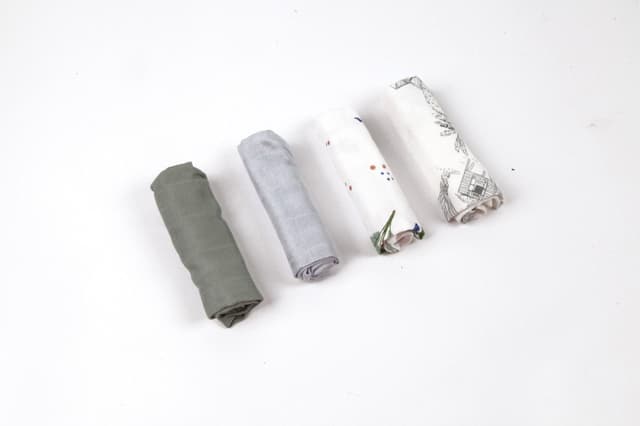 Bamboo Wash Cloth 4pc (Rustic Rainforest)S$25.00Shop now
Does Singapore's humidity change the answer?
It changes what happens between baths more than it changes the number of baths.
In a hot, humid climate, the folds are the issue: the neck, the wrists, the thighs, behind the knees, and anywhere a chubby baby has a crease. Milk gets into them, sweat stays in them, and they stay damp. That's where you get the redness, and it's a drying problem.
The daily habit is a soft damp cloth through the folds and then drying them properly, patting and never rubbing. That takes a minute, it can happen at any diaper change, and it does more for skin in the tropics than an extra bath ever will. An extra bath in hot weather is fine. Three of them a day isn't.
When she needs more than that
The frequency goes up naturally as the child does more, and it goes up for one specific medical reason.
- Once she's crawling, most days, because hands and knees meet every floor in the house.
- Once she's on solids, daily is reasonable, usually after dinner, plus face and hands after every meal.
- After anything that has gone properly wrong. This doesn't need justifying.
- In eczema, where a doctor may specifically recommend a short daily bath followed immediately by moisturizer while the skin is still damp. This is the soak-and-seal approach and it's the exception to everything above.
That last one deserves a moment, because it contradicts the rest of the page and isn't a contradiction. Holly is two and has eczema, and for a long time I was carefully limiting her baths on general principle while her dermatologist was recommending a short daily one with moisturizer applied within three minutes of getting out. The bath isn't the problem in eczema. Leaving the skin to dry out afterward is. Follow the plan you've been given for your own child and not the general advice, including mine.
The rest of bath time
Making bath nights count
If it's only happening twice a week, make those two occasions do more than get her clean.
Keep the water at about 37°C and check it with your elbow or your wrist, which are far more reliable than your hands. Five to ten minutes is a complete bath for a baby, since longer in warm water dries the skin. Use plain water for the first few weeks, and after that a small amount of a fragrance-free cleanser at most, since babies don't need lathering. I'm not sure the cleanser is needed at all before six months, though we used one anyway, out of habit.
Get the room warm first and have the towel open and waiting, because the exit is where a good bath most often falls apart. Pat dry, paying attention to the folds, and moisturize while the skin is still slightly damp if she needs it.
Use the time. A bath is warm, close, one-to-one, and completely uninterrupted, which is a rare combination in a house with more than one child in it. As a physiotherapist I'd also point out that water is the one place a young baby can move against light resistance with no effort from you, and letting her kick for a few minutes before you start washing is good for her.
Mentioned above
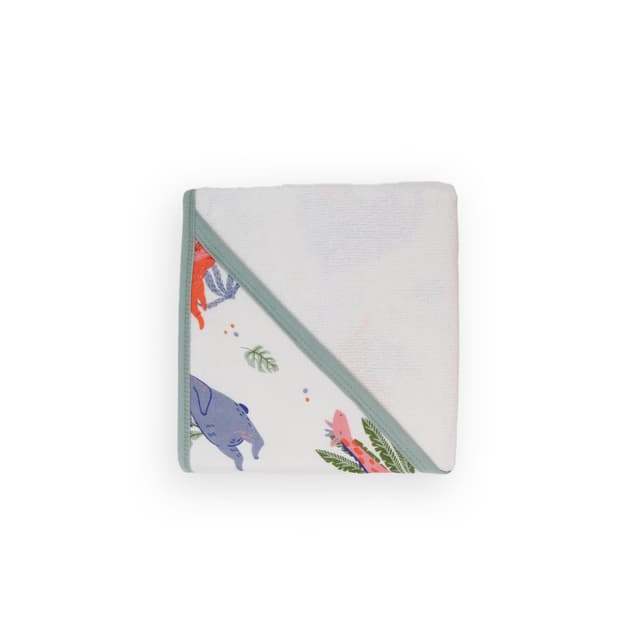 Bamboo Hooded TowelS$45.00Shop now
 Bamboo Hooded Towel & Wash Cloth Set (Outdoor)S$39.90Shop now
The evidence
This guide is general information, written to help you understand a topic and ask better questions. It is not medical advice and does not replace your own doctor, midwife or paediatrician. Anything that worries you about your baby belongs with them.