

6 July 2026 · Veronica Chi
Business & Product Director · Mother of two
Why You Should Use a Bamboo Washcloth When Bathing Baby
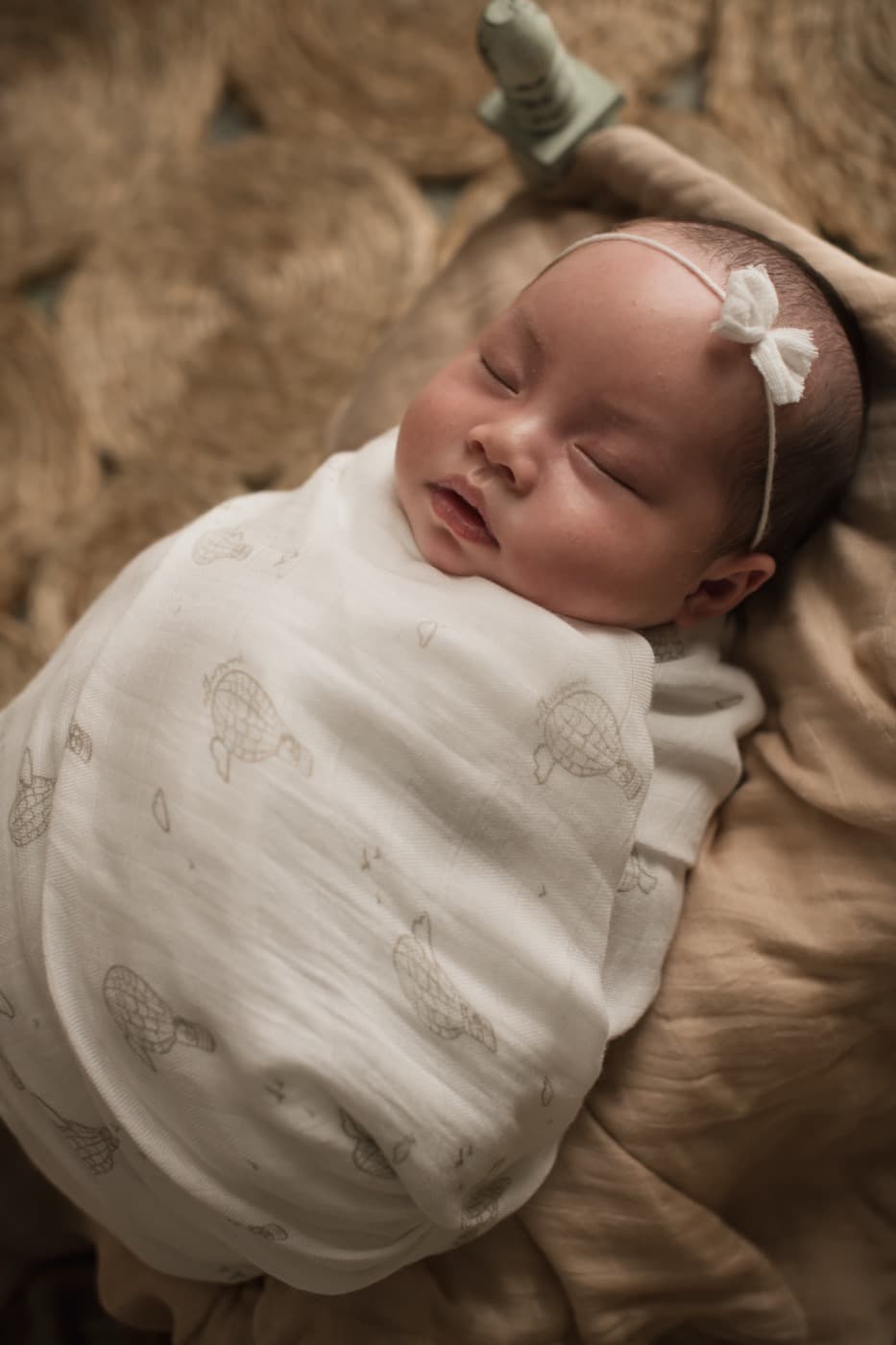
A washcloth is about the smallest purchase in this category, which makes it a good place to be straightforward about what fabric does and doesn't do.
What makes bamboo softer than cotton?
The cross-section of the fibre. Bamboo viscose is extruded as a smooth round filament, cotton is a flat twisted ribbon with a rougher surface, so there's measurably less friction against skin, and on a newborn that isn't a subtle difference, and it counts more on a washcloth than on almost anything else because a washcloth is used with pressure, wiping a face, a neck fold, a bottom, small areas, repeatedly, on the thinnest skin your baby has. Which leads to the technique point that outranks the fabric entirely: pat, don't rub. Newborn skin is thinner than an adult's and its barrier is still developing. Rubbing is what turns ordinary redness into a rash. A soft cloth used firmly will still irritate.
Is a bamboo washcloth better for sensitive or eczema-prone skin?
It's a sensible choice and it isn't a treatment. I'm careful about that line because our category routinely crosses it.
For sensitive skin, low friction and no fragrance are the two things that count. A soft cloth and plain water is the standard first-weeks approach and it remains the right approach for any broken or inflamed skin at any age.
Eczema is a medical condition with medical management. If the skin is inflamed, weeping, cracked or not settling, that belongs with a doctor, and no change of cloth substitutes for a treatment plan. Where fabric helps is alongside one, reducing friction and keeping the skin dry between applications.
The other half is what you wash the cloth in. Fragrance-free non-biological detergent, an extra rinse, and no fabric softener, which coats the fibre and reduces exactly the absorbency you wanted.
The rest of bath time
Mentioned above
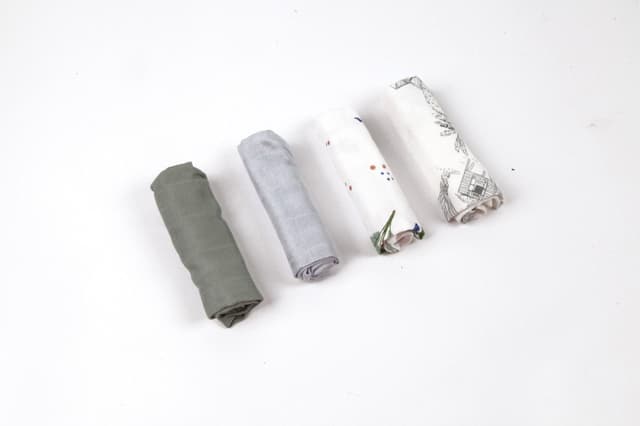 Bamboo Wash Cloth 4pc (Rustic Rainforest)S$25.00Shop now
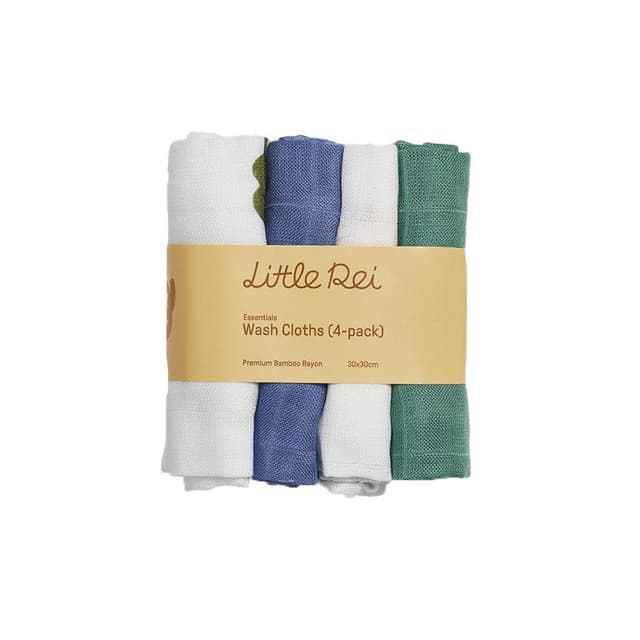 Bamboo Train Wash Cloth - 4pcS$25.00Shop now
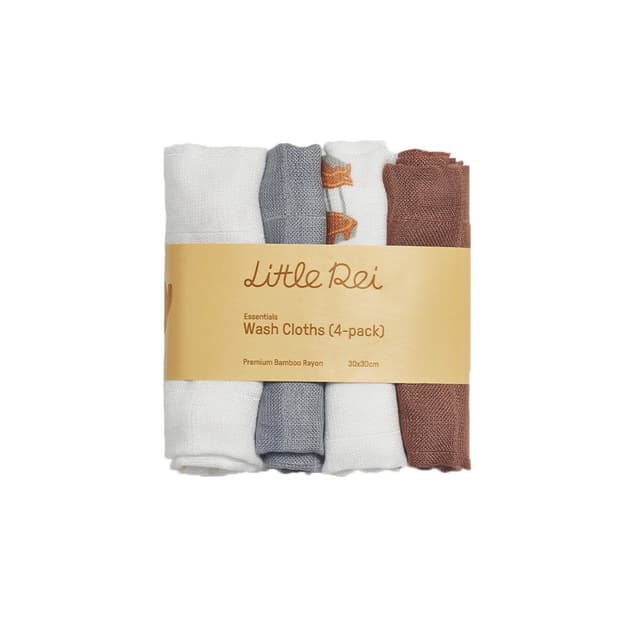 Bamboo Carousel Wash Cloth - 4pcS$19.90Shop now
Why absorbency and quick drying matter in our climate
This is the property I'd weight highest here and it's the one that gets least attention.
A washcloth spends most of its life damp. In a bathroom at eighty per cent humidity, a thick cloth that keeps water will still be damp at bedtime and will smell by the next day, and a cloth that smells is carrying a bacterial load you're then putting on a baby's face.
Thin beats plush here, the opposite of the instinct. A thin bamboo or muslin cloth absorbs enough, releases the water quickly and dries between uses. A thick terry one feels more luxurious in the shop and is the wrong tool for this climate.
Hang it spread out and never folded over a rail, wash at sixty degrees where the label allows, and own enough that none has to be used twice in a day. Six is a sensible number.
Beyond the bath
It's the most reused object in the house. Face and hands after meals, a cool compress on a warm forehead, mopping up after a feed, wiping down a high chair tray, and, folded, a pad under the head in a pram. I suspect there are uses I haven't seen.
Which is the reason to own a lot of them and the reason not to spend much on any individual one.
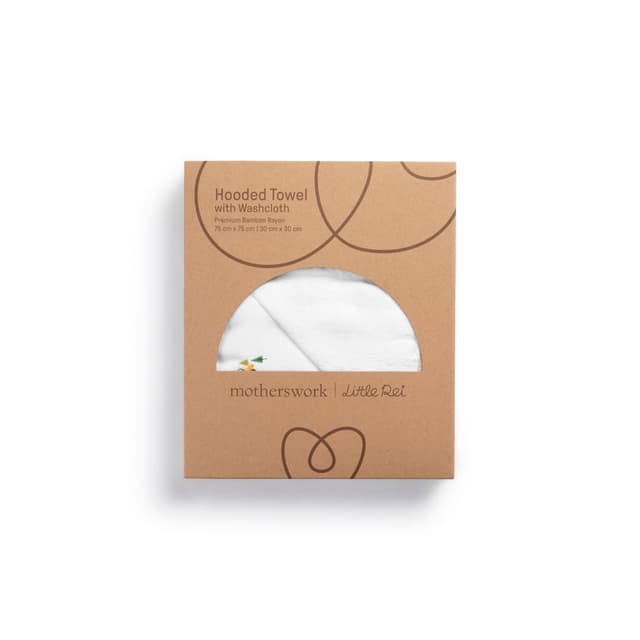
Frequency beats fibre. Since I write the specifications I can afford to say it: a plain cotton muslin square does most of this job perfectly well and costs less. The bamboo one is softer and dries a little faster. If you're choosing between a good cloth used once and a cheaper cloth used fresh every day, take the second.
On the specifics
Is bamboo washcloth good for baby skin?
Yes. Bamboo fibres are smoother and rounder than cotton, so the cloth is gentler on thin newborn skin and less likely to irritate sensitive or eczema-prone areas.
How many baby washcloths do I need?
Four to eight is a comfortable number: one in use, one drying, one in the nappy bag and one in the wash. Sets of four make the rotation simple.
How do I wash bamboo washcloths?
Machine wash cool or warm with a gentle detergent, skip fabric softener and bleach, and line dry. Bamboo softens further with each wash.
Can I use a bamboo washcloth on a newborn's face?
Yes, with plain warm water it is ideal for the face and eye area. Use a clean corner for each eye, and pat without rubbing.
Evidence
This guide is general information, written to help you understand a topic and ask better questions. It is not medical advice and does not replace your own doctor, midwife or paediatrician. Anything that worries you about your baby belongs with them.