

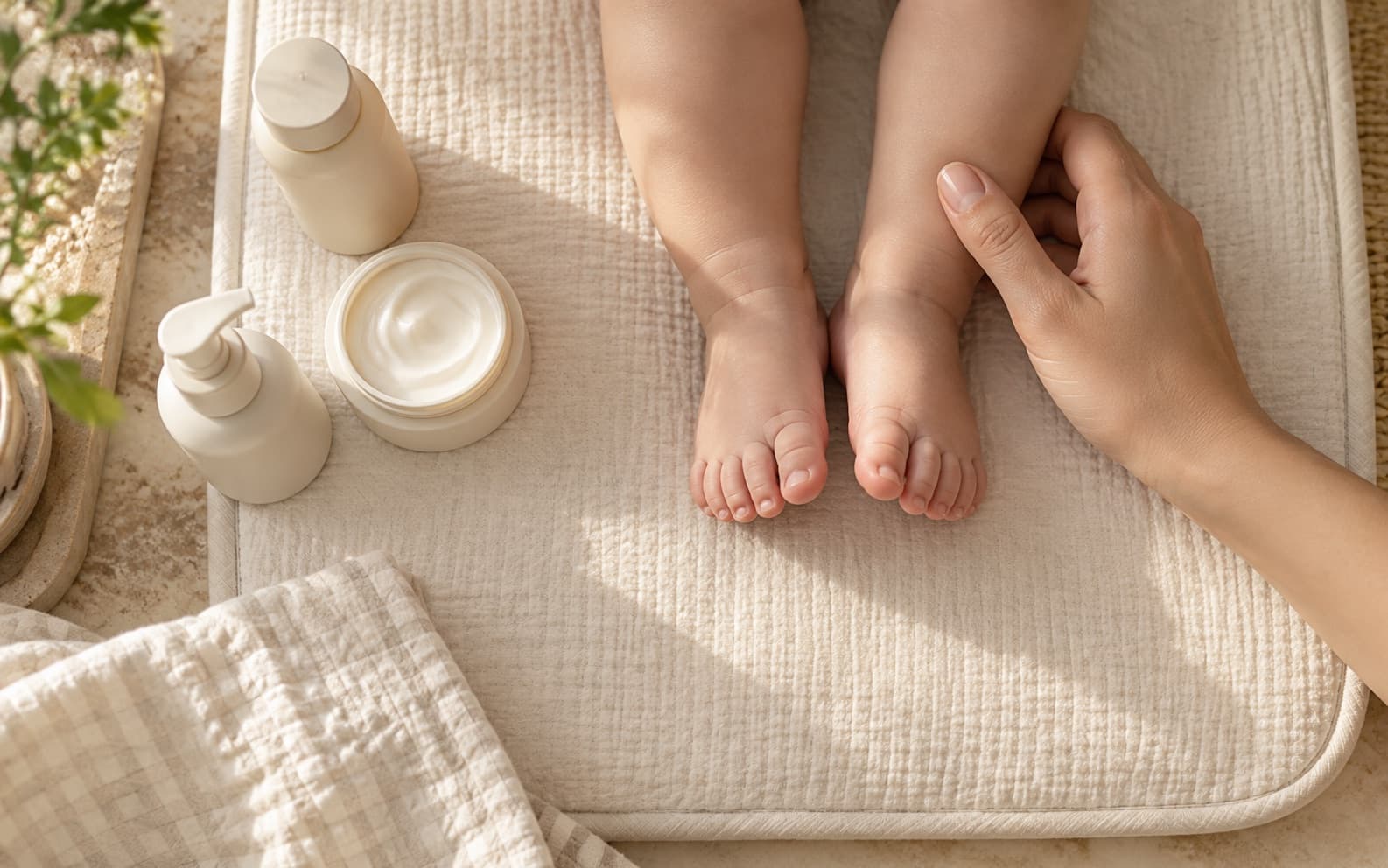
Newborn skin looks finished and it isn't. It performs all the same jobs as adult skin, barrier, temperature regulation, defense, with a structure that's still assembling, and that single gap explains very nearly everything that happens on it during the first year.
Holly is two and has eczema, and the first eighteen months of working that out taught me more about baby skin than anything I read beforehand. We make bamboo textiles here, so treat the fabric section as informed and interested, and treat all of it as general information. Anything that persists, spreads or arrives with an unwell baby belongs with a doctor.
How baby skin is different
Thinner, more permeable and much less able to hold water. A newborn's outermost layer is a fraction of the thickness of yours, the structures anchoring the layers together are less developed, and the natural moisturizing factors that keep skin supple are present at lower levels.
The consequences all run in one direction. Baby skin dries out faster, absorbs more of whatever you put on it, reacts more readily and repairs more slowly, and her surface area is large relative to her body weight, so anything absorbed through the skin arrives as a proportionally larger dose.
The barrier keeps maturing across roughly the first year and in some children far longer. Sweat glands are present but immature, so heat rash is a first-year problem far more than a toddler one. Skin pH shifts over the first weeks from near-neutral at birth toward the mildly acidic mantle that resists bacteria, and soap pushes it back the wrong way. There's very little melanin protection at birth whatever her skin tone, so sun counts from day one.
The rashes that are normal
Most of them, which isn't a great deal of comfort at two in the morning. Several distinct and entirely harmless rashes turn up in the first weeks, and the skill is recognizing the group. Diagnosing each one is your doctor's job.
| What | When | Action |
|---|---|---|
| Milia | First weeks | Nothing. Clears on its own |
| Erythema toxicum | First week | Nothing. Harmless despite the name |
| Baby acne | 2-6 weeks | Nothing. Don't treat |
| Cradle cap | First months | Soften and comb gently if you wish |
| Heat rash | Any warm day | Cool the baby; remove a layer |
| Dry, peeling skin | First fortnight | Nothing, or a plain emollient |
| Blistering, weeping, fever | Any time | See a doctor |
Milia are tiny firm white spots across the nose and cheeks, present from birth and gone within weeks. There's nothing to do and please don't squeeze them. Erythema toxicum looks alarming and isn't: blotchy red patches with a small pale center, appearing in the first few days, wandering around the body and clearing within a fortnight.
Neonatal acne arrives around week two to six, driven by maternal hormones, and resolves on its own with no products at all. Cradle cap is greasy yellow scales on the scalp and sometimes the eyebrows, neither itchy nor a hygiene problem, and softening it with a plain oil and brushing gently helps if you want to do anything. Peeling hands, feet and ankles in the first fortnight is normal shedding, particularly in babies born after their due date. Heat rash is pinhead pink bumps in the folds and on the neck and back, which settles once the skin is cooled and left uncovered.
The rashes parents ask about
The rashes that aren't
The pattern that counts is the rash plus something else.
See a doctor promptly for a rash with a fever, poor feeding, unusual sleepiness or floppiness. Same for blisters, pus, weeping or crusting, for skin that's hot, swollen or tender around the rash, and for anything spreading rapidly. Any rash at all in a baby under three months gets medical advice sooner, simply because their immune systems are so young. I'd guess I've called the pediatrician about a rash a dozen times across five children, and I still don't regret one of those calls.
One specific check, taught slightly differently in different countries and good everywhere: a rash that doesn't fade when you press a clear glass against it needs urgent assessment. That doesn't diagnose anything by itself, and a fading rash isn't a guarantee of safety either. A baby who seems unwell should be seen whatever the rash does.
How often to bathe her
Less often than most of us assume. Two or three baths a week is plenty for a young baby, provided the diaper area and any milky folds get cleaned in between. Daily bathing does no harm if it's short and gentle, and where we live, where a baby sweats all day, there's a real case for it. The water should be doing the work, though. Keep baths to five or ten minutes, because long soaks strip lipids from an already fragile barrier. Water around 37°C, tested with a wrist or an elbow and never a hand. Plain water alone is enough for the first weeks, and after that a small amount of a fragrance-free pH-balanced baby cleanser, and not at every bath.
Skip bubble bath entirely in the first year, since it's a common trigger for irritation and for diaper-area soreness. Pat dry and don't rub, and dry the folds properly, neck, armpits, groin, behind the knees, because trapped moisture in a fold is where skin breaks down first. Then moisturize within a few minutes of drying while the skin still holds the bath water.
What to put on her
As little as possible, chosen for what it lacks. Fragrance is the most common avoidable irritant in baby products, and unscented isn't the same thing as fragrance-free, because the first may contain a masking fragrance. Essential oils are fragrance, and products marketed as natural aren't inherently gentler, since several plant extracts are well-documented sensitizers.
For everyday dryness, a plain fragrance-free emollient is the entire answer. For the diaper area, a simple barrier ointment applied thinly at changes. One important exception to the moisturize-everything instinct: don't put thick or oily products over heat rash, because occlusion is exactly the problem there.
If there's any family history of eczema, asthma or allergy, ask your doctor about a routine early. This is an area where advice has changed, early and consistent emollient use counts, and your own clinician will have the current local guidance. With Holly I wish I'd asked six months sooner than I did.
How much clothing matters
More than the products do, particularly anywhere warm. Skin that stays damp, whether from sweat or milk or a humid room, breaks down and itches, and the fabric against it decides how long it stays damp.
What counts is how a textile handles moisture. A fabric that lifts sweat off the skin and spreads it out to evaporate keeps skin drier than one that keeps it in place. One loose layer in warm conditions, and check the back of her neck to know whether she's too warm.
Wash new clothing before first wear in a fragrance-free detergent, and skip fabric softener, which coats the fibers and reduces absorbency. Watch the seams, labels and elastic, because most localized irritation in a well-cared-for baby traces back to a label or a tight elastic edge. Look for a textile certification such as OEKO-TEX Standard 100 if you want a check on what was used in processing. Change her out of anything damp promptly, since a wet vest against skin for an hour does more harm than a missed bath ever will.
Mentioned above
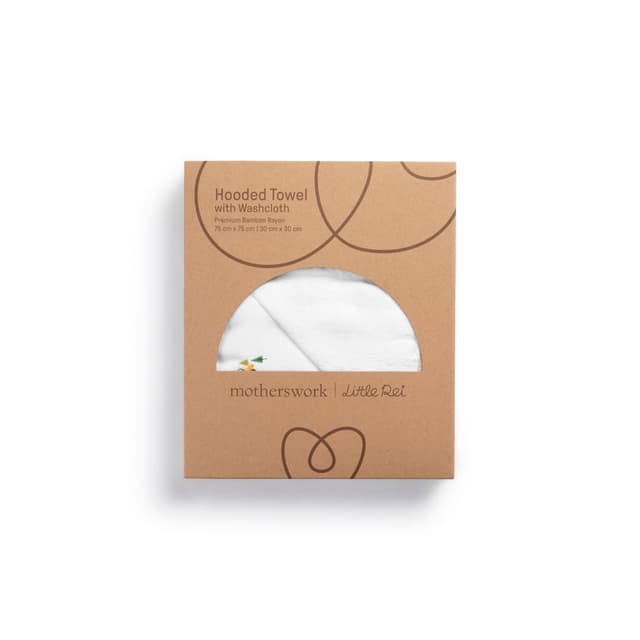 Bamboo Hooded Towel & Wash Cloth Set (Outdoor)S$39.90Shop now
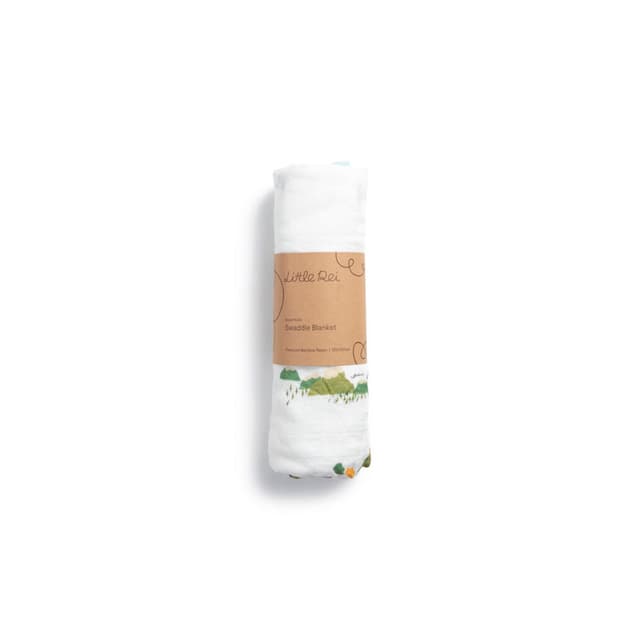 Bamboo Swaddle Single (Printed)S$29.00Shop now
Sun
Babies under six months should be kept out of direct sun altogether: shade, clothing, a wide hat, and timing that avoids the strongest part of the day. Guidance on sunscreen for under-sixes varies by country, so ask your own health service.
From six months, a broad-spectrum sunscreen suitable for children alongside shade and clothing is the standard combination, reapplied regularly. That applies year-round near the equator and at altitude, and on overcast days too, when a great deal of ultraviolet still gets through.
What the research says
- American Academy of Pediatrics: Bathing Your Newborn
- NHS: Washing and bathing your baby
- NHS: Heat rash (prickly heat)
This guide is general information, written to help you understand a topic and ask better questions. It is not medical advice and does not replace your own doctor, midwife or paediatrician. Anything that worries you about your baby belongs with them.