

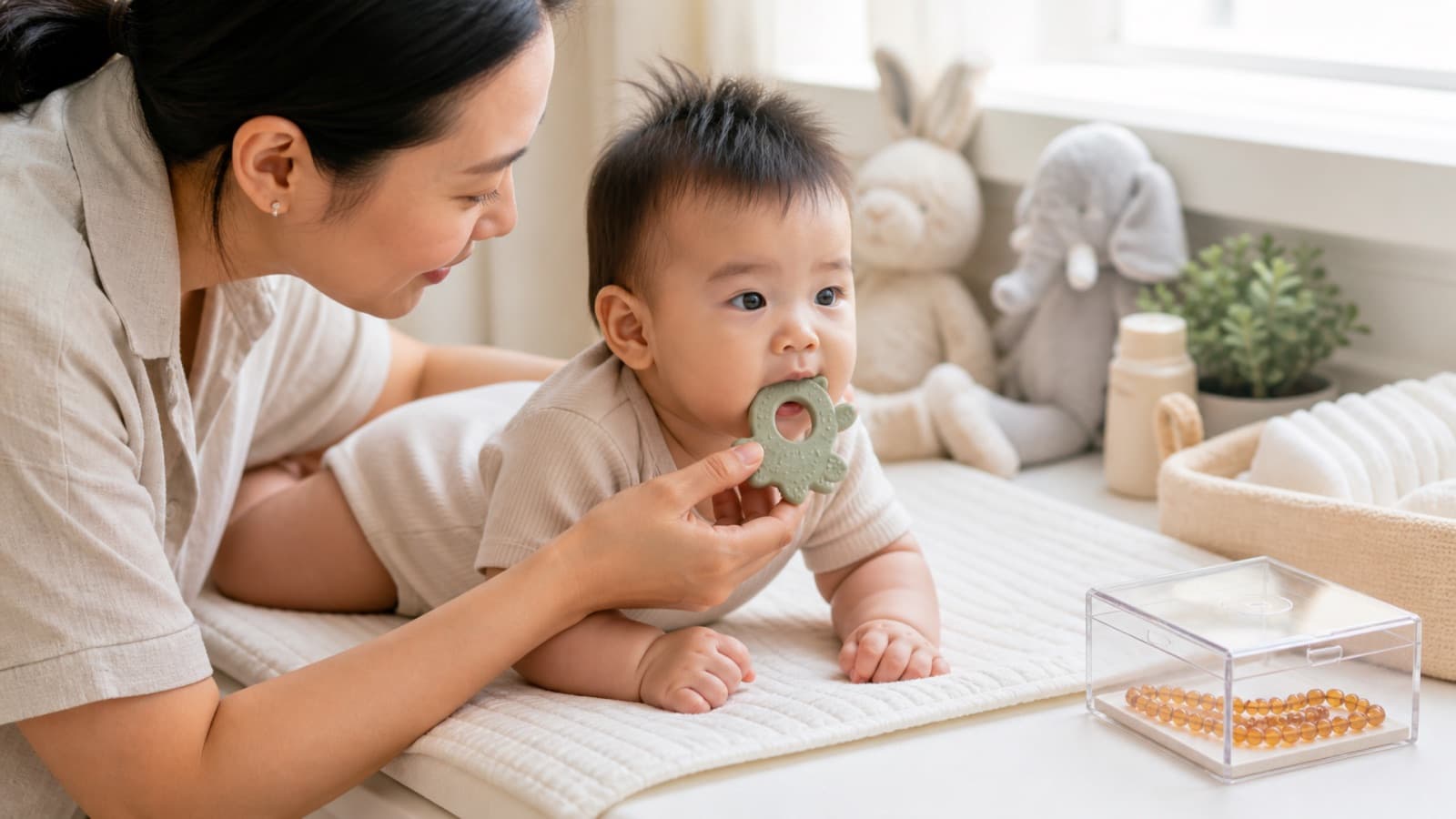
Five children have taught me exactly one reliable thing about teething, which is that the timeline in the books is an average.
Dominic was early. Katherine had nothing at all until nearly eleven months, and I spent a good part of that year concerned about it. Melissa is nine months and has two. All five of them ended up with a full set of teeth by about two and a half, in more or less the same order, and the month any individual tooth arrived turned out to count for nothing.
What order do baby teeth come in?
The order is far more consistent than the timing.
The bottom two front teeth come first, usually somewhere between six and ten months. Then the top two front teeth, then the ones either side of those, then the first molars at around twelve to sixteen months, then the canines, and the second molars last at somewhere around two to three years. Twenty teeth in total, and the full set is usually in place by two and a half to three.
Wide variation is normal at both ends. Some babies are born with a tooth. Some have nothing at a year, which is something to mention to your doctor at a routine visit and is very rarely a problem. A child with no teeth at all by around eighteen months is a conversation, and it's a conversation and not an alarm.
The molars are the ones nobody warns you about. Everybody expects the first teeth to be hard and they usually aren't. The twelve-to-sixteen-month molars are broad, they take days to come through, and they produced the worst weeks in our house every single time.
The signs it is teething
This section exists because teething gets blamed for a great deal that it doesn't cause, and that blame occasionally delays somebody noticing that a child is unwell. What teething does: drooling, a lot of it, often with a rash on the chin from the moisture. Chewing and biting on everything within reach. Sore, swollen gums, sometimes with a visible white edge or a small bluish swelling. Irritability and disrupted sleep for a few days around a tooth. Off feeds slightly, because sucking increases the pressure in a sore gum. A mildly raised temperature, meaning under 38°C.
What teething doesn't do, whatever anybody tells you: cause a fever of 38°C or above, cause diarrhea, cause a rash anywhere other than the chin and neck from drool, cause vomiting, or cause a cough. Those are illness, and a baby of teething age is also a baby of the age where they start catching things. The two coincide constantly and that's why the myth persists. I believed it myself through two children, or maybe three.
If she has a real fever, treat it as a fever. A temperature of 38°C or above in a baby under three months is urgent regardless of how many teeth are coming.
Getting through it
How can you soothe teething gums?
Pressure and cold, in that order, and almost everything effective is free.
- Counter-pressure with a clean finger, rubbed firmly on the gum. This works better than most objects and it's available immediately.
- Something cold and firm to chew. A chilled teething ring from the refrigerator, a cold damp washcloth, a chilled spoon. Refrigerator and not freezer, because frozen objects are hard enough to bruise a gum.
- For babies on solids, cold soft food. Chilled yogurt or a cold puree does the job and gets eaten.
- Extra comfort and a slightly earlier bedtime during a bad few days, since most of the misery is a sleep problem by the second night.
- Wipe the chin and neck often and use a barrier cream on the drool rash, which is much more of a nuisance than the teeth for some babies.
- Infant paracetamol or ibuprofen at the correct dose for age and weight, for a difficult night. Ask a pharmacist or a doctor, and don't guess.
What to avoid, in the order I see them: amber teething necklaces, a strangulation and choking risk with no evidence behind them. Teething gels containing benzocaine or lidocaine, advised against for infants. Homeopathic teething tablets, some of which have been recalled. Anything frozen solid, and any food she could break a piece off.
Mentioned above
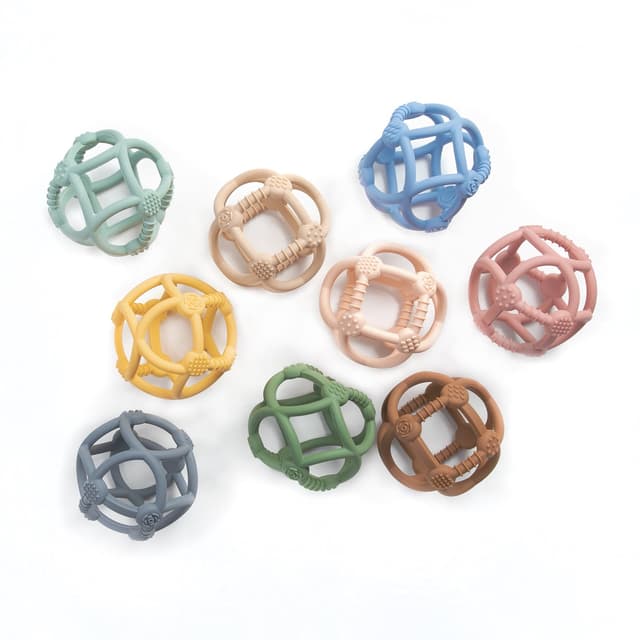 Teething BallS$12.90Shop now
Caring for those first teeth
Start before there are any teeth, which nobody does and everybody should.
Wiping the gums with a clean damp cloth once a day from a few weeks old makes the arrival of a toothbrush completely unremarkable, and the arrival of a toothbrush is otherwise a fight. Once the first tooth appears, brush twice a day with a soft infant brush and a smear of fluoride toothpaste the size of a grain of rice, increasing to a pea at three.
Don't rinse afterward. Spit only. The fluoride works by staying in contact with the tooth, and rinsing it away removes most of the benefit. No bottles of milk or juice in bed, and move to an open or straw cup from around six months where you can.
First dental visit by the first birthday, or within six months of the first tooth. That's earlier than most people expect and it's largely so somebody can show you how to brush a squirming toddler's teeth, which is a practical skill and not an obvious one.
What the research says
- NHS: Baby teething symptoms
- NHS: What to do if a child is choking
- HealthHub: Ministry of Health Singapore
This guide is general information, written to help you understand a topic and ask better questions. It is not medical advice and does not replace your own doctor, midwife or paediatrician. Anything that worries you about your baby belongs with them.