

21 June 2026 · Veronica Chi
Business & Product Director · Mother of two
Why Use a Teething Ball to Help During Teething?
Teething is one of the areas where the products sold to help are less important than the products you must avoid, so I'll do the avoiding first.
Amber teething necklaces are a strangulation and choking risk and there's no evidence they do anything. Teething gels containing benzocaine or lidocaine are advised against for infants by medicines regulators, benzocaine because of a rare but serious blood disorder it can cause in young children. Homeopathic teething tablets have been recalled after inconsistent levels of belladonna were found in them. None of those belongs near your baby. All three are still widely sold.
What's left is pressure, cold and patience, which is where a teething ball comes in.
What does a teething ball do?
Counter-pressure, which is the thing that relieves a sore gum, and the mechanism is the same one behind rubbing a gum with a clean finger: firm pressure against the area where a tooth is pushing through interrupts the discomfort, and a baby who's biting on something is applying that pressure herself, at the spot that hurts, at the intensity she wants, which is more precise than anything you can do for her. Cold adds a mild numbing effect on top. The two together are the whole of what any teething product does. The specific advantage of a ball shape is that it's graspable from any angle by hands that haven't yet worked out orientation, and there's always a part of it she can reach the back gums with, which is where the molars come through at twelve to sixteen months, and the molars are the ones nobody warns you about.
| Age | Usually | What helps |
|---|---|---|
| 3-6 months | Drooling, chewing fists | A clean cool cloth to gnaw |
| 6-10 months | First lower incisors | Chilled, not frozen, silicone |
| 8-12 months | Upper incisors | Firm textured toys; pressure on gums |
| 12-18 months | First molars | The sorest stage. Cold food helps |
| Any age | Fever, diarrhoea, rash | Not teething. See a doctor |
Why a silicone one
Because of what it needs to survive: being chewed, dropped, sterilised, and put in a refrigerator daily for months.
Food-grade silicone tolerates heat so it can be properly cleaned, it doesn't splinter or crack the way hard plastic can, and it's soft enough not to bruise a gum while still firm enough to give resistance. Wood is attractive and can split. Hard plastic can crack. Anything liquid-filled can leak.
Look for one-piece construction with no join, no glued parts and nothing detachable. That specification rules out most of the novelty ones, and it's the one to hold to.
On teething
When should you offer a teething ball?
From around four to six months, when hands are reliably going to the mouth, and expect it to be good until the second molars are through at around two to three years.
Signs it's teething: drooling with a rash on the chin, chewing everything, sore or swollen gums sometimes with a visible white edge, disturbed sleep for a few days around a tooth, and a mildly raised temperature, meaning under 38°C.
Treat a fever as a fever. What teething doesn't cause, whatever anybody says: a fever of 38°C or above, diarrhoea, vomiting, a cough, or a rash anywhere other than the chin and neck from drool. Those are illness, and babies of teething age are also babies of the age when they start catching things. I suspect that's the whole explanation for the myth, though I haven't seen it tested.
Keeping teething safe and clean
Six rules, and the first two are the ones that get broken.
- Refrigerate, never freeze. A frozen-solid object is hard enough to bruise or damage a gum, and the cold is uncomfortable and not soothing.
- Never attach it to her with a cord, a ribbon or a necklace. If you clip it to clothing, use a purpose-made holder within the length limit set for soother holders and never put it in the cot.
- Check it before every use for splits, tears or anything coming loose, and discard it at the first sign.
- Clean it properly. Wash after every use and sterilise as the manufacturer directs, since a chewed object that lives in a warm humid flat will grow something otherwise.
- Supervise. Not because a well-made one-piece toy will fail, but because this is the age when everything goes in the mouth and she may find something else while you aren't looking.
- Nothing in the cot. Teething toys are for awake time only, and a baby who's uncomfortable at night needs comfort and not an object.
Mentioned above
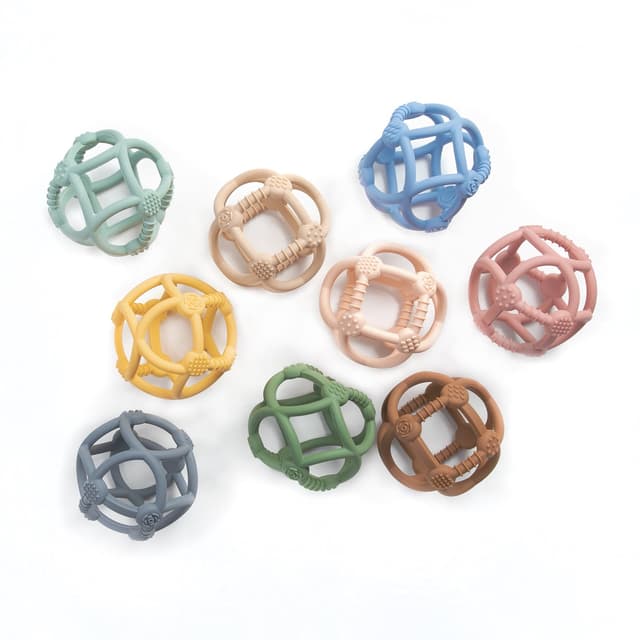 Teething BallS$12.90Shop now
Mentioned above
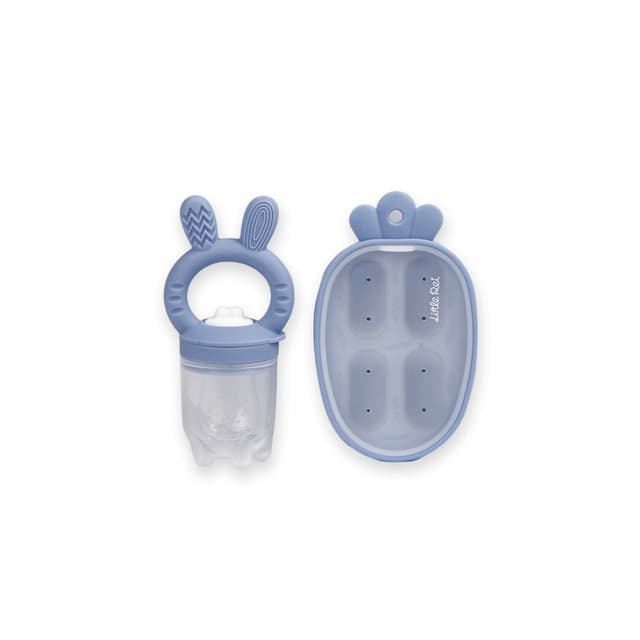 Fruit Feeder with Mini Freezer TrayS$24.90Shop now
Where a cheaper option is fine: a clean damp washcloth chilled in the refrigerator does most of this for nothing, and a good many babies prefer it, and so does a clean finger, firmly. For a bad night, infant paracetamol or ibuprofen at the correct dose for age and weight is reasonable. Ask a pharmacist, and don't guess.
On the specifics
At what age can my baby use a teething ball?
From around three months, once baby can bring objects to the mouth. Always supervise, and choose a ball sized so it can't be swallowed.
Can I put a teething ball in the freezer?
Fridge yes, freezer no. Chilled silicone soothes hot gums; frozen silicone becomes too hard and can bruise delicate tissue.
How often should I clean a teething ball?
Wash daily with warm soapy water and sterilise every few days, or after any tumble to the floor. Food-grade silicone tolerates sterilising well.
Is silicone safe for teething babies?
Food-grade silicone free from BPA, PVC and phthalates is one of the safest materials for mouthing, and it's soft, non-porous and easy to sterilise.
Does a fever mean my baby is teething?
No. Teething can bring mild fussiness and drooling, but not true fever. If your baby has a fever, check with your paediatrician.
Sources
- US Food and Drug Administration, Safely soothing teething pain: benzocaine and homeopathic teething products
- NHS: Baby teething symptoms
- NHS: What to do if a child is choking
- HealthHub: Ministry of Health Singapore
This guide is general information, written to help you understand a topic and ask better questions. It is not medical advice and does not replace your own doctor, midwife or paediatrician. Anything that worries you about your baby belongs with them.