


Melissa is nine months old and started solids in June, which makes this the fifth time I've done it and the first time I've done it without any anxiety at all.
What I'd tell anyone about to start is that age is the least reliable part of the decision. Six months is the guidance, and it's good guidance, but your child is what tells you she's ready.
The three signs of readiness
All three, together.
She can sit up with support and hold her head steady, which matters because a safe swallow needs a stable trunk and neck. As a physiotherapist, this is the one I watch most closely. A baby who's still working to hold herself upright has nothing left over for eating, and that wobble matters.
She can coordinate eyes, hands and mouth well enough to look at food, pick it up and bring it to her mouth. She has lost the tongue-thrust reflex, so food goes back instead of straight out again.
In most babies all three arrive together, at around six months.
What gets mistaken for readiness
A great deal, and every one of these convinced somebody I know that their four-month-old was ready.
- Watching you eat with obvious interest. Babies are interested in everything you do, including reading and putting on shoes.
- Waking more at night. Sleep regressions arrive at four months and again later, and solids don't fix them. This is the most persistent myth in infant feeding and the evidence doesn't support it.
- Chewing on fists, which is developmental and often teething.
- Seeming hungrier, which usually means a growth spurt and calls for more milk.
- Being large for her age. Size has no bearing on whether her gut and her swallow are ready.
- Grabbing at your plate, which is a nine-month-old skill arriving early in a very determined baby.
Why six and not four
Several body systems finish maturing between four and six months. Starting before they're ready gives up real benefits and gains nothing.
The gut lining becomes less permeable, kidney function matures enough to handle a wider solute load, and the swallow coordinates. Waiting to around six months means fewer gastrointestinal infections, and starting before four months raises the risk of overweight later in childhood.
Between four and six months there's a gray zone. Some babies are ready at five and a half, and a doctor may advise starting earlier for a specific reason such as reflux or faltering growth. Never before seventeen weeks, though. That's the firm floor.
| Sign | Ready? | What it means |
|---|---|---|
| Sits supported, head steady | Yes | One of the three real signs |
| Eye, hand, mouth coordination | Yes | Can get food to their own mouth |
| Swallows, no longer pushes out | Yes | Tongue-thrust reflex has faded |
| Waking more at night | No | Sleep architecture maturing at four months |
| Watching you eat | No | Social interest, from about four months |
| Chewing fists, drooling | No | Teething and oral exploration |
| Being a big baby | No | Size doesn't shift the timeline |
| Wanting more milk | No | A growth spurt. Feed more milk |
Premature babies
Go by corrected age, and take advice specific to your child.
A baby born at 32 weeks is developmentally two months behind her calendar age, and readiness follows the development. Preterm babies also have higher iron needs and sometimes different oral-motor patterns, so this is a conversation with your pediatric team and not a guideline to apply on your own. Melissa was term, so I don't know this from the inside.
Not much later, either
This half of the advice often gets lost, and it matters just as much.
Delaying much past six months has real costs. Iron stores laid down before birth run out at around six months, and breast milk alone no longer covers the requirement, so iron-rich first foods are the real nutritional priority. Waiting also shortens the window when babies most readily accept new textures and flavors, and introducing allergens late is now known to raise allergy risk.
Six months is a target, not a line to cross as late as you can.
Mentioned above
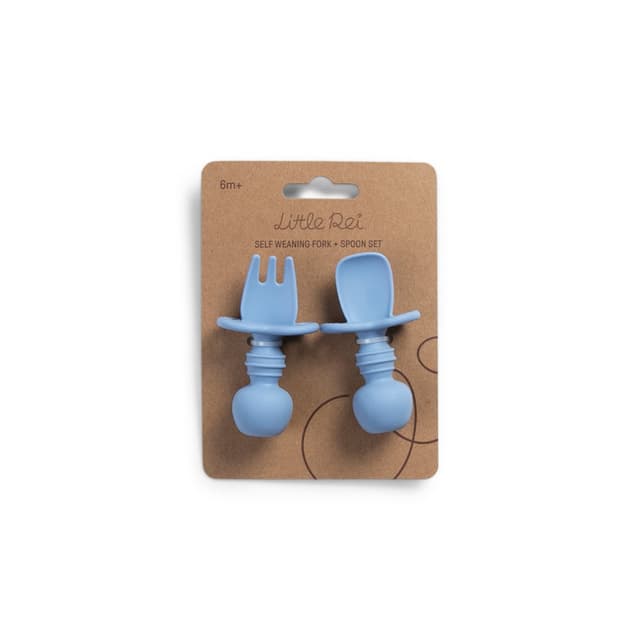 Self Weaning SetS$9.90Shop now
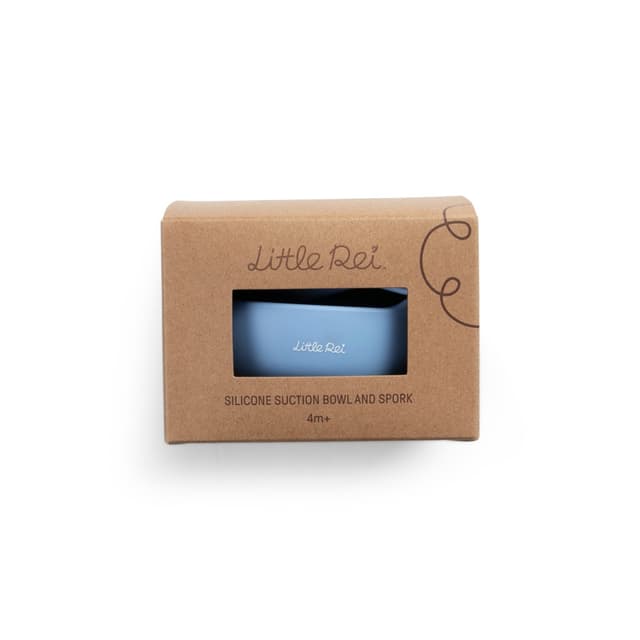 Suction Bowl with SporkS$19.90Shop now
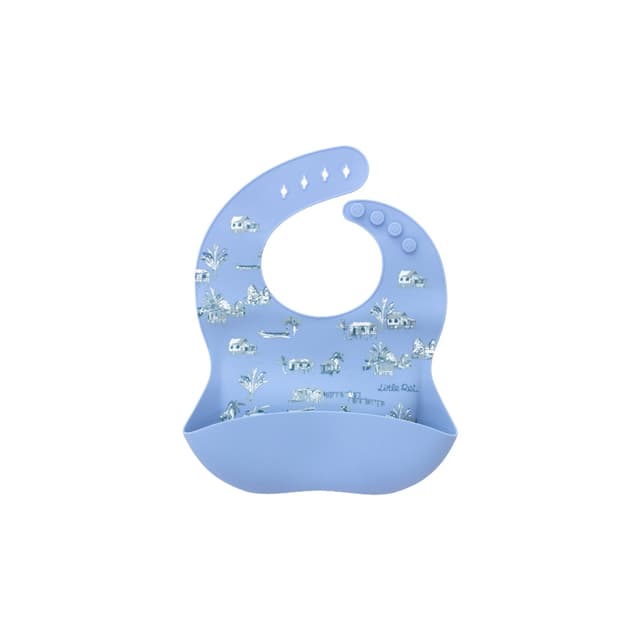 Silicone Rustic BibS$19.90Shop now
What the first week looks like
Smaller than you're imagining. One or two teaspoons, once a day, at a time when she's neither ravenous nor full. Twenty to thirty minutes after a milk feed works well.
Expect most of it to come back out. That's a mouth learning a new movement after six months of doing only one thing. Milk feeds stay exactly the same, because at this stage solids are practice.
Ten minutes is a full meal. End it cheerfully whether or not anything was swallowed, and do it again tomorrow.
What comes next
Two things to know before day one
First, learn the infant choking response before the first meal: both parents, and anyone else who feeds her. It takes twenty minutes and it matters more than anything else here. Gagging is loud and normal, choking is silent, and knowing the difference in advance lets you stay calm through the first weeks of gagging. Second, decide now that you won't measure. The most common way this goes wrong is a parent counting spoonfuls until a pleasant part of the day turns into a test. She decides how much. You decide what's offered and when. Holding that line from the first meal saves you the toddler food fight later, and I say that having failed to hold it with my first two.
Asked most often
At what age can a baby start solid food?
Around six months, and judged by three signs and not by the date: sitting supported with a steady head, coordinating eyes, hands and mouth, and swallowing food, no longer pushing it back out. All three need to be present.
Will starting solids help my baby sleep through the night?
No. This has been tested and starting solids doesn't improve night waking. More waking at four months is normal maturation of sleep architecture and isn't a hunger signal.
Is it bad to start solids at four months?
Guidance in some countries allows it from four months in specific circumstances, and if a doctor or dietitian has advised it for your baby, follow that. Starting early without advice risks displacing more nutritious milk before the gut, kidneys and swallowing coordination are ready.
When should a premature baby start solids?
Use corrected age, from the due date, as the starting point, judge readiness on the same three physical signs, and take advice from your pediatric team, since preterm babies often reach those signs on their own timetable.
The evidence
- Du Toit et al. (2015), NEJM 372:803-813: Randomized Trial of Peanut Consumption in Infants at Risk for Peanut Allergy (LEAP)
- NHS. Your baby's first solid foods
- World Health Organization: Infant and young child feeding
This guide is general information, written to help you understand a topic and ask better questions. It is not medical advice and does not replace your own doctor, midwife or paediatrician. Anything that worries you about your baby belongs with them.