

21 July 2026 · Veronica Chi
Business & Product Director · Mother of two
Why You Should Use Bamboo Rayon Sheets for Your Baby's Cot
I specify these fabrics for a living, so let me start with the thing the category is least keen to say out loud: what we sell isn't bamboo in the way linen is linen. It's rayon made from bamboo cellulose, and the straight label is viscose or rayon.
That distinction counts commercially, since regulators in several countries have taken action against companies marketing rayon simply as bamboo without disclosing the processing, and it counts to you because it tells you where the benefits come from. They come from the fibre that comes out of the process.
The performance is real. The story on the packet is usually not the whole one.
Why is bamboo rayon better for a baby's skin?
Because of the shape of the finished filament, and nothing botanical.
Regenerated cellulose is extruded as a smooth, round, uniform fibre. Cotton is a flattened, twisted, ribbon-like fibre with a rougher surface. Against skin at the microscopic scale that's a real difference in friction, and friction is what turns a warm damp patch on a baby into a red one.
It also handles moisture well, moving it off the skin and spreading it out to evaporate instead of keeping it in one place. In a cot in this climate that's the property that counts most, because a baby sleeping twelve hours on a sheet in a warm room is producing moisture the whole time.
What it doesn't do is treat anything. If your baby has eczema, the sheet is a comfort measure alongside a treatment plan.
Do bamboo sheets keep babies cool in Singapore's heat?
They help, and the room helps more. A breathable sheet that wicks will feel cooler than a dense synthetic one, and in a flat at twenty-eight degrees overnight that's something to have. It won't compensate for a room that's too warm, too many layers, or a sleep sack rated for a European winter. The order of operations is room temperature, then what she's wearing, then the sheet. Check her by putting a hand on the back of her neck or her chest. Warm and dry is right. That check costs nothing and tells you more than any product page.
Whether bamboo are cot sheets safe
The sheet isn't the safety question. The fit is.
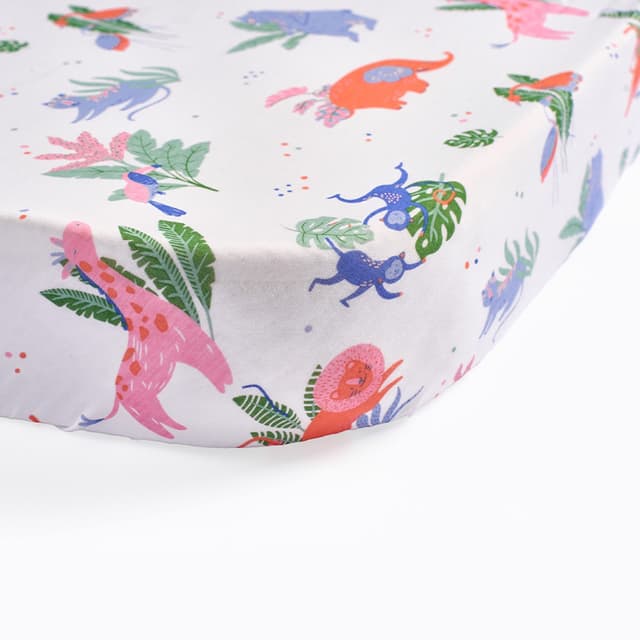
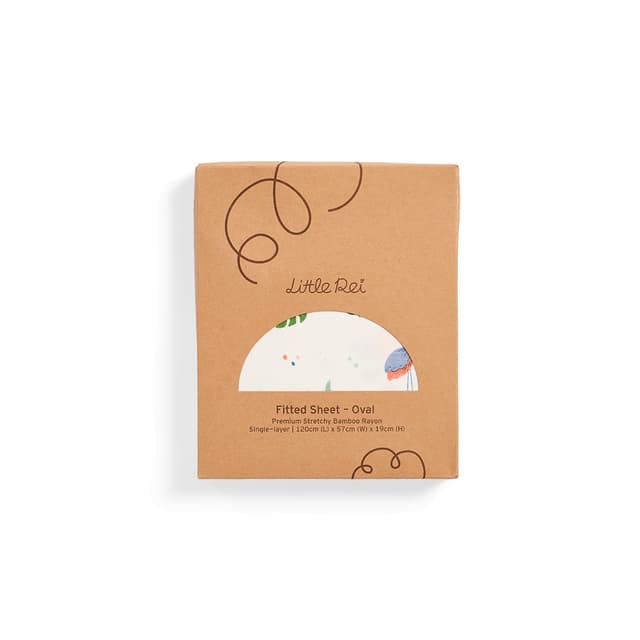
A cot sheet must be fitted, taut and correctly sized for the mattress. A loose or oversized sheet that can be pulled up is a hazard regardless of what it's made from. Buy the size that matches your mattress, check the elastic every few weeks, and replace it when it goes slack.
Nothing else goes in the cot for the first year: flat, firm, clear, and a baby on her back. No amount of nice fabric changes that.
On the chemistry: look for OEKO-TEX Standard 100 certification, and specifically Product Class I, which is the class covering articles for babies and toddlers and has the strictest limits. It's a real test against a defined list of substances, and it's the best thing on a label in this category.
How bamboo sheets hold up to washing
Well, and better than cotton at one specific thing: they go softer with washing where cotton often stiffens.
The trade-off is that regenerated cellulose is weaker when wet than cotton, so it wants a gentler cycle and it won't survive being boiled repeatedly. Wash warm, skip fabric softener entirely because it coats the fibre and undoes the wicking you bought it for, and dry it properly, because half-dry cloth folded away in this humidity will smell within days.
Realistically you'll get a couple of years out of a cot sheet in daily use. Own three, so one is on, one is clean and one is in the wash.
The rest of the cot
Mentioned above
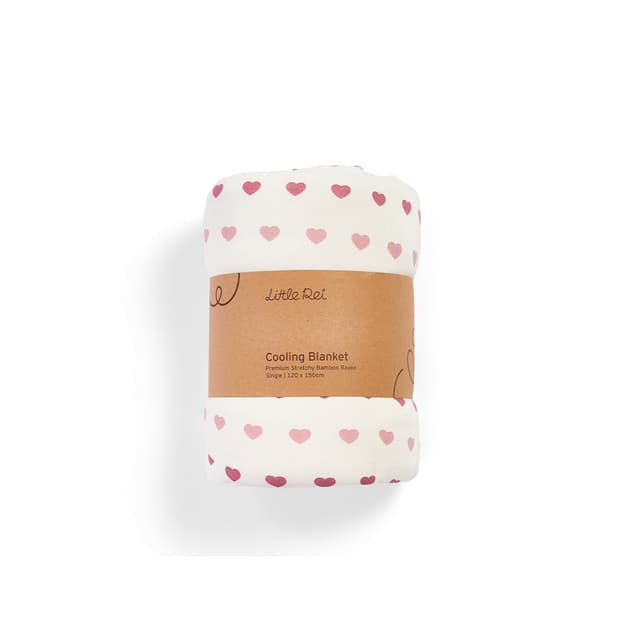 Bamboo Cooling Blanket (120x150cm)S$135.00Shop now
Whether bamboo is a more sustainable choice
Sometimes, and I wouldn't buy it primarily for that reason without asking one question.
The plant is fast-growing and needs little irrigation or pesticide, which is the part of the story everybody tells. Turning it into fibre is a chemical process, and conventional viscose production uses solvents that are hazardous when they aren't properly contained. Closed-loop systems recover and reuse them. Conventional plants don't always.
The real question is how it was processed, and whether the manufacturer will tell you. A leaf on the packaging tells you nothing. Ask about closed-loop processing and about certification, and treat vagueness as an answer. I asked our own mill this in July and got a straight answer, which is the only reason I'm comfortable writing this paragraph.
The case for bamboo, briefly, and where a cheaper option is fine
It's soft, it moves moisture, it goes softer with washing, and in a hot humid bedroom those three add up to a child who's more comfortable. That's the case and I think it's a good one.
The part I'd tell a friend: if money is tight, a well-fitting cotton percale sheet washed regularly beats an expensive bamboo one left on for a fortnight. Fit and frequency outrank fibre. Buy the fabric when you have the fit and the routine already right.
Evidence
- US Federal Trade Commission, Bamboo fabrics and the Textile Products Identification Act: rayon made from bamboo must be labelled as rayon
- The Lullaby Trust: Safer sleep advice
- OEKO-TEX: Standard 100 product classes
- NHS: Atopic eczema
This guide is general information, written to help you understand a topic and ask better questions. It is not medical advice and does not replace your own doctor, midwife or paediatrician. Anything that worries you about your baby belongs with them.