

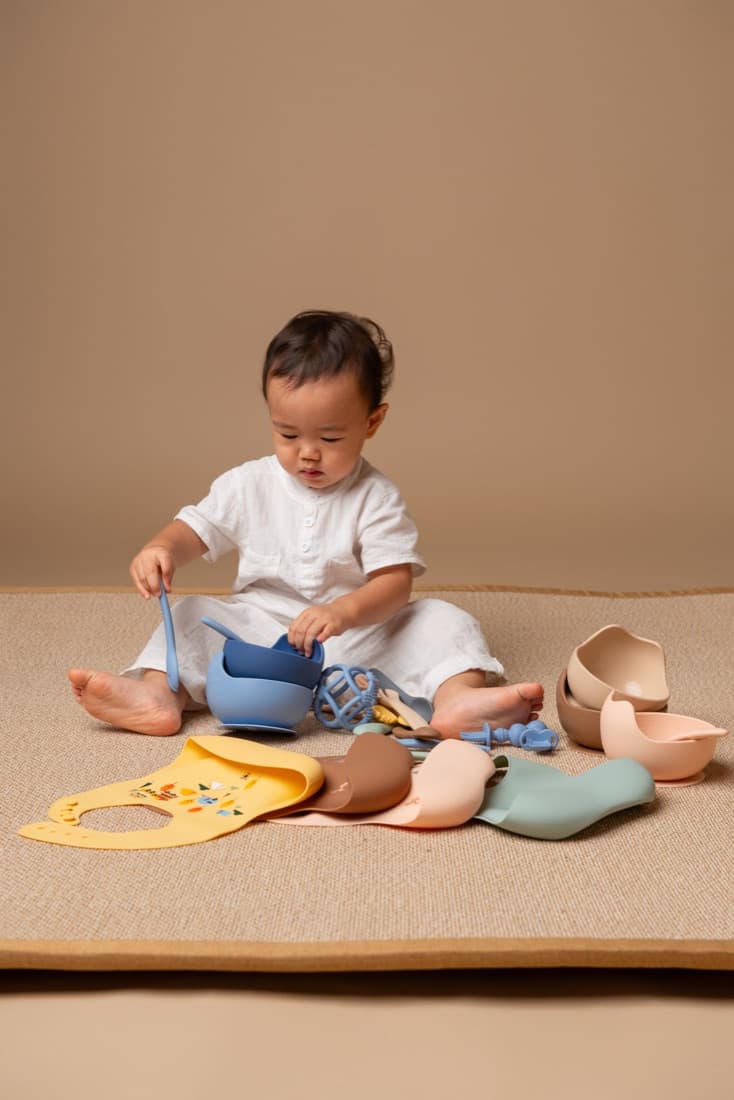
For about eighteen months I ate standing at the kitchen counter, around two in the afternoon, whatever was left on somebody else's plate. With twins that wasn't a lapse in standards. It was the only option.
What changed it was giving up on two separate meals. One thing, cooked once, in two forms. Everything below is a variation on that.
What makes a lunch work for both of you?
Four properties. A lunch with all four survives an actual weekday.
Edible one-handed, because you'll be holding somebody. Fine at room temperature, because it'll go cold and you'll eat it anyway. Splits into a baby version without a second recipe: same food, cut differently, no salt. And assembled, not cooked. A lunch with a method has a failure point, and a lunch with a failure point doesn't happen.
Anything that fails one of those is a weekend lunch.
Five bases that feed two people
Each is one cooking job and two meals. All five have been through our kitchen more times than I can count.
- Eggs, in almost any form. Scrambled with a little cheese, an omelette cut into strips for small hands, or a frittata made on Sunday and eaten cold on Tuesday. Fast, cheap, and good for a baby.
- Toast with something on it. Avocado, hummus, nut butter thinly spread, mashed sardines. Your version has salt and chilli. Hers is a finger-length strip with neither.
- Pasta, cooked in bulk. Toss yours with anything you like. Hers is a few pieces with butter and grated cheese, or a plain tomato sauce made with no added salt.
- A grain bowl built from whatever is in the fridge. Rice or couscous, something roasted, something raw, a dressing on yours only.
- Soup or dal, blended for you and thicker for her, served warm with bread to dip. This is the one that freezes best and make double.
Same pattern in all five: seasoning goes on at the end and on your portion only. Salt is the one thing that deserves being strict about. Under a year the limit is less than 1g a day. Adult food blows through it without trying. I think. I've never weighed it.
What does an assembly plate look like?
For the days when even the five above are too much. We eat this perhaps twice a week, with no shame.
Something with protein, something with carbohydrate, something raw, something soft. Cheese, oatcakes, cucumber sticks, a boiled egg. Ham, bread, tomato, avocado. Hummus, pitta, pepper strips, banana. Nothing cooked. Four minutes. A perfectly respectable meal for a small child and a large one.
Put hers down at the same time as yours. Eating together counts for more than what's on either plate. A child watching an adult eat the same food is doing real work.
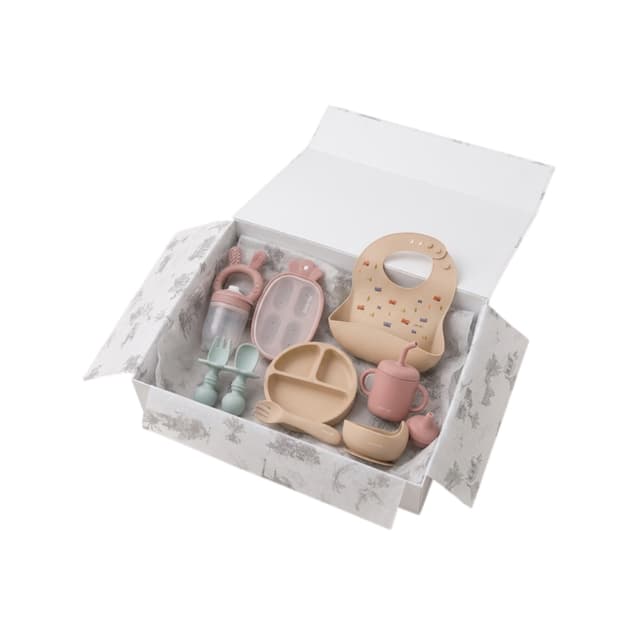
How to eat while feeding a baby
That's the practical heart of it. Took me four children to work out.
- Sit down. Standing at the counter is how you eat four mouthfuls and then wonder why you're irritable at four in the afternoon.
- Serve both plates at once. Feeding her first and yourself afterwards means yours is cold and interrupted, and it'll be interrupted anyway.
- Give her something to work on that takes a while. A long strip of anything she has to gum through buys you four minutes.
- Accept a shorter meal. Fifteen minutes, both fed, is a success.
- Make double the night before. Yesterday's dinner is today's lunch and it involves no decisions, which at midday is counts for more than variety.
- Have three lunches you can make without thinking, and rotate them. Novelty isn't a requirement for either of you at this hour.
Eat properly. I'd press this hardest. Feeding a baby is physically demanding, breastfeeding especially. The parent living on toast crusts is the parent who falls over in week nine. Your lunch isn't the optional half.
More from the same kitchen
What should you watch out for
A short list of things that go into adult lunches and shouldn't go into hers.
- Salt, in all its disguises: stock cubes, soy sauce, cheese in quantity, bread in quantity, anything cured, and most shop-bought sauces.
- Honey, which isn't safe for anyone under one year old under any circumstances.
- Whole nuts, whole grapes and cherry tomatoes, raw hard carrot or apple, and anything round that hasn't been quartered lengthways.
- Added sugar, which is unnecessary before one and best kept minimal after.
- Low-fat versions of things. She wants the full-fat yoghurt and the full-fat cheese. You can have the other kind.
- Undercooked egg for under-ones, unless it has the British Lion mark, in which case it is fine.
Beyond that, allowing for texture and size, she can eat what you're eating. That's the whole convenience. Lean on it.
This guide is general information, written to help you understand a topic and ask better questions. It is not medical advice and does not replace your own doctor, midwife or paediatrician. Anything that worries you about your baby belongs with them.