

15 June 2026 · Veronica Chi
Business & Product Director · Mother of two
Sippy Cup vs Straw Cup: When to Use Each
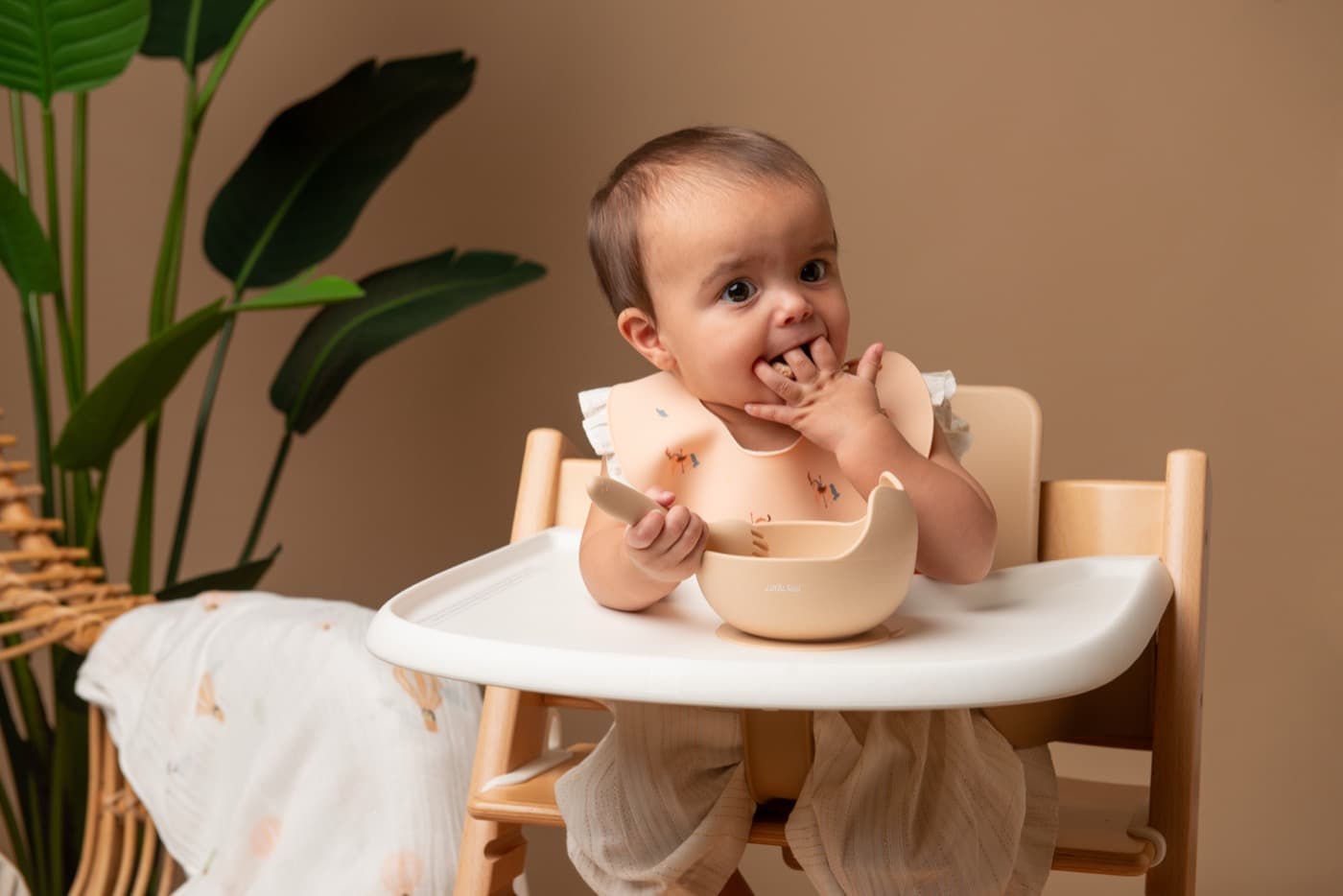
I sell cups, so I'll start with the part that's awkward for us: the spouted sippy cup, which is the default first cup almost everywhere, is the one dentists and speech therapists are least keen on.
It isn't dangerous and it isn't a scandal. It's the option with the least going for it, and the category sells it hardest because it spills least.
What is the difference between a sippy cup and a straw cup?
The mouth movement, which is the thing that counts and the thing the packaging never mentions. A spouted sippy cup is drunk from with a sucking action against a spout held between the tongue and the roof of the mouth, close to the movement she already uses on a breast or a teat, which is exactly why it's easy to introduce and why it doesn't move her on to anything. The spout is a step sideways. A straw needs a different action: lips sealed around a narrow tube, tongue back and down, cheeks doing the work. An open cup needs something different again, a controlled sip with the tongue tip staying low. Both of those are steps toward mature drinking and swallowing.
| Cup | From | Develops | Downside |
|---|---|---|---|
| Open cup | 6 months, held by you | Lip control, jaw stability | Spills, until it doesn't |
| Straw cup | 6-9 months | Tongue lift and retraction, mature swallow | Harder to clean |
| Spouted sippy | As a short bridge | Little. Closest to a bottle | Prolongs an immature swallow |
| Bottle | — | — | Phase out from around 12 months |
Why do dentists prefer straw and open cups?
Two reasons, and the first is about time.
A sippy cup with a valve is designed to be carried, which means it's carried, sipped from over hours instead of drunk at a meal. If what's in it is anything other than water, that's prolonged exposure of the teeth to sugar, which is the mechanism behind early decay. The all-afternoon grazing the cup enables is the problem.
The second is positional. The spout is where a dummy goes, and prolonged use of anything held in that position affects the developing bite and, some speech therapists argue, tongue posture. The evidence on speech specifically is thinner than the confident version you'll read online, and I'd rather understate it.
The practical upshot is uncontroversial: keep water in whatever cup travels, keep milk and anything sweet to mealtimes in an open or straw cup, and don't use a spouted cup as the long-term default.
Around the same stage
So when should you use each cup
Start an open cup at six months, alongside solids. Not in place of everything else. Start it.
A tiny open cup with a small amount of water, held by you, at every meal from six months, means the skill is being learned from the beginning. She'll spill nearly all of it for weeks. That's the process.
Add a straw cup from around nine months, which is when most babies can manage the suck, and which is the best travelling cup you'll own. Use a spouted sippy cup if you want one for the pram or the car, treat it as a spill-control device for water, and plan to be off it well before two.
Most guidance suggests being off bottles between twelve and eighteen months and using an open cup for most drinks by around two.
Mentioned above
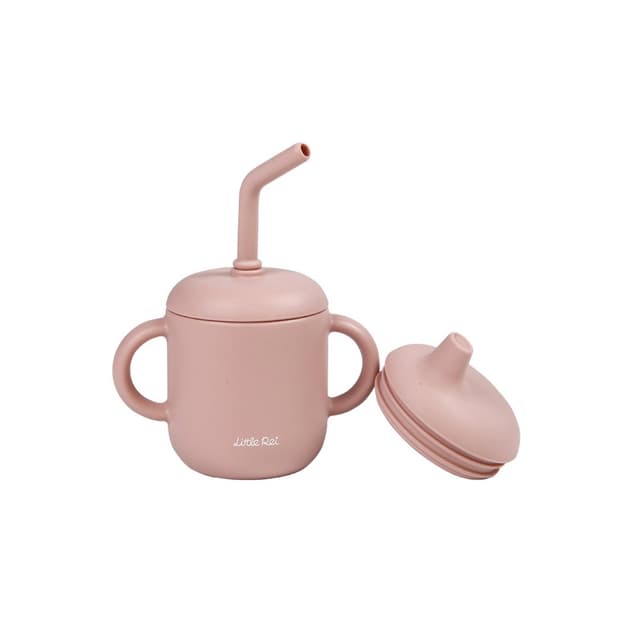 Silicone Multi Use CupS$24.90Shop now
How to teach an open cup or a straw
Both take a fortnight of mess and neither needs a technique beyond patience.
For an open cup: a small heavy-based cup with about a centimetre of water, you holding it and tipping gently to her lip, at every meal. Let her put her hands on it. Expect it down her front for a month. Six weeks, in my case, and I'm not sure it was the cup.
For a straw: the trick that works on almost every baby is a short flexible straw dipped in water, a finger over the top to trap a little liquid, and released into her mouth. Two or three goes and the connection is usually made. A soft-tipped straw cup you can squeeze gently does the same thing.
What to skip: teaching either while she's thirsty and cross, and switching cup types every fortnight because one isn't working yet. Pick one, keep it at meals, and give it two weeks before you judge it.
Sources
- American Academy of Pediatrics, HealthyChildren.org, Discontinuing the bottle and choosing a cup
- NHS: Baby's first solid foods
- HealthHub: Ministry of Health Singapore
This guide is general information, written to help you understand a topic and ask better questions. It is not medical advice and does not replace your own doctor, midwife or paediatrician. Anything that worries you about your baby belongs with them.